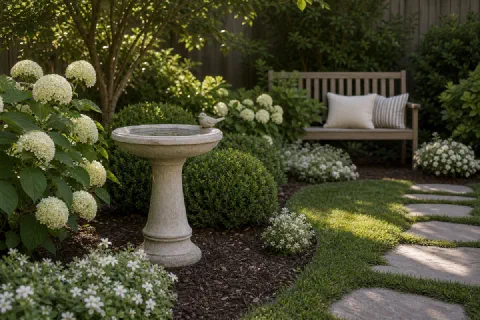
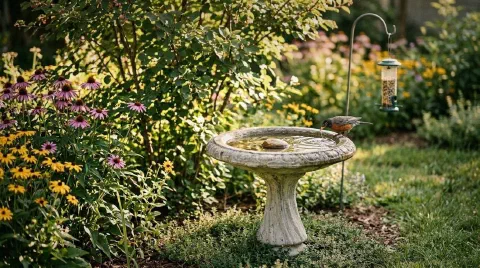
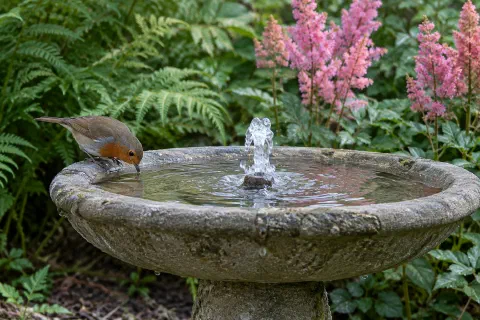
For a bird bath songbirds can use, start with shallow water, secure footing and a clear view of approaching predators. Nearby trees provide perches; thick shrubs pressed against the bowl can conceal cats. Keep the water fresh and make the basin easy to empty. Those choices matter more than the ornament on its pedestal.
7 Bird Bath Ideas for Shallow, Clean Water
Last updated:
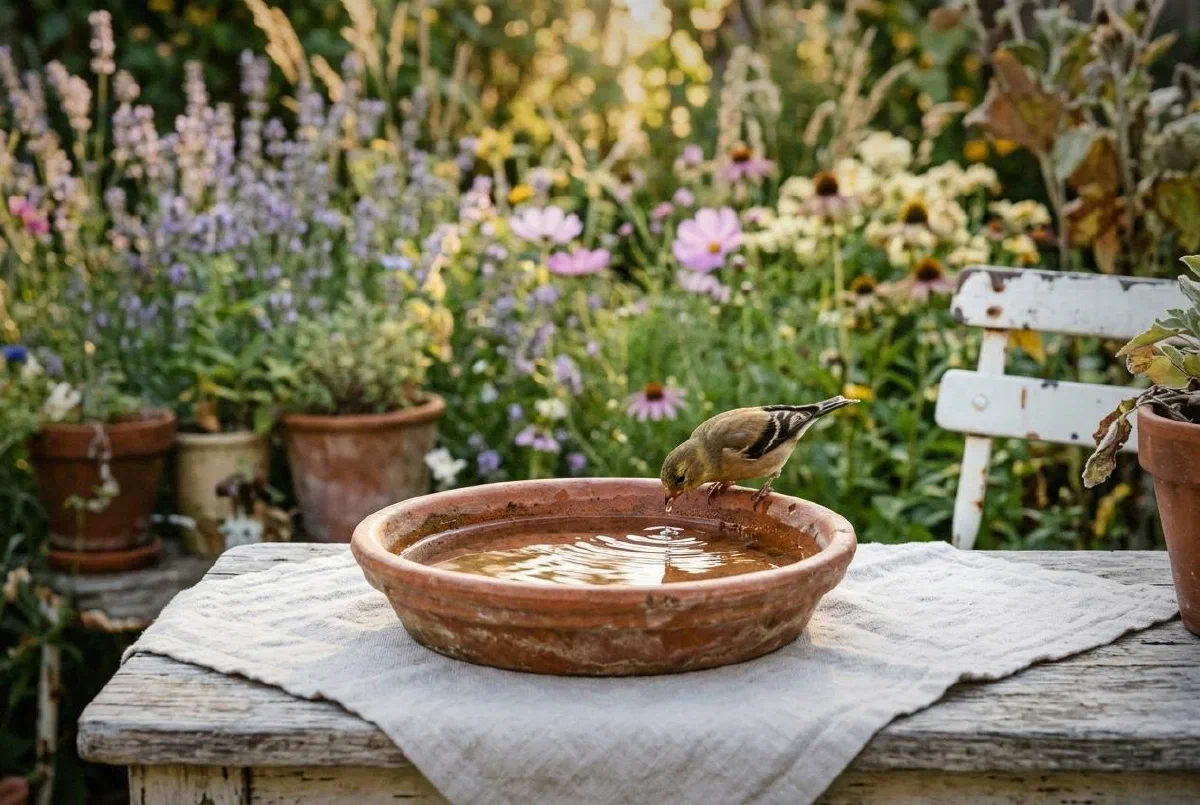
Illustrative scene, not a photograph of the linked products.
These seven setups are changes to try, not promises of visits. Start with your existing bath and change one part at a time.
| Setup | What to change | What to watch |
|---|---|---|
| A bath beside a planted border | Leave an open approach between water and dense cover | Cats or other disturbance near the bowl |
| A shallow basin | Measure the filled depth | A deep center or steep sides |
| A bath with standing places | Add secure stones or branches | Slippery surfaces and loose pieces |
| A ground-level dish | Use a shallow container on level ground | Dirt, pets and water loss |
| A bath with a drip | Add a secure, manageable drip | The basin or container running dry |
| A shaded summer bath | Move it out of strong afternoon sun if possible | Falling debris and changing shade |
| An easy-clean bath | Keep a brush nearby and empty old water | A routine you cannot maintain |
1. Leave a clear approach beside the planting
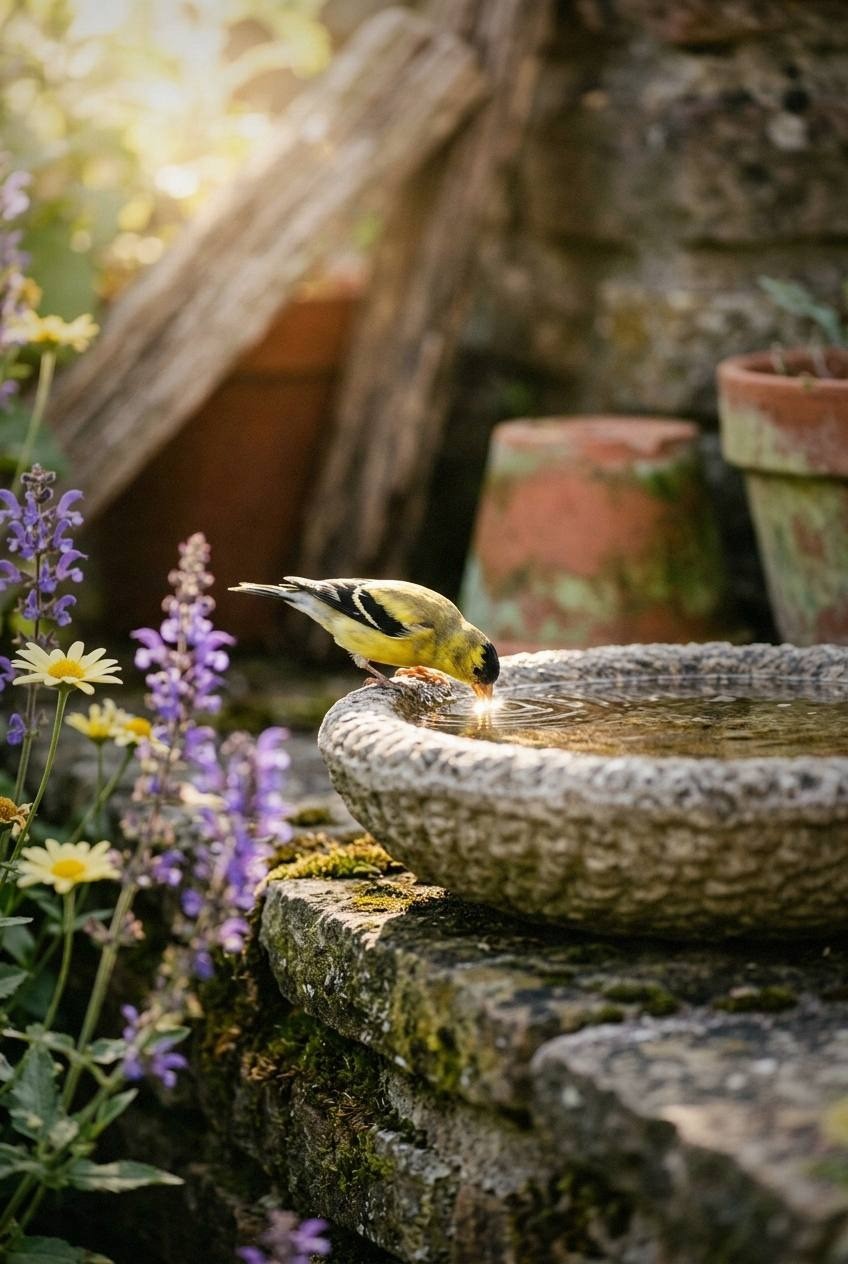
Put the bath where birds can see the area around it. The Cornell Lab recommends open ground between a bath and thick shrubbery when neighborhood cats are a concern. Keep your own cat indoors.
A nearby tree can offer a perch without filling the basin with low, dense stems. There is no single shrub distance that fits every yard. Look for hiding places at ground level, and keep the bowl away from busy paths and pets.
If your current spot is troublesome, the bird-bath placement checklist gives you a useful place to start.
2. Measure the water instead of filling to the brim
Cornell’s guideline is no more than 1 inch deep at the edges, sloping to a maximum of 2 inches in the middle. That is water depth, not the height of the bowl’s outside wall.
Check both points with a ruler. A bowl can be 2 inches deep yet have a nearly vertical edge. Choose a gentle slope and a secure surface. You do not need to scratch or alter the finish to remember a suitable fill level.
3. Give birds a steady place to stand
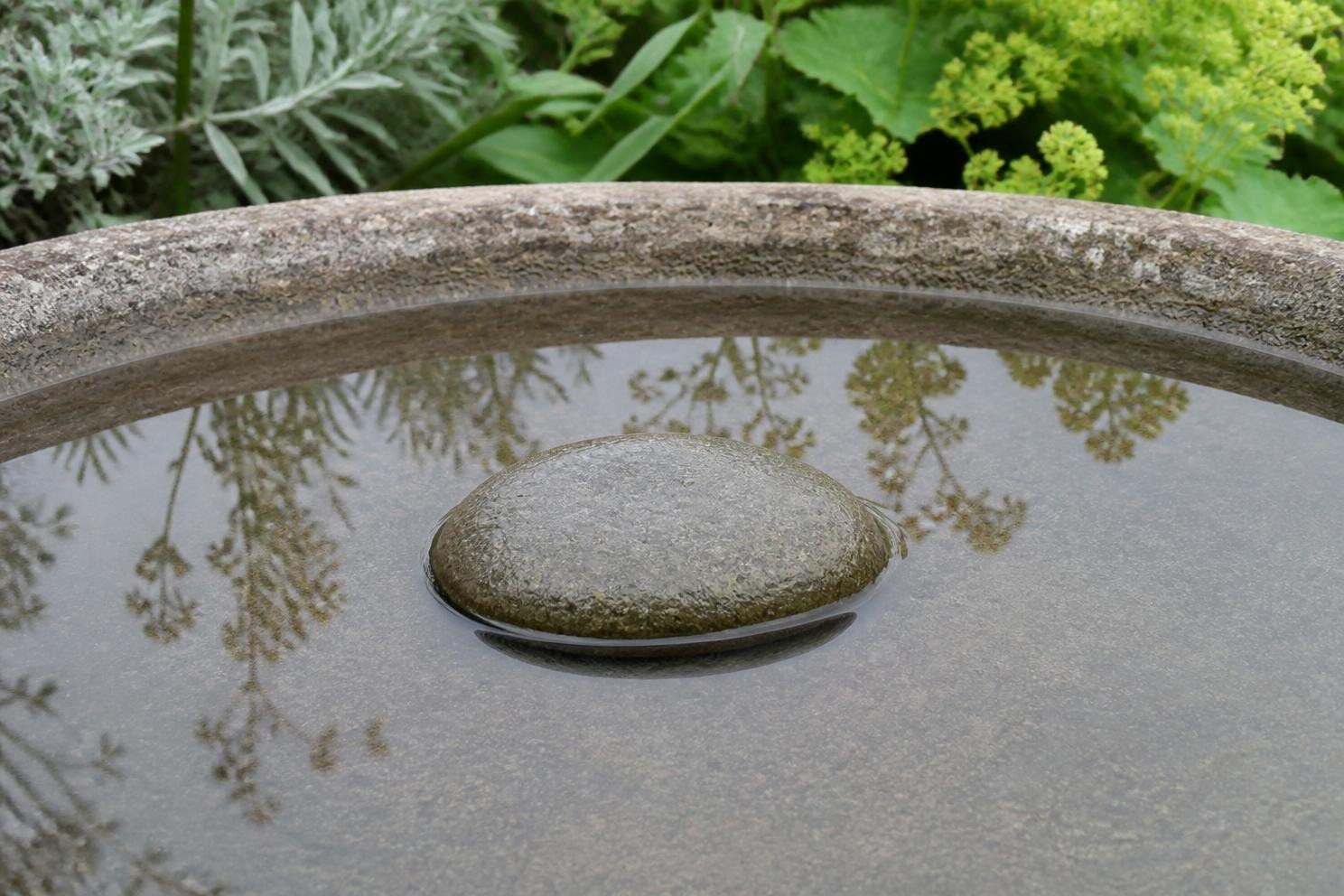
Cornell suggests stones or branches in the water so birds can drink without getting wet. Use pieces that sit securely and can come out for cleaning. Test them with your hand before filling the bowl.
Do not build a loose stack in a deep basin. A perch should not tip, trap debris or leave the only reachable water too deep. Recheck the water depth after adding it.
4. Try a shallow dish at ground level
A wide plant saucer or shallow pan can make a useful trial bath. Set it level, with a clear approach and no sharp edges. Cornell notes that birds seem to prefer ground-level baths, which resemble the water they find naturally.
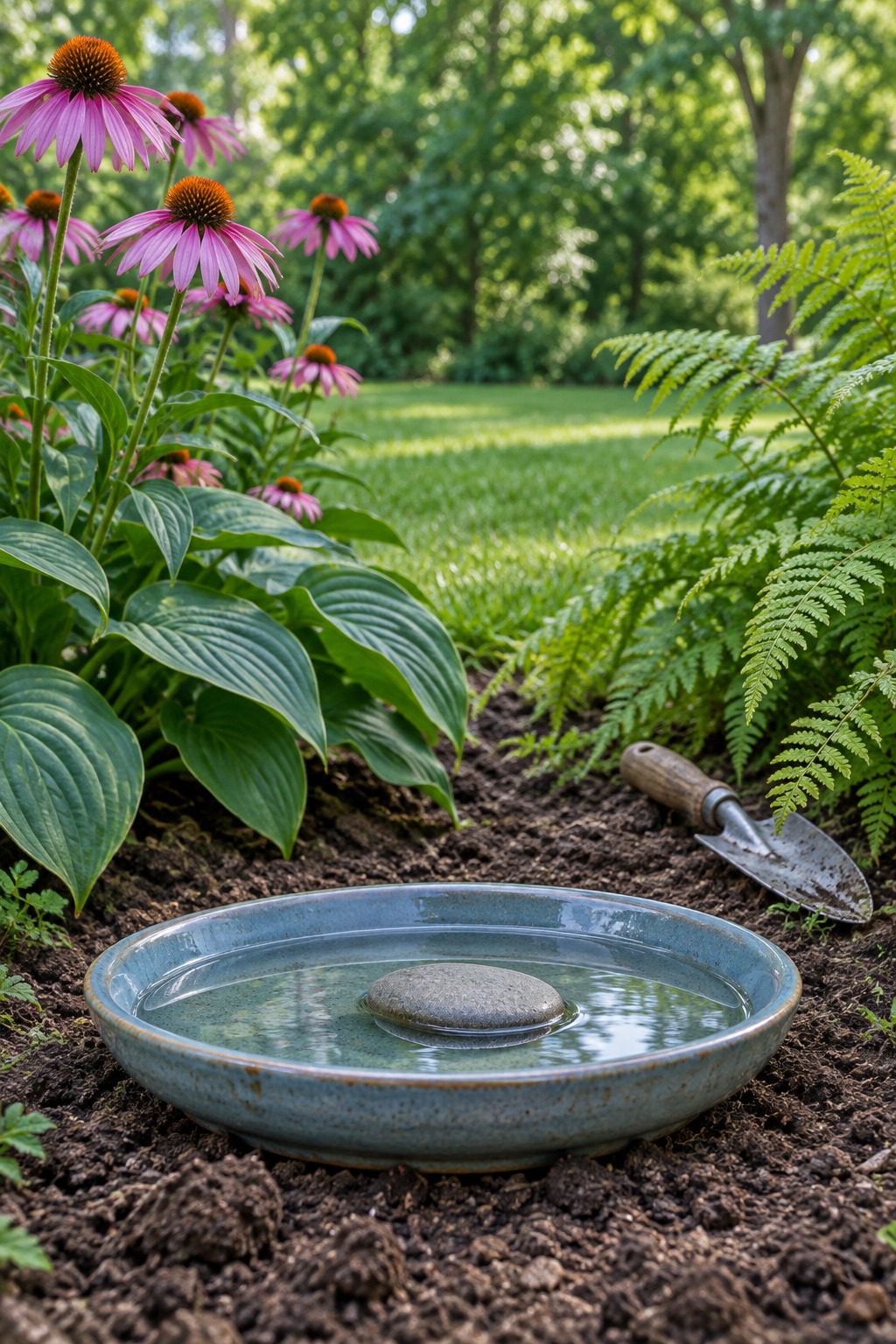
Ground level also means soil splash, pets and low hiding places need attention. Keep it clean and inspect it often. You can use a dish you already own; a second purchase is not required to test the location.
5. Add a drip you can service
Moving water can make a bath more attractive. Cornell describes a simple suspended container with a small hole in its base. Secure it well, keep the approach clear, and watch how long it lasts before it needs filling.
Do not leave a hose running unattended or assume a drip prevents mosquitoes. Water still needs changing, and the bowl still needs scrubbing. A pump also adds maintenance. The fountain guide covers those tradeoffs before you buy one.
6. Use summer shade without inviting debris
Choose shade during hot months where possible. Look at the spot in the afternoon, when a morning patch of shade may be gone. Nearby branches can provide perches, but a bath directly beneath a feeder or messy canopy needs more cleaning.
Keep the bowl visible to you and within comfortable reach. A bath at the far end of the garden is less convenient to check when you are busy. Visibility is a maintenance choice, not a reason to place it beside an untreated glass window.
7. Make emptying and scrubbing easy
Change water every day or two, and sooner when dirty. Empty the old water and clean the basin rather than repeatedly topping it up. Audubon’s cleaning guidance uses nine parts water to one part vinegar and advises avoiding synthetic soaps and cleansers. Rinse thoroughly before refilling.
A removable bowl can make this easier. Keep the bath brush nearby, and clean any stones or pump parts according to their instructions. A fountain does not replace this routine.
Baths with useful features
| Bath | Useful feature | Check before ordering |
|---|---|---|
| Gtongoko 34-inch metal bath (opens Amazon in a new tab)As an Amazon Associate, we earn from qualifying purchases. Full disclosure. | A 12-inch bowl that lifts out for cleaning | The listed bowl is 2 inches deep. Measure your fill level; the rim height does not determine water depth. |
| Daoeny 35-inch bath in antique bronze (opens Amazon in a new tab)As an Amazon Associate, we earn from qualifying purchases. Full disclosure. | A decorative metal pedestal with a five-prong soil base | Its 12-inch bowl is listed as 2 inches deep. Confirm the removable parts and assembly instructions. |
| OUISJYER 10-inch small metal bath (opens Amazon in a new tab)As an Amazon Associate, we earn from qualifying purchases. Full disclosure. | A smaller bowl and adjustable stake height | Select the 10-inch, 1.6-inch-deep version. Its smaller capacity needs closer attention in hot weather. |
All three were in stock on Amazon when checked on October 11, 2026. These are inexpensive metal stake baths, so a budget-to-splurge ranking would add little. Choose by bowl access, size and where the base can be installed. A five-prong stake still needs suitable soil; it does not guarantee stability in loose ground or wind.
Choose a bowl you can lift and clean comfortably. The garden images here illustrate placement; they do not show the exact linked products.
A short setup order
- Choose a spot with a clear approach and manageable maintenance.
- Set the base level and test for rocking.
- Measure the water depth at the edge and center.
- Add a secure standing place if needed.
- Keep the brush and refill supplies within easy reach.
- Observe before adding a drip, pump or second bath.
Do pennies or tennis balls keep mosquitoes out?
Do not rely on either. The CDC’s mosquito-prevention guidance includes bird baths among containers to empty and scrub weekly. Frequent water changes and scrubbing are the useful jobs; an object floating in the bowl does not replace them.
Is there a bird-bath version of the 5-7-9 rule?
That phrase is often used in discussions of squirrel access to feeders. It is not the depth or placement guidance used here. Use measured shallow water, a clear approach and regular cleaning for the bath.
Do you need food beside the bath?
No. Keep seed out of the water and avoid positioning the bath where feeder debris falls into it. Water and feeding stations need their own care routines.
For a broader buying comparison, see five bird-bath styles for a backyard corner. For planting and care around one bath, use the backyard bird-bath guide.