A bird bath works best when birds can reach shallow, clean water and see what is approaching. Start with the basin and its location: a gentle slope, secure footing, shade in hot weather, and open ground between the water and dense cover. A prettier pedestal will not solve a deep or dirty bowl.
Bird Bath Ideas: Shallow Water, Placement and Care
Last updated:
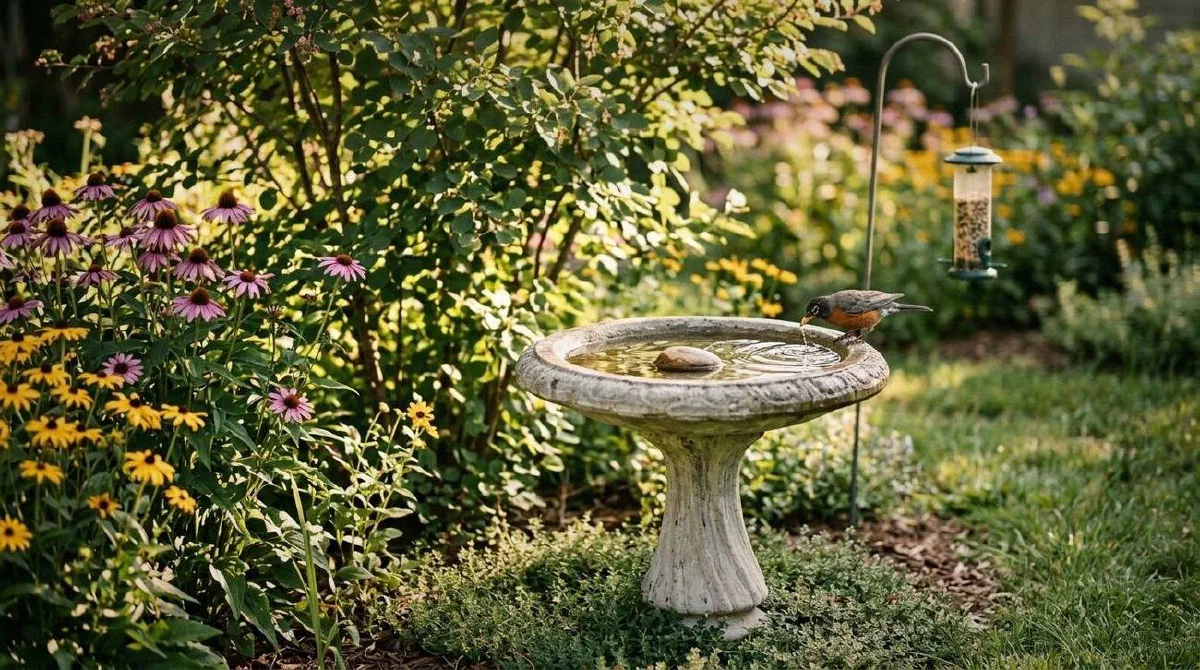
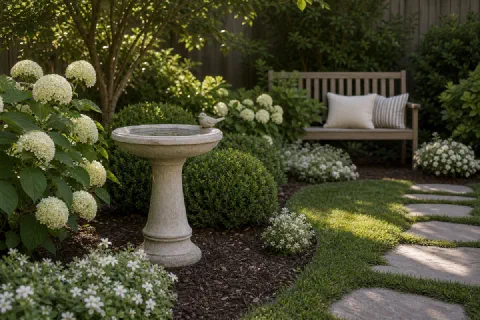
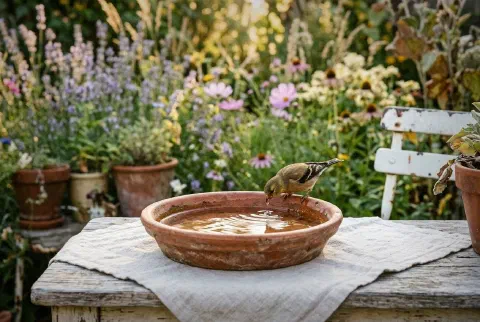
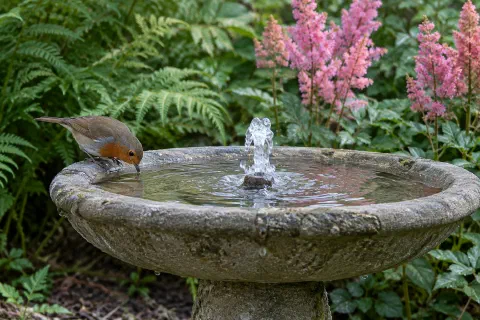
Illustrative scene, not a photograph of the linked products.
You can try those changes with the bath you already own.
| Bird bath spec | The number | Source |
|---|---|---|
| Water depth | 1 inch at the edge, 2 inches in the middle at most | Cornell Lab |
| Deepest water birds will use | No more than 2 to 3 inches | Penn State Extension |
| Ground bath, distance from the nearest hiding spot | Typically 10 to 15 feet | Penn State Extension |
| Fresh water | Change it every day | Penn State Extension |
| Scrub with a brush | Once a week | Penn State Extension |
Do bird baths attract birds?
Yes. Birds need water to drink and to bathe, which keeps their feathers in shape, and a bath draws wildlife that never visits a feeder, from chickadees to the odd chipmunk. Penn State Extension says birds only use a bath with shallow water, so the basin matters more than the pedestal. Rough footing, clean water and a safe spot do the rest.
Choose the bowl before the ornament
The Cornell Lab’s bird-bath guide recommends a shallow basin that resembles a puddle. Keep water no deeper than 1 inch at the edge, with a gentle slope to no more than 2 inches in the middle. A large bowl can still be unsuitable if its sides are steep or its surface is slippery.
| What to check | Why it matters | A practical fix |
|---|---|---|
| Depth at the edge and center | Birds need a place to stand, not just a deep reservoir | Measure the water rather than filling to the rim |
| Basin access | A bath you cannot empty easily is harder to maintain | Look for a lift-out bowl or a manageable weight |
| Footing | A smooth wet surface can be slippery | Add stable stones or branches without creating loose stacks |
| Base | A tilted bowl loses water and can rock | Set the bath level and follow the mounting instructions |
A shallow dish on the ground is worth trying before buying a new bath. Cornell notes that birds seem to prefer ground-level water. Keep that dish away from places where cats can hide close to the rim.
How deep should bird bath water be?
Keep it shallow: Cornell says no deeper than 1 inch at the edge and no more than 2 inches in the middle. Penn State Extension allows up to 2 to 3 inches at the deepest point. If your bowl is deeper, fill it partway and measure rather than filling to the rim.
Should you put rocks in a bird bath?
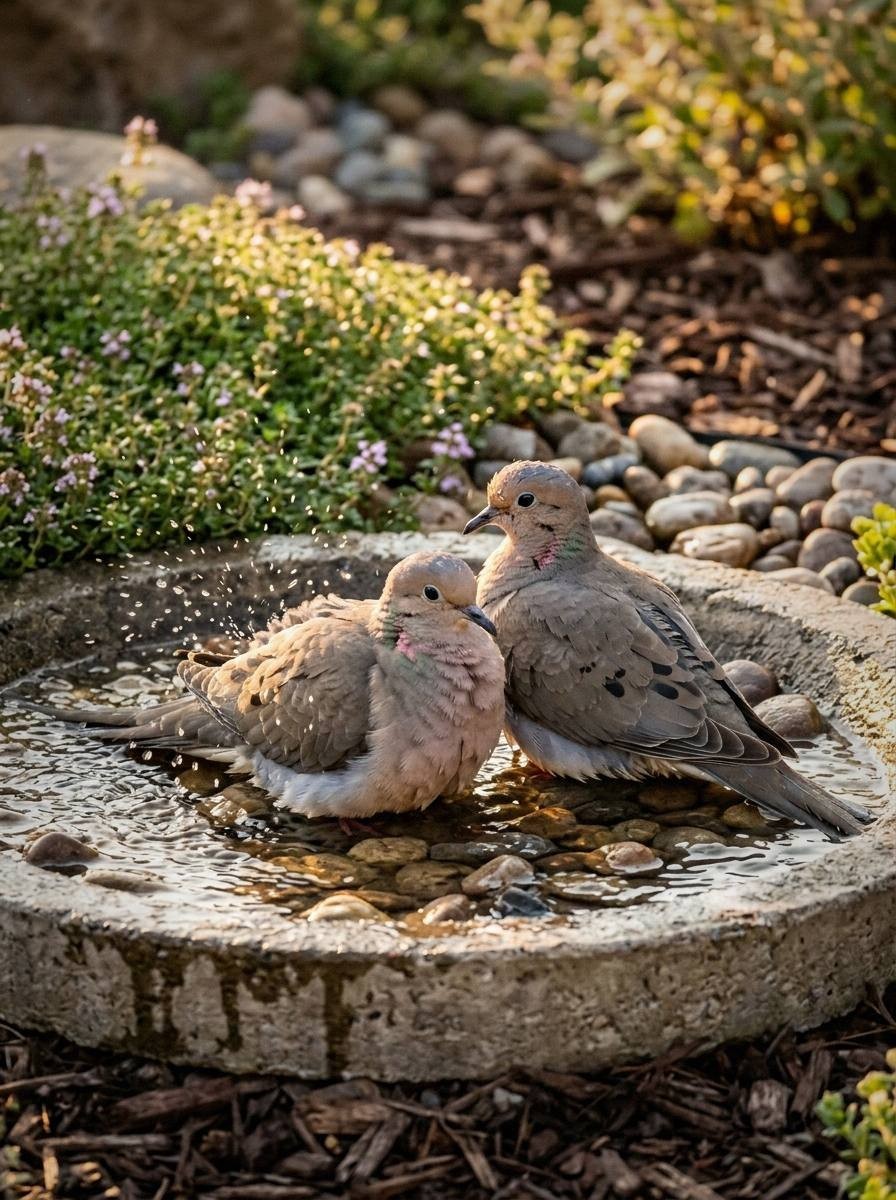
Yes, a few small ones. Penn State Extension suggests adding a few small rocks, or even bathtub stickers, so the surface is not slick. It also says birds prefer rough surfaces like concrete or terra-cotta over glazed pottery or smooth plastic.
Three metal baths to compare
| Bath | Useful feature | Check before ordering |
|---|---|---|
| Gtongoko 34-inch metal bath (opens Amazon in a new tab)As an Amazon Associate, we earn from qualifying purchases. Full disclosure. | A 12-inch bowl that lifts out for cleaning | The listed bowl is 2 inches deep. Measure your fill level; the rim height does not determine water depth. |
| Daoeny 35-inch bath in antique bronze (opens Amazon in a new tab)As an Amazon Associate, we earn from qualifying purchases. Full disclosure. | A decorative metal pedestal with a five-prong soil base | Its 12-inch bowl is listed as 2 inches deep. Confirm the removable parts and assembly instructions. |
| OUISJYER 10-inch small metal bath (opens Amazon in a new tab)As an Amazon Associate, we earn from qualifying purchases. Full disclosure. | A smaller bowl and adjustable stake height | Select the 10-inch, 1.6-inch-deep version. Its smaller capacity needs closer attention in hot weather. |
All three were in stock on Amazon when checked on October 11, 2026. These are inexpensive metal stake baths, so a budget-to-splurge ranking would add little. Choose by bowl access, size and where the base can be installed. A five-prong stake still needs suitable soil; it does not guarantee stability in loose ground or wind.
The photos on this page show garden settings. They are not product photographs of the linked baths.
Where to put a bird bath
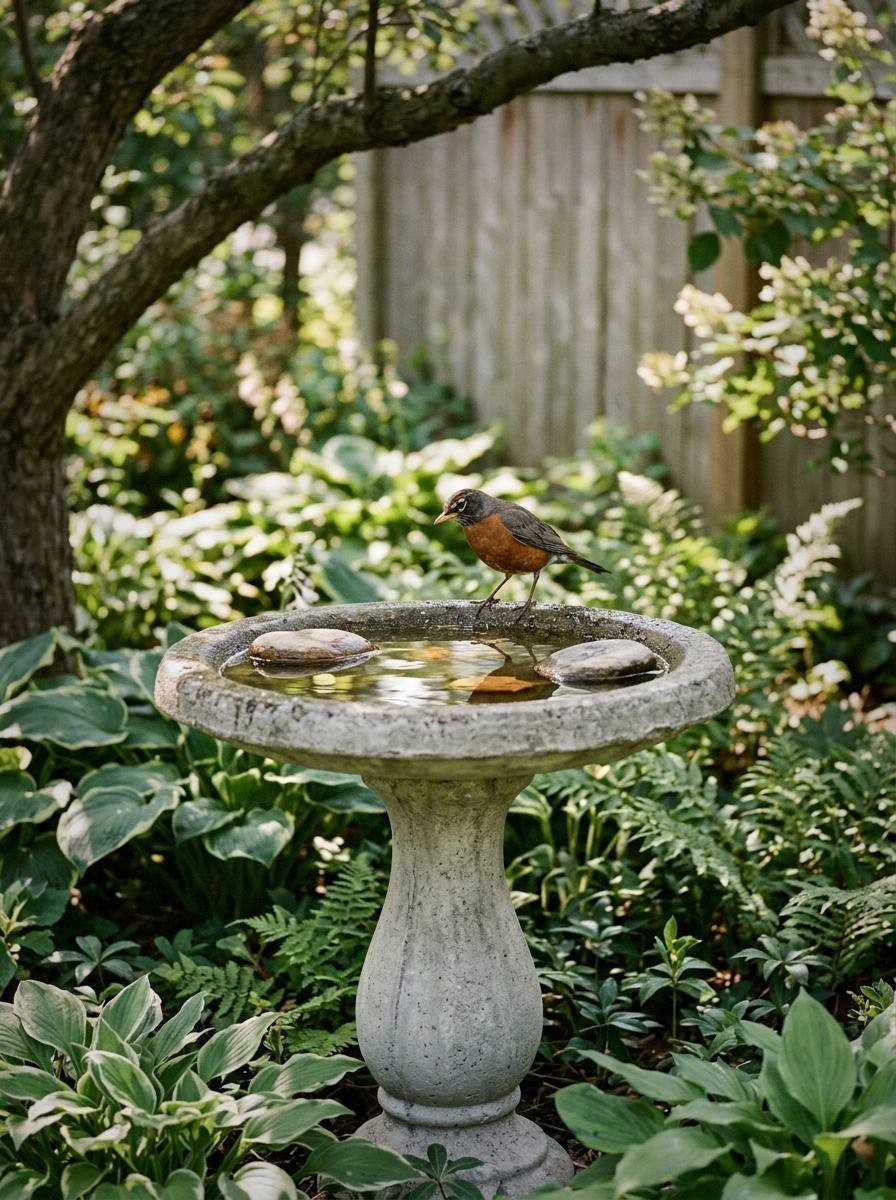
Put a bird bath near shrubs or low branches, in partial shade, in a spot where birds can see a cat coming. Penn State Extension gives one number: a ground bath sits about 10 to 15 feet from the nearest hiding spot. Stay clear of feeders, and keep it close to a hose.
Five rules to check your own yard against:
- Escape cover nearby. Birds like shrubs or low branches close enough to perch on and dart into if a hawk shows up, so they can drink and bathe without feeling exposed. Predation is the main reason a bath sits empty.
- Partial shade. A shady spot keeps the water from overheating in summer and slows algae.
- Open ground for a ground-level bath. Set it 10 to 15 feet from the nearest hiding spot so birds can see a cat approaching.
- Not under a bird feeder. Food and droppings dirty the water, and that means more scrubbing.
- Within reach of water and a brush. If cleaning means moving furniture or dragging a hose through a bed, pick a simpler spot.
Look at the spot from ground level as well as from your window. These placement mistakes help you check it from a bird’s point of view.
Above-ground or ground-level bird bath?
Penn State Extension says feeder birds such as chickadees, house finches and tufted titmice are most likely to use an above-ground bath. A ground-level bath may draw less common species because it looks more like a natural stream or pond, and it also gives chipmunks and squirrels a drink. Having both gives the widest variety.
How to make a bird bath
You do not need to buy one. The National Wildlife Federation says you can set large plant saucers or ceramic bowls on tree stumps, logs, or large pots filled with soil for stability. Add a few small rocks for footing and keep the water shallow.
Make the routine small enough to keep
Change the water every day if you can; Penn State Extension says daily changes in summer also keep mosquito larvae from hatching. Replace it sooner when it is visibly dirty. Empty the basin rather than topping up old water. Check small bowls more often during heat or windy weather.
Audubon recommends scrubbing with nine parts water to one part vinegar, and avoiding synthetic soaps and cleansers. Rinse the basin thoroughly before refilling. Follow the bath manufacturer’s care instructions, especially for finishes, pumps and heaters.
Scrub the basin with a brush once a week to remove algae; Penn State Extension suggests mild soap and water, and Audubon’s vinegar mix above works too. Keep a brush for the bath beside your garden supplies. Clean stones and any removable parts too. If local wildlife authorities issue disease guidance, follow that advice; an ordinary cleaning routine is not a substitute for an outbreak notice.
Make a place to watch the bath
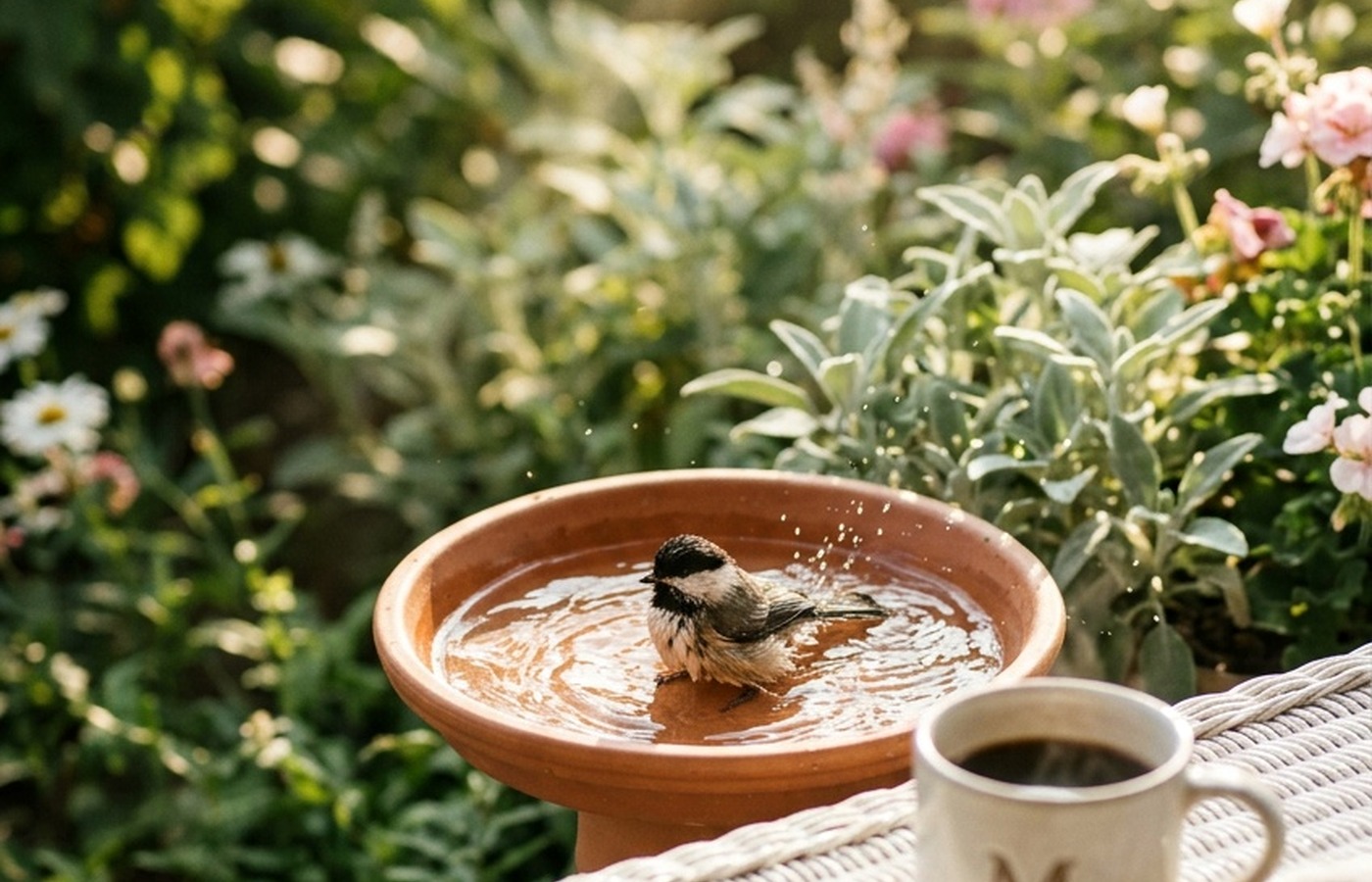
Choose a chair or window for birdwatching, where you can see the water without moving closer to the birds. Use a steady surface for your cup. Keep the bath in its safe, accessible spot and move your seat to improve the view.
Spend a few quiet minutes there when you make coffee, if that fits your morning. Check the water on the way, using the care routine above. A chair you already own is enough; there is no need to set a twenty-minute timer.
Watch from the same place on several days. If you want to keep notes, record the time, the birds you can identify and whether they drink or bathe. Visits will vary. As leaves fill out or the sun shifts, adjust your seat if the view becomes blocked or uncomfortable.
Add movement only after the basics work
Cornell suggests dripping water as one way to make a bath more attractive. Penn State Extension describes a simple dripper: puncture a small hole in the bottom of a plastic soda bottle or milk jug, fill it, and hang it above the bath so it drips in. It needs refilling every day. Place it where it cannot fall into the bowl or obstruct birds, and monitor how quickly it empties. Penn State Extension also mentions a hose mister, which hummingbirds like to fly through.
A fountain brings extra work: pump cleaning, suitable water depth, a power source and, for many solar pumps, changing performance with sunlight. It still needs fresh water. Read the bird-bath fountain comparison before adding equipment to a setup that already needs attention.
Plant around the bath without crowding it
Leave room to lift the bowl out and stand beside it with a brush. Put taller plants behind that working space, rather than leaning stems over the water. Choose native plants suited to your region, light and soil through Audubon’s native-plant database.
The bath can be part of a planted corner, but it should stay accessible as plants mature. A plant’s nursery size is not its final spread. For a larger project, seven backyard corner ideas helps you fit water, planting and a seat into the same yard.
Keep winter care realistic
Check whether the basin can tolerate freezing. Cornell warns that concrete may crack in freezing weather. A removable bowl that can come indoors is useful if its manufacturer does not recommend leaving it out.
Is a heated bird bath safe for birds?
Yes, when the heater is made for bird baths. Penn State Extension lists heated baths, submersible heaters and solar heaters (which only work well in sun), and the plug-in types need a nearby outlet. Our heated bird bath guide compares wattage and safety.
If you choose a heater, use one designed for the bath and follow its electrical instructions. Never add antifreeze or glycerin to the water. You do not need to keep an ordinary summer bath running through every winter condition.
Questions before buying
Is a taller bath better?
Height can make a bath easier for you to see or service, but it does not establish bird preference or predator protection. Penn State Extension suggests an above-ground bath for feeder birds and a ground-level one for variety. Compare the actual bowl, base and surrounding cover. Try a shallow ground dish if your existing pedestal is being ignored.
Can a deep bowl be made usable?
Stable stones can provide places to stand, but they do not turn steep sides into a gentle slope. Measure the water around them, avoid loose stacks, and choose a shallower bowl if you cannot provide safe access.
How long until birds use it?
None of the sources we read gives a firm number of days. Birds find a bath faster when it has shallow water, rough footing, a safe spot and some moving water or sound. If birds approach and leave, recheck depth, footing and nearby hiding places before ordering more accessories.
For different layouts using the same basics, see seven bird-bath setups and five basin styles for a backyard corner.