A Zone 7 butterfly garden needs suitable caterpillar host plants as well as flowers for adult butterflies. Zone 7 describes winter cold; it does not establish native range, one soil type or a single planting calendar. Start with Xerces regional plant resources, then check the actual species and site.
Zone 7 Butterfly Garden Plants: 12 Candidates by Season
Last updated:
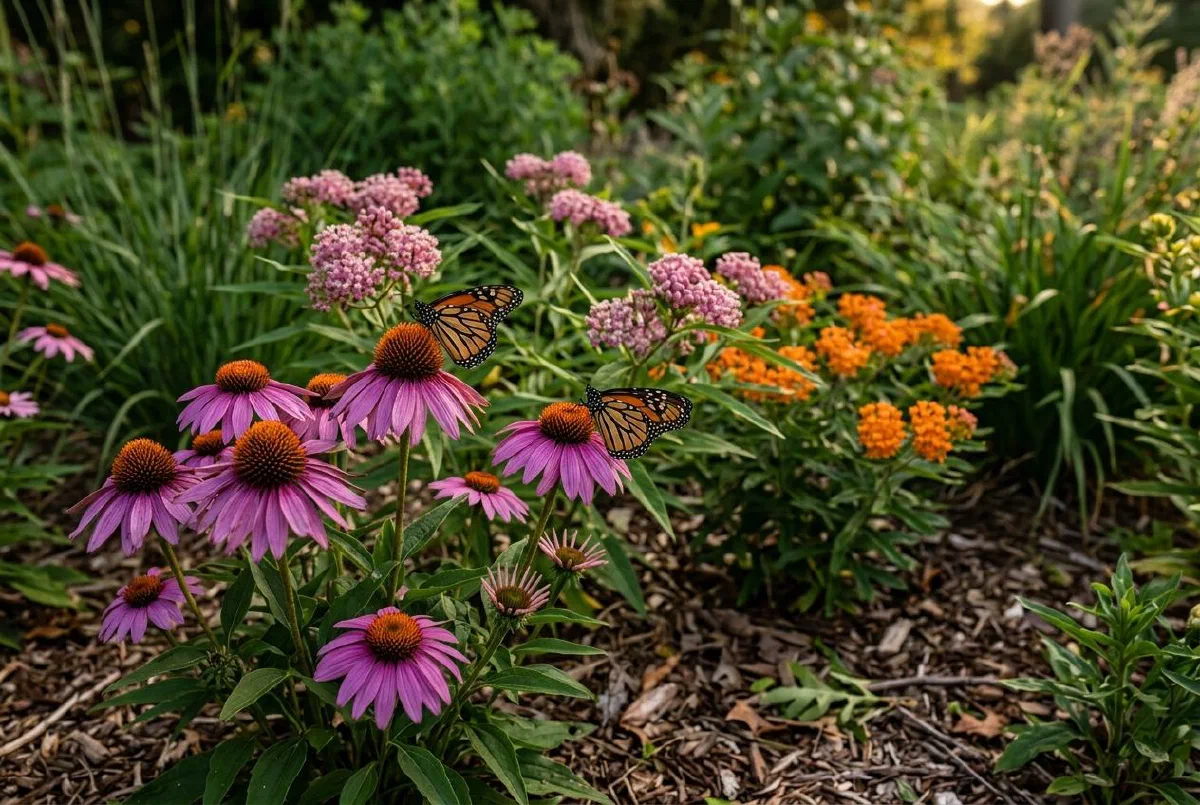
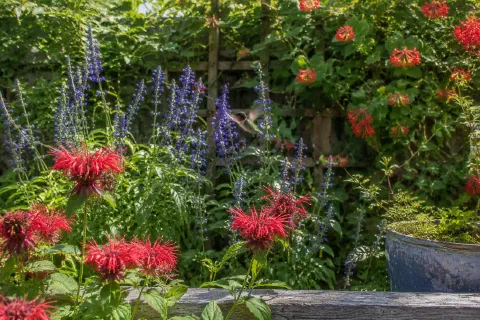
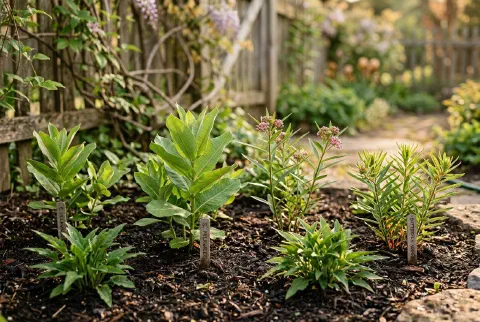
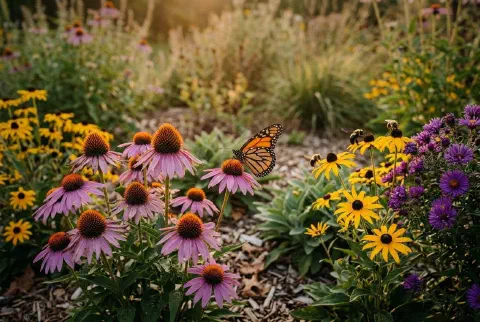
Illustrative scene, not a photograph of the linked products.
The twelve candidates below offer a spring-to-fall shortlist. Their broad seasons are supported by North Carolina Extension profiles, with links for checking each plant. Local flowering can shift, and these are choices rather than a twelve-plant shopping requirement.
Host Plants and Nectar: Compare the Roles
Spicebush and milkweed have a host role as well as flowers. Host plants need to support the particular caterpillars in your region. Choose hosts for butterflies actually found in your region, and expect some leaves to be eaten.
| Part of the plan | Useful decision | Check at the site |
|---|---|---|
| Caterpillar host | Choose a locally appropriate host species | Regional range and room for mature growth |
| Spring flowers | Include early-season candidates | Light before and after trees leaf out |
| Summer flowers | Fill the main growing-season gap | Drainage and water available during establishment |
| Late flowers | Extend flowering into the later season | Local bloom timing rather than a guaranteed October display |
There is no requirement for four plants per season or three of every host. Sketch mature widths, leave access for care, and compare actual nursery prices after the selection is made.
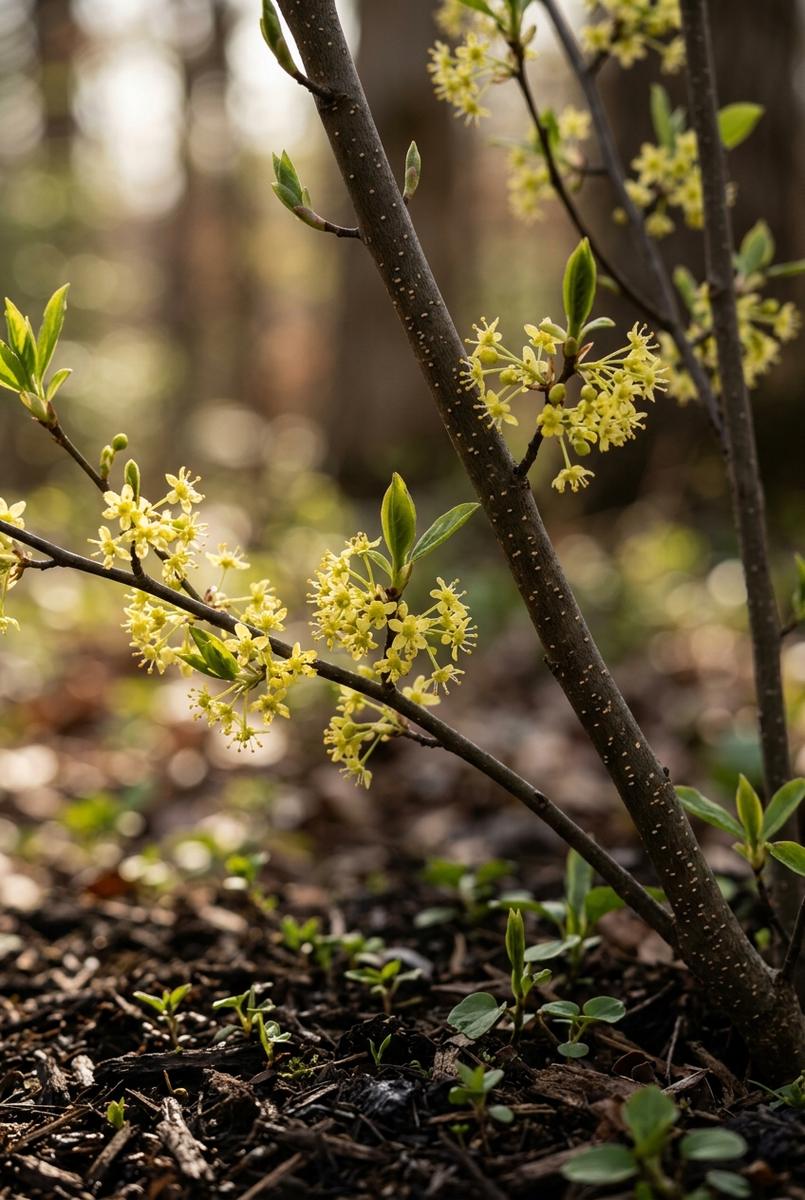
Spring Candidates: Spicebush and Woodland Flowers
Spicebush (Lindera benzoin). North Carolina Extension identifies it as a spicebush swallowtail host with spring flowers. This is a substantial shrub, not a small perennial; the profile lists a mature width of six to fifteen feet. Check room before putting it into a narrow border.
Wild columbine (Aquilegia canadensis). Its Extension profile places flowering in spring. Check the light and drainage of the intended position instead of assuming every porch-side bed is suitable.
Golden ragwort (Packera aurea). The species profile lists spring and summer flowers. Check its spreading habit and moisture requirements before choosing it to fill a small gap.
Woodland phlox (Phlox divaricata). The profile describes spring flowers and moist, well-drained shade conditions. It offers a different planting choice from a sun-loving summer border.
Summer Candidates: Milkweed and Nectar Flowers
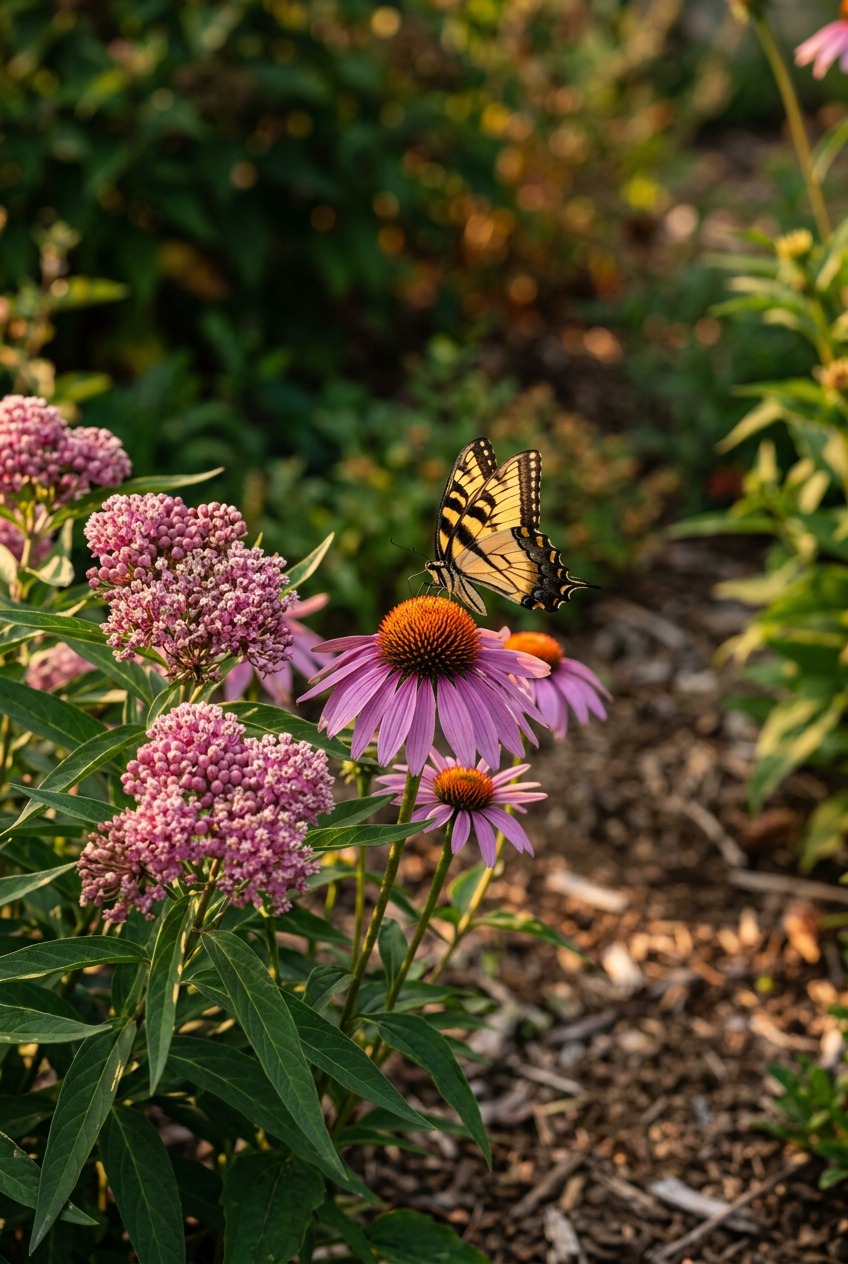
Swamp milkweed (Asclepias incarnata). Its profile identifies a monarch host suited to moist, well-drained or occasionally wet conditions. Do not treat every deep, stagnant puddle as a suitable planting site.
Purple coneflower (Echinacea purpurea). Extension lists summer flowering. Check the actual cultivar’s flower form and mature size; flower form and nursery treatment history are useful questions to ask before buying.
Butterfly weed (Asclepias tuberosa). Its profile identifies a monarch host, good drainage and difficult transplanting once established. Mark its position and avoid moving a mature plant casually.
Mountain mint (Pycnanthemum muticum). The profile lists summer flowers visited by pollinators. Allow for growth using the mature size of the actual species or cultivar.
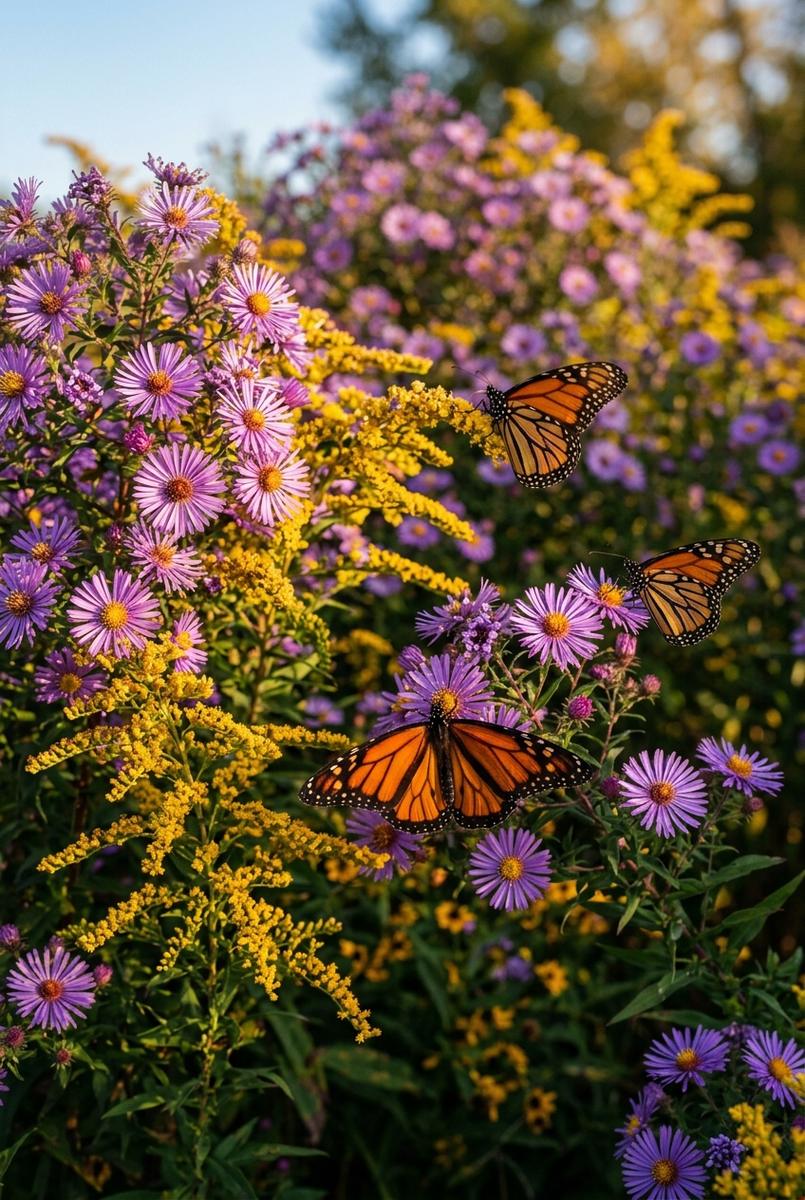
Later-Season Candidates: Aster, Joe Pye Weed and Goldenrod
New England aster (Symphyotrichum novae-angliae). Its profile lists summer and fall flowering. Choose the cultivar and support plan for the available space and follow the cultivar’s care instructions.
Joe Pye weed (Eutrochium purpureum). The species profile places flowering in summer and fall. Check the exact species; plants sold under similar common names can have different site needs.
Ironweed (Vernonia noveboracensis). Extension lists summer and fall flowers and moist-site conditions. Plan its mature footprint before adding it behind smaller flowers.
Rough goldenrod (Solidago rugosa). Its profile lists summer and fall flowering. Select the species or cultivar deliberately, and check its growth habit rather than assuming every goldenrod stays in one small clump.
Planting Setup and Care in Your Part of Zone 7
- Record sun, drainage and the usable bed area.
- Check regional native range and suitable hosts, then shortlist flowers from several seasons.
- Draw mature footprints using the actual plant labels or profiles.
- Prepare the bed for the selected plants; do not automatically mix gravel or a fixed compost depth into every soil.
- Plant when local conditions suit the species and plant size, following nursery instructions.
- Check root-zone moisture during establishment and adjust to rain and heat. Use the actual soil moisture and weather to guide care.
- Record flowering gaps and add suitable plants next season rather than promising continuous bloom from the list alone.
Inspect milkweed for eggs and caterpillars before intervening against insects. Avoid routine spraying; diagnose a problem and consult local Extension advice where needed. Identify plant problems before treating them, and avoid assuming that beneficial insects will arrive on a schedule.
Can These Plants Grow in Pots or Shade?
Use a container only if its root space, drainage, support and water needs fit the actual plant. One fourteen-inch pot is not a universal answer for all twelve candidates. For a shaded bed, begin with the appropriate woodland profiles and the shade-corner guide.
Are All Twelve Native to Every Zone 7 Garden?
No. These candidates include species associated with eastern or central North America. Zone 7 also occurs in other regions. Use regional lists and local advice before buying, and replace unsuitable candidates with locally appropriate hosts or nectar plants.
Supplies for the work you will actually do
Buy plants locally where you can check their exact species and condition. For establishing and caring for your selected host and nectar plants, compare these supplies only if you do not already have an equivalent:
| Supply | Useful job | Check before ordering |
|---|---|---|
| Fiskars three-piece hand-tool set (opens Amazon in a new tab)As an Amazon Associate, we earn from qualifying purchases. Full disclosure. | Trowel, transplanter and cultivator for small planting and maintenance jobs | Hand tools do not replace the equipment needed to excavate or reshape a large bed. |
| Giftsfaloy 2-gallon watering can (opens Amazon in a new tab)As an Amazon Associate, we earn from qualifying purchases. Full disclosure. | Carry water to new plants when the hose does not reach | Consider the filled weight and use the spout or rose suited to the plant. |
| KVR folding kneeler and seat (opens Amazon in a new tab)As an Amazon Associate, we earn from qualifying purchases. Full disclosure. | A place to kneel or sit during work beside the bed | Follow the load and locking instructions. Use level, firm ground, never a sloping or muddy basin. |
All three were in stock on October 11, 2026. These solve separate jobs, so there is no forced budget-to-splurge ranking. Skip any supply that does not make your own work easier.
What to Read Next
- A wildflower seed mix brought the butterflies back if you would rather start a patch from seed than buy twelve pots.
- Native plants for wildlife habitat for the birds, bees, and moths that use the same bed once it fills in.
- Plants hummingbirds visit every day for a separate shortlist suited to the same region and planting conditions.
- Start a wildflower garden from seed in 5 easy steps for the sowing method if a whole bed feels like too much at once.
- Monarch garden plants for spring helps you choose milkweed by region.