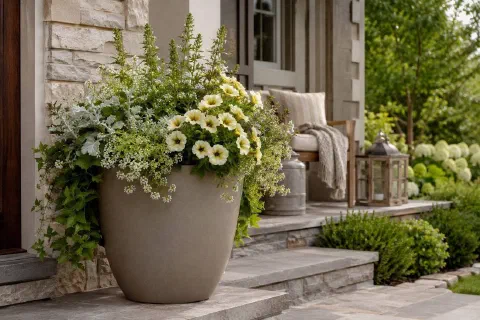
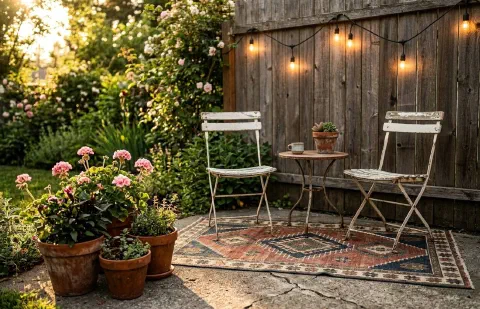
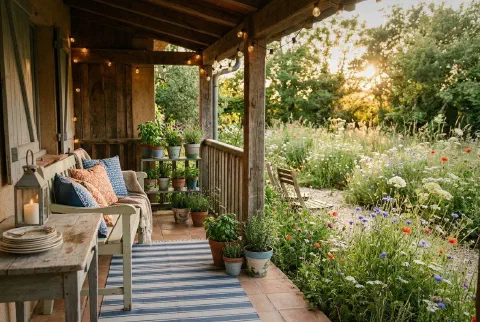
Cheap porch pots look more deliberate when their sizes, finishes and planting work together. Choose containers that fit the plants first, then repeat one finish across the group. Leave room for drainage and the door swing. A plain nursery pot inside a suitable outer planter is often easier to maintain than a complicated homemade container.
Cheap Porch Pots: 5 Ways to Make a Matching Group
Last updated:
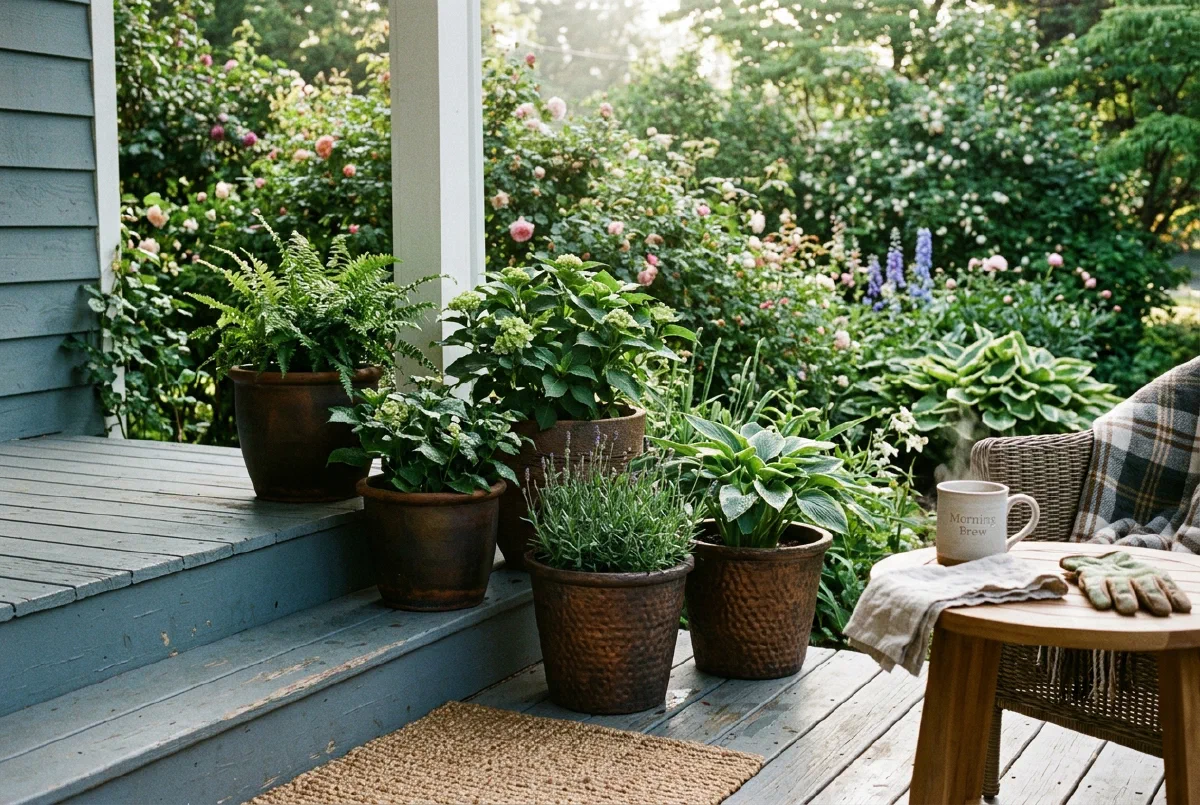
Illustrative scene, not a photograph of the linked products.
Start with two or three pots rather than filling every step. One taller container beside a lower one gives the planting some variation without introducing several unrelated finishes.
Five container approaches
| Type | What makes it work | Practical drawback |
|---|---|---|
| Terracotta | Repeated natural clay tones suit a mixed planting | Weight, drying rate and freeze exposure need attention |
| Resin or plastic | A consistent finish can tie different sizes together | Check stability, drainage and the maker’s outdoor-use instructions |
| Metal outer planter | A simple shape adds contrast to foliage | Sun can heat the container; protect the roots with an appropriate inner pot |
| Wooden crate as an outer holder | Useful for grouping small nursery pots | Wood and trapped moisture need care; it is not automatically a planting box |
| Hypertufa | A textured handmade container with a shape you choose | Making and curing it takes planning and a reliable recipe |
1. Use terracotta as it is
There is no need to manufacture an aged surface. Brush off loose dirt, clean reused pots appropriately and let the clay provide the texture. Check whether the pot is suitable to remain outside through local freezing weather.
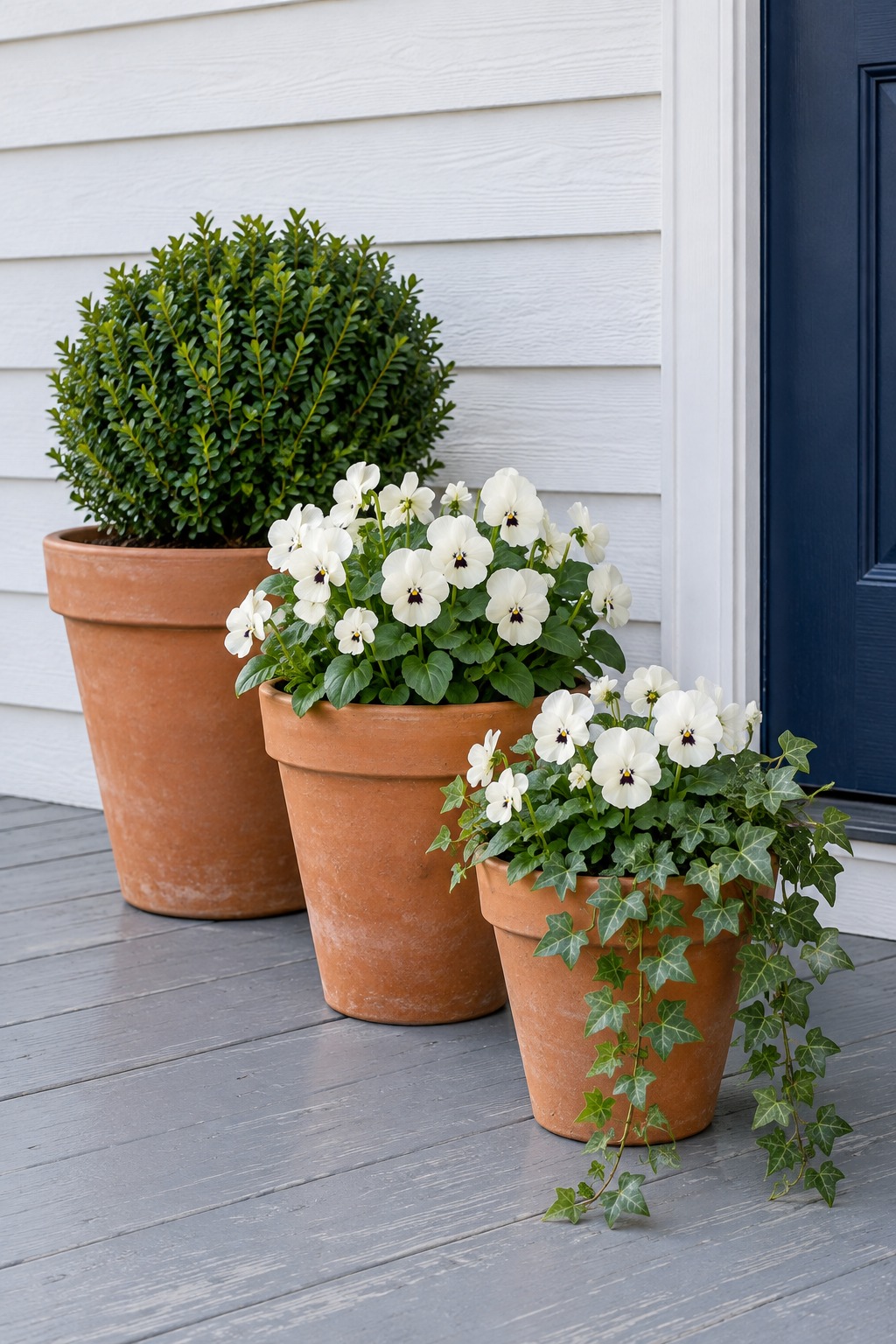
Group pots by proportion. A broad container works differently from a narrow tall one even when their listed heights match. Measure the actual planting space and check the root-ball size at the nursery.
2. Give resin pots a consistent finish
Choose a factory finish you like, or use a coating whose instructions explicitly cover the container material and outdoor exposure. Surface preparation, application conditions and curing time come from that product’s label. Do not block drainage holes or paint surfaces that the coating instructions exclude.
A single repeated finish can make a mixed set easier to arrange. Test a small area before committing all the pots, particularly on flexible plastic.
3. Treat metal containers as a planting system
Check whether the container is sold for direct planting or as an outer holder. An inner nursery pot can make seasonal changes and drainage checks easier. Empty collected water rather than leaving roots standing in it.
Avoid turning any random bucket into a planter without considering sharp edges, drainage and its coating. In strong sun, check the growing conditions at the roots instead of choosing by appearance alone.
4. Put nursery pots inside a wooden holder
A crate can group several pots, but it needs a stable location and a way for water to escape. Remove the plants for watering if the holder cannot drain safely. A liner that traps water can create a new problem.
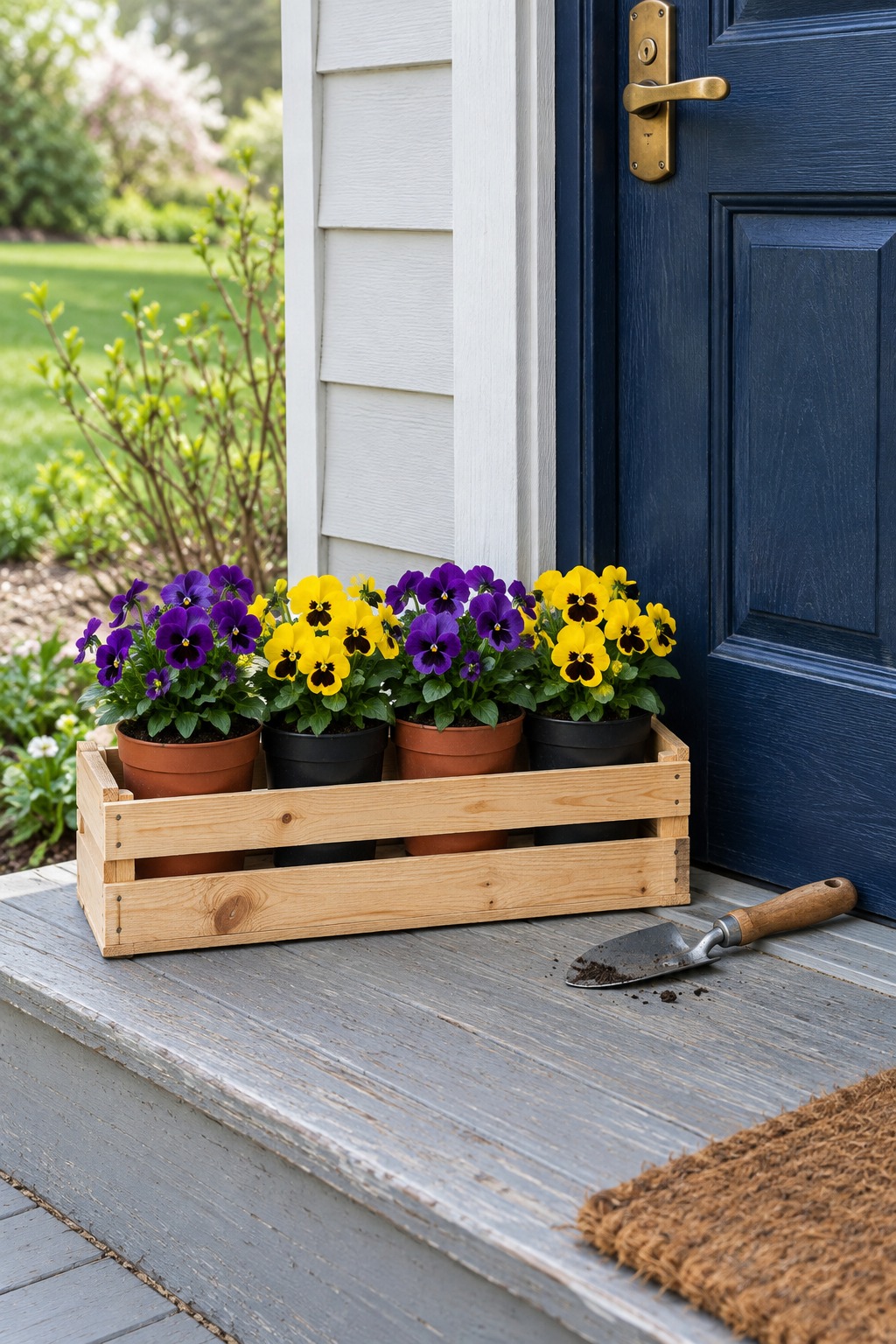
Do not assume reclaimed wood, a stain or a finish is suitable for every planting use. For edible plants, choose a container with a documented appropriate use rather than relying on appearance.
5. Plan a hypertufa project separately
Hypertufa is an option when you want to make the shape yourself. Use a reliable horticultural recipe, the stated protective equipment and its full curing instructions. It is not a same-day substitute for a container that must be planted this weekend.
If the porch needs pots now, finish the arrangement with ready-made containers. Save the handmade project for when you can give mixing, curing and testing the time they require.
Arrange the pots before planting
Set empty containers in place and open the door fully. Check the walking route, delivery space and handrail access. Keep pots off a step if they leave too little usable tread or make the route harder to see.
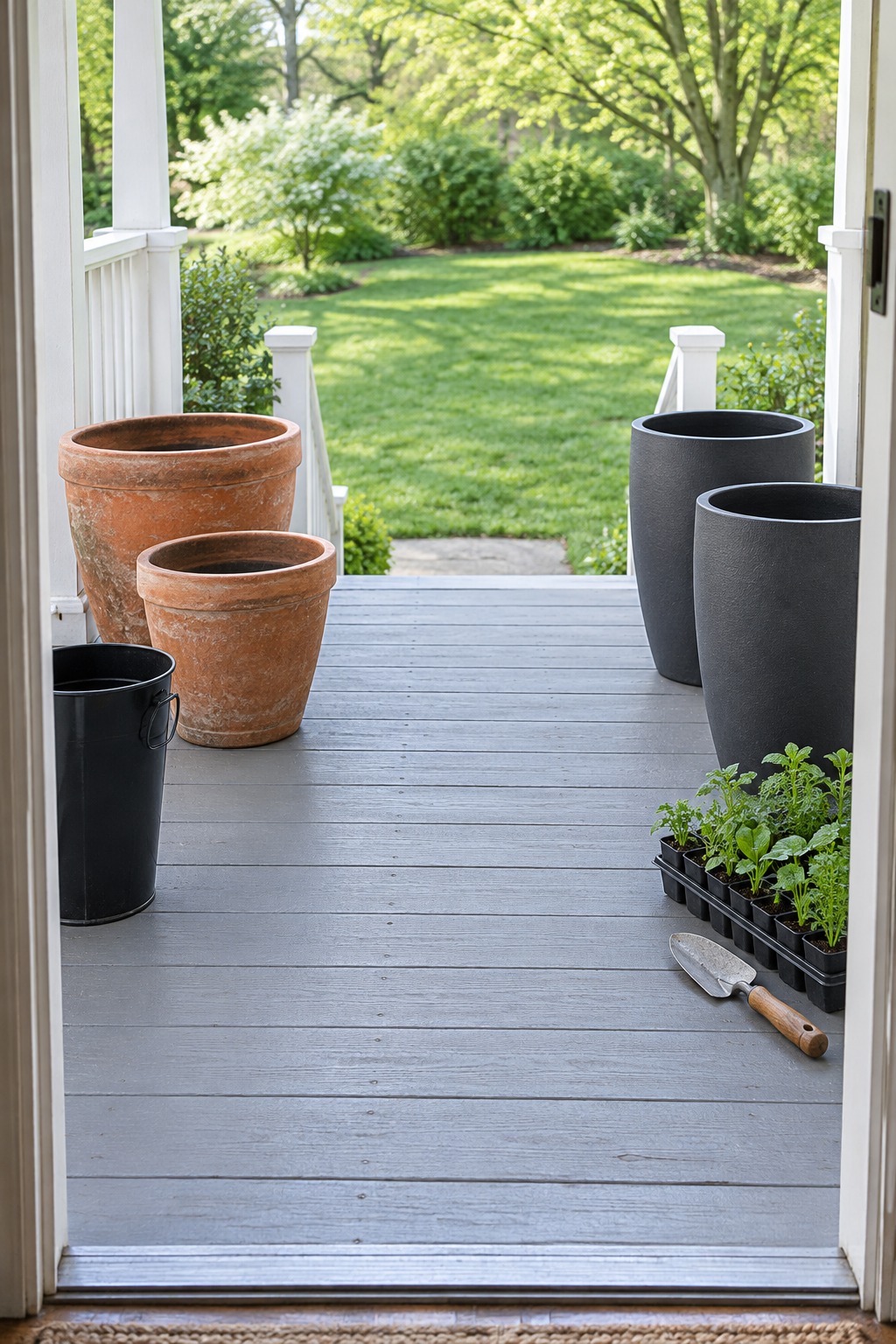
Choose a small group with different heights and repeat one material or color. Look at it from the street and from inside the doorway. If the arrangement feels busy, remove a container before buying more decoration.
Match the plants to the actual light at the porch. A plant sold for full sun will not perform the same way under a deep roof. Plants sharing a container should have compatible light and water needs.
What to compare before buying
| Current item | Why it may fit | What to measure or check |
|---|---|---|
| SnugNiture 22-inch round black planters, pair (opens Amazon in a new tab)As an Amazon Associate, we earn from qualifying purchases. Full disclosure. | A repeated tall shape beside an entry | Opening, usable soil space, drainage and stability at your site |
| Worth 9-gallon beige tall planters, pair (opens Amazon in a new tab)As an Amazon Associate, we earn from qualifying purchases. Full disclosure. | A larger planting container with a matching partner | The listed 14-inch diameter and 21-inch height, plus root-room and drainage details |
| Miracle-Gro Moisture Control mix, 8-quart two-pack (opens Amazon in a new tab)As an Amazon Associate, we earn from qualifying purchases. Full disclosure. | A container mix to compare for compatible plants | Follow the label; it does not replace checking moisture or suit every plant |
The listings were in stock on October 11, 2026. The two planter sets serve different sizes and finishes. The mix is a supply, not a third price tier.
Keep the planting presentable
Check moisture in the growing medium and water for the plants, weather and container rather than on a fixed daily schedule. Clear drainage openings, remove damaged foliage and empty standing water from outer holders. Fertilize only as the plant and product instructions call for.
When a plant needs replacing, keep the containers and change the planting. Repeating the same pot finish through the seasons can save more work than repainting everything for each holiday.
For a seasonal arrangement, see fall decor on a small porch. For a climbing plant at the entry, read star jasmine by the door before choosing the container and support.