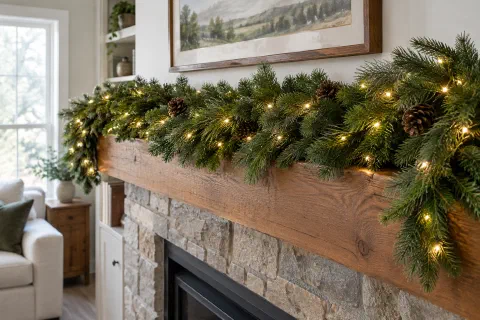
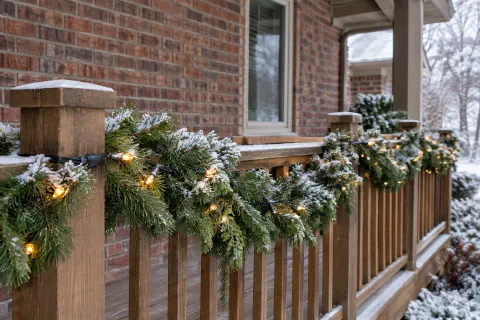
The right amount of Christmas garland is your measured run times 1.5 for a draped look, or times 2 for a full one, rounded up to whole strands. Most faux garland comes in 9-foot lengths. That means a 5-foot mantel takes one or two strands, a staircase takes three or four, and a standard door takes two or three.
Christmas Garland: How Much You Actually Need
Last updated:
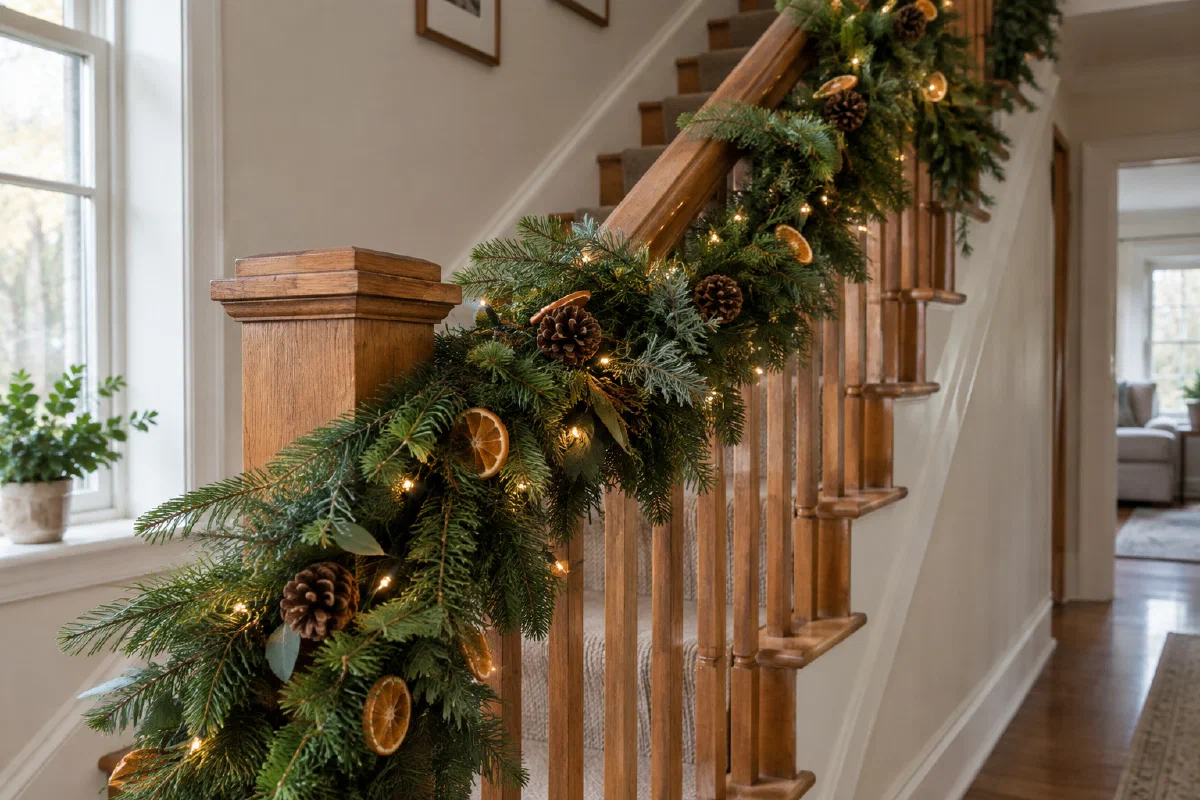
Styling idea: a layered, lit garland on a banister. Not the linked products.
Some links on this page are Amazon affiliate links. If you buy through them, Etheric Echoes earns a small commission at no extra cost to you.
How Much Garland Do You Need? The Quick Table
Measure the real run first, then use the rule for that spot. The 9-foot strand counts come from a worked guide at Decoriosity and the multipliers match what a decorating pro told Martha Stewart.
| Spot | How to measure | Garland to buy | 9-foot strands |
|---|---|---|---|
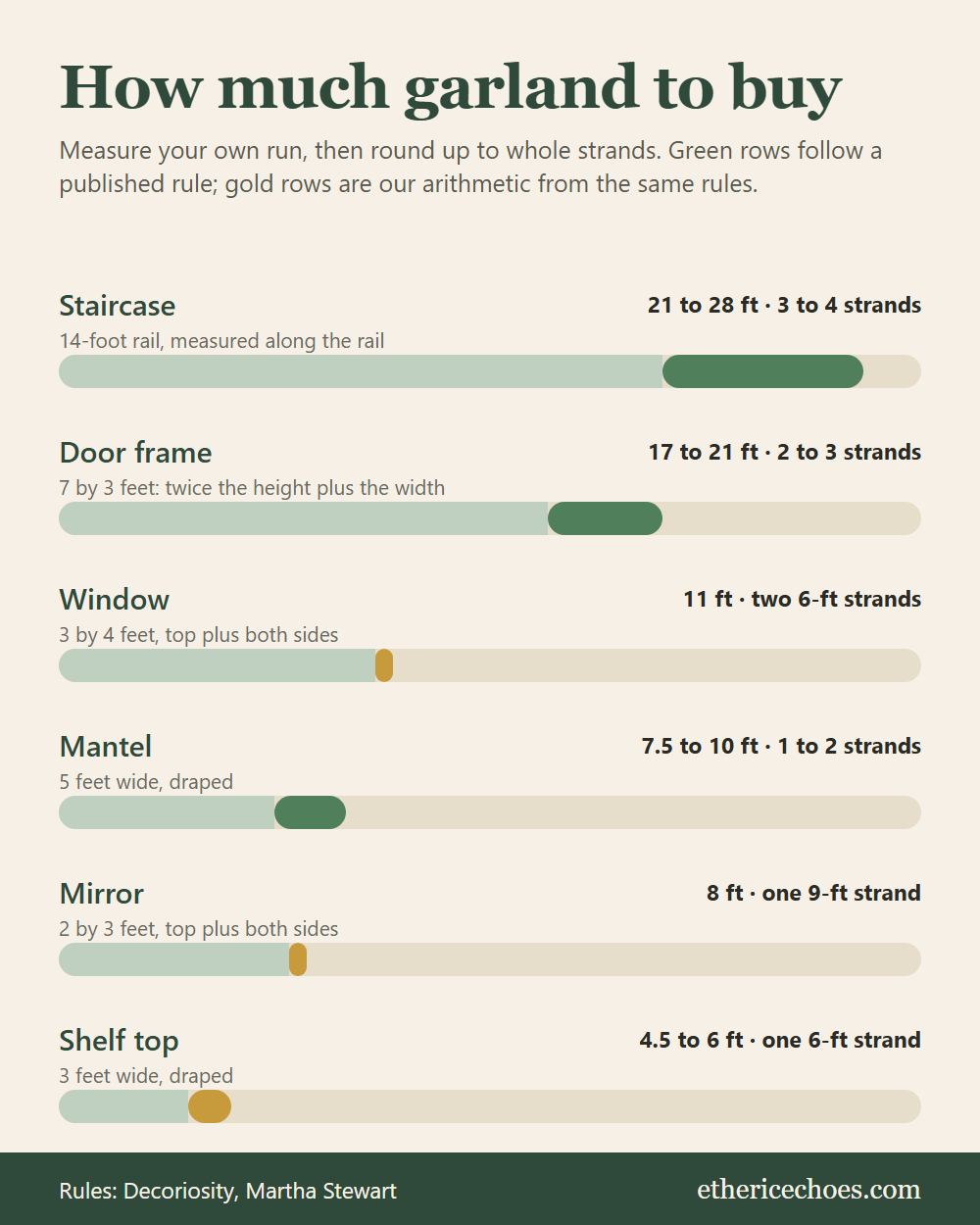
| Mantel, 5 feet wide | Shelf width, edge to edge | 7.5 to 10 feet draped, or 9 feet flat with the ends hanging over | 1 to 2 |
| Staircase, 14-foot rail | Along the rail, over each post | 21 feet neat, 28 feet full | 3 to 4 |
| Door, 7 by 3 feet | Twice the height plus the width | 17 feet, or 21 feet with a 2-foot pool each side | 2 to 3 |
| Christmas tree, 7 feet | Tree height only | 63 feet light, 84 feet full | 7 to 10 |
Fresh Christmas garland is bought by the foot, not by the strand. An artificial garland comes in 6-foot and 9-foot lengths, so divide by 6 if that is what you have.
How Much Garland Do You Need for a Staircase?
Measure along the handrail, not the floor, then multiply by 1.5 for neat swags or 2 for deep ones. A 14-foot rail needs 21 to 28 feet, which is three to four 9-foot strands. A decorator quoted by Martha Stewart gives the same range as 1.5 to 2 feet of garland per linear foot of stairs.
The floor measurement fools people. A flight that looks like 10 feet across the floor runs 13 to 14 feet along the rail once you go up and over the posts. For a quick check, count the steps and double the number. On a curve, lay string along the rail and measure the string, because a stiff tape will not follow the bend.
For a thin garland, lay two strands side by side instead of buying a thicker one. Tie the garland to the rail every few balusters with fabric ties and hide the ties under the greenery, then cover them with a bow.
How Long Should Garland Be for a Mantel?
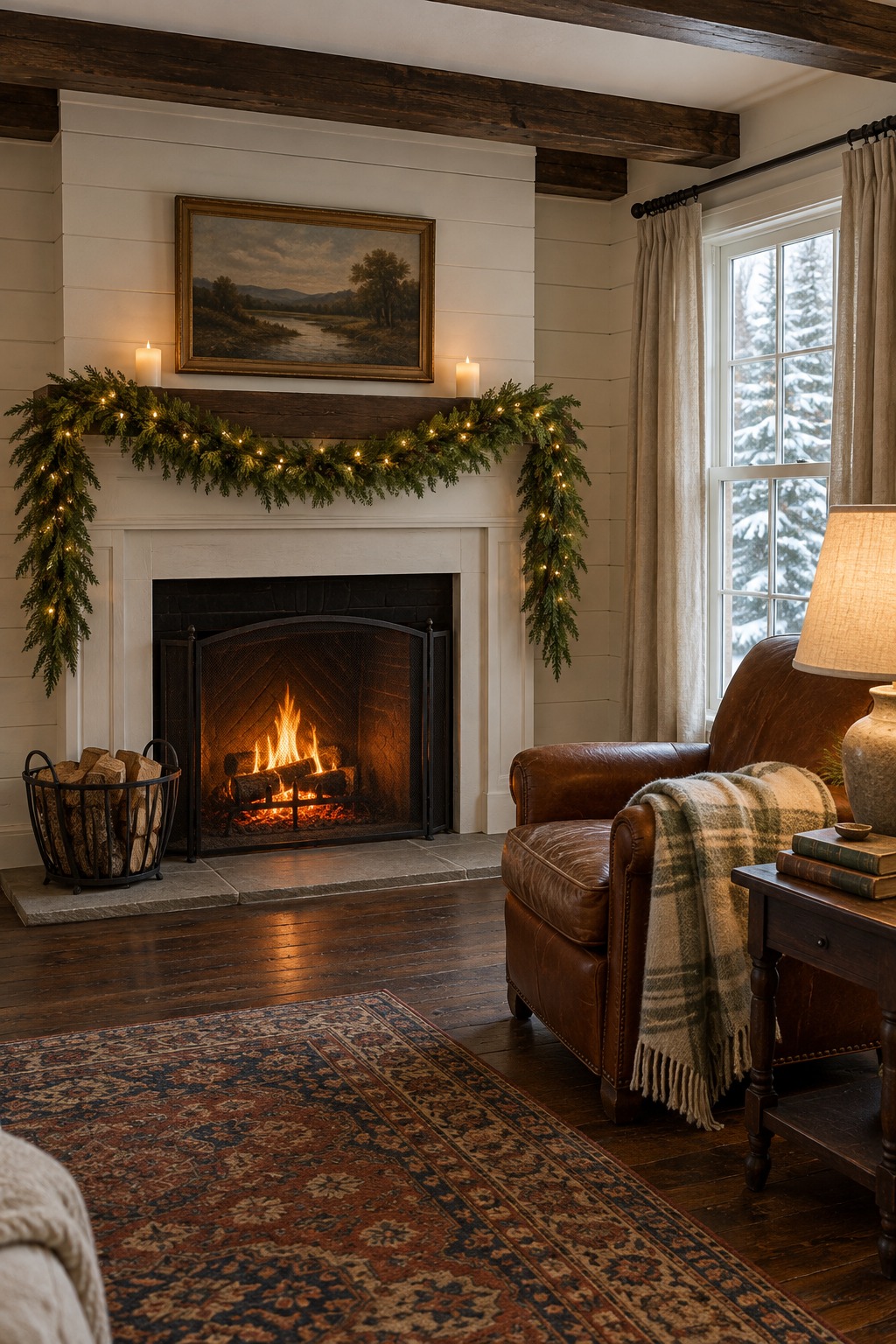
Multiply the width of a fireplace mantel by 1.5 to 2 for a draped look. A 5-foot mantel takes 7.5 to 10 feet, so one or two 9-foot strands. For a flat run with the ends hanging over, add 2 to 3 feet per side: a 60-inch mantel needs at least 9 feet, according to Decor Quarter.
Balsam Hill’s mantel guide points out that you can also go shorter with no overhang for a clean line, or longer for a lush one. On a mantel 7 feet wide or more, one 9-foot strand stops short of the drape, so join two and hide the join behind a candle group.
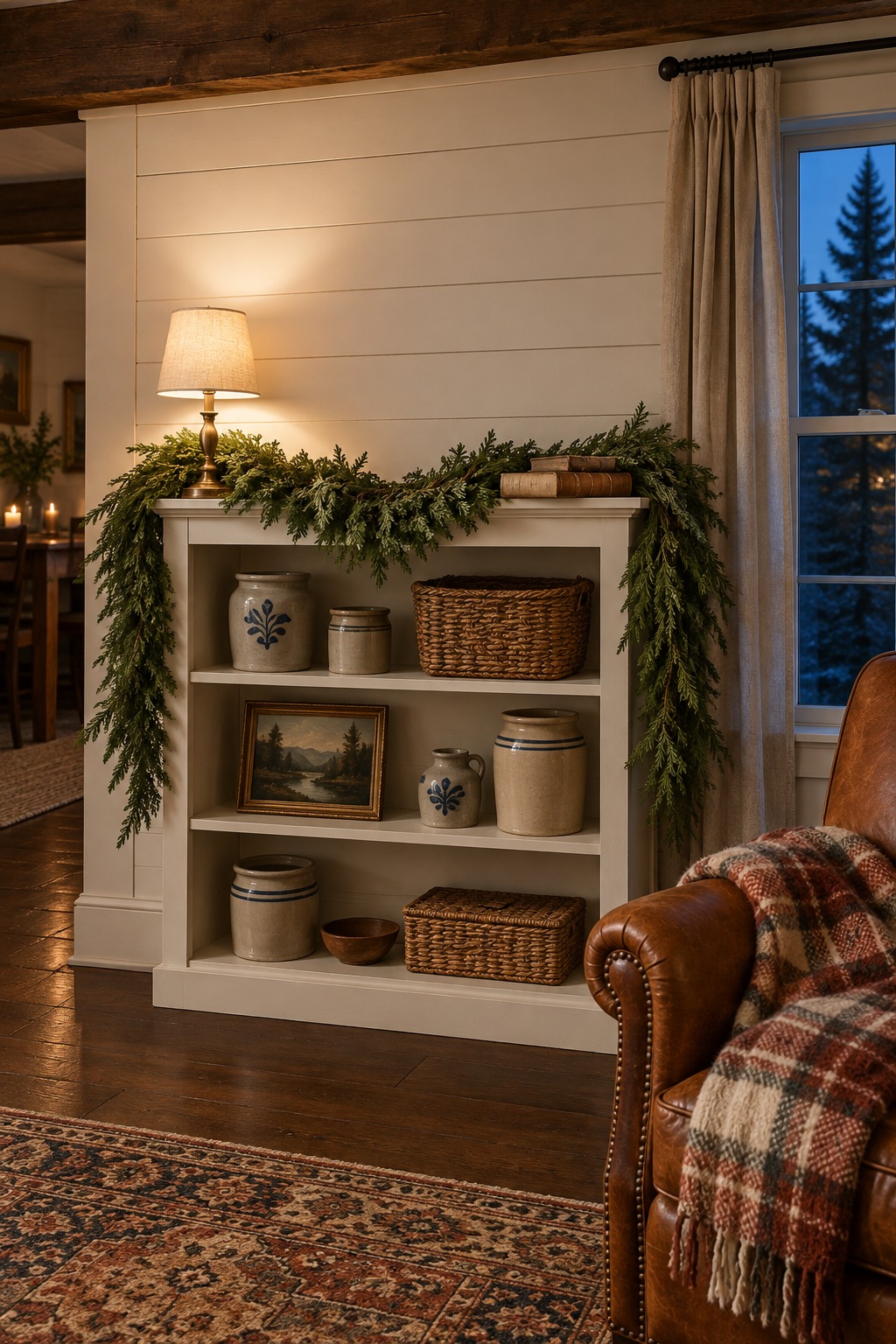
No fireplace needed. A bookshelf top, a console or a deep window ledge takes the same math.
How Much Garland Does a Door Frame Need?
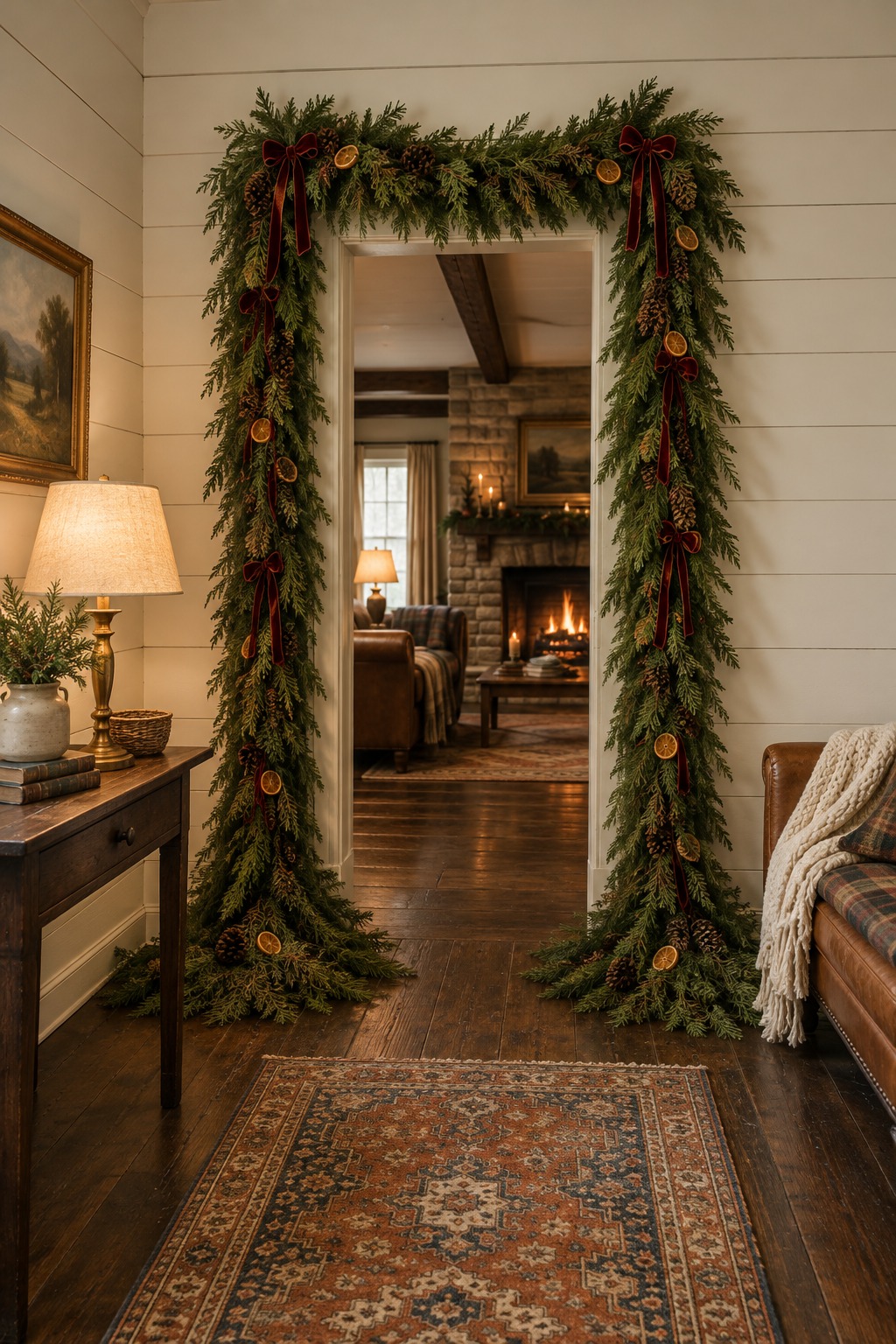
Use twice the height plus the width. A 7-foot by 3-foot door is 17 feet, or two 9-foot strands. If you want the ends to pool 2 feet on each side, plan on 21 feet, or three strands. A pro quoted by Martha Stewart hangs about 24 feet over a front door, cut in two and tied at the top center so the branches fall toward the floor. If the door already has a wreath, run the garland around the frame and leave the middle clear.
The garland run and strand planner does the whole-strand math for you. Enter your span, swag drop and end hangs, and it shows strands per layer, join overlap and excess length. If your route is uneven, lay a string where you want the garland and use the string’s length instead.
A straight 3-foot-wide doorway with a 7-foot hang on each side needs 17 feet per layer before spare length. With 9-foot strands and a 3-inch overlap at each join, two strands cover each layer: 18 feet minus 0.25 feet leaves 17.75 feet. A doubled arrangement needs 34 feet, so four strands, with 1.5 feet left over.
Where Does Garland Fit in a Small Home?
To decorate with garland in a small home, start with the surfaces you already have: a shelf top, a mirror, a window or a curtain rod. These Christmas garland ideas add holiday decor without taking any floor space. The Spruce shows garland along a shelf edge, around a mirror, down one side of a window and hung from a curtain rod, all without using floor space.
These lengths are our arithmetic from the same rules, so measure your own before you buy.
| Small spot | Rule used | Garland to buy | Strands |
|---|---|---|---|
| Shelf or cabinet top, 3 feet wide | Width times 1.5 to 2 | 4.5 to 6 feet | One 6-foot |
| Window, 3 feet wide and 4 feet tall | Top plus both sides: 2 times height plus width | 11 feet | Two 6-foot |
| Mirror, 2 feet wide and 3 feet tall | Top plus both sides | 8 feet | One 9-foot |
| Interior doorway, 3 by 7 feet | Twice the height plus the width | 17 feet | Two 9-foot |
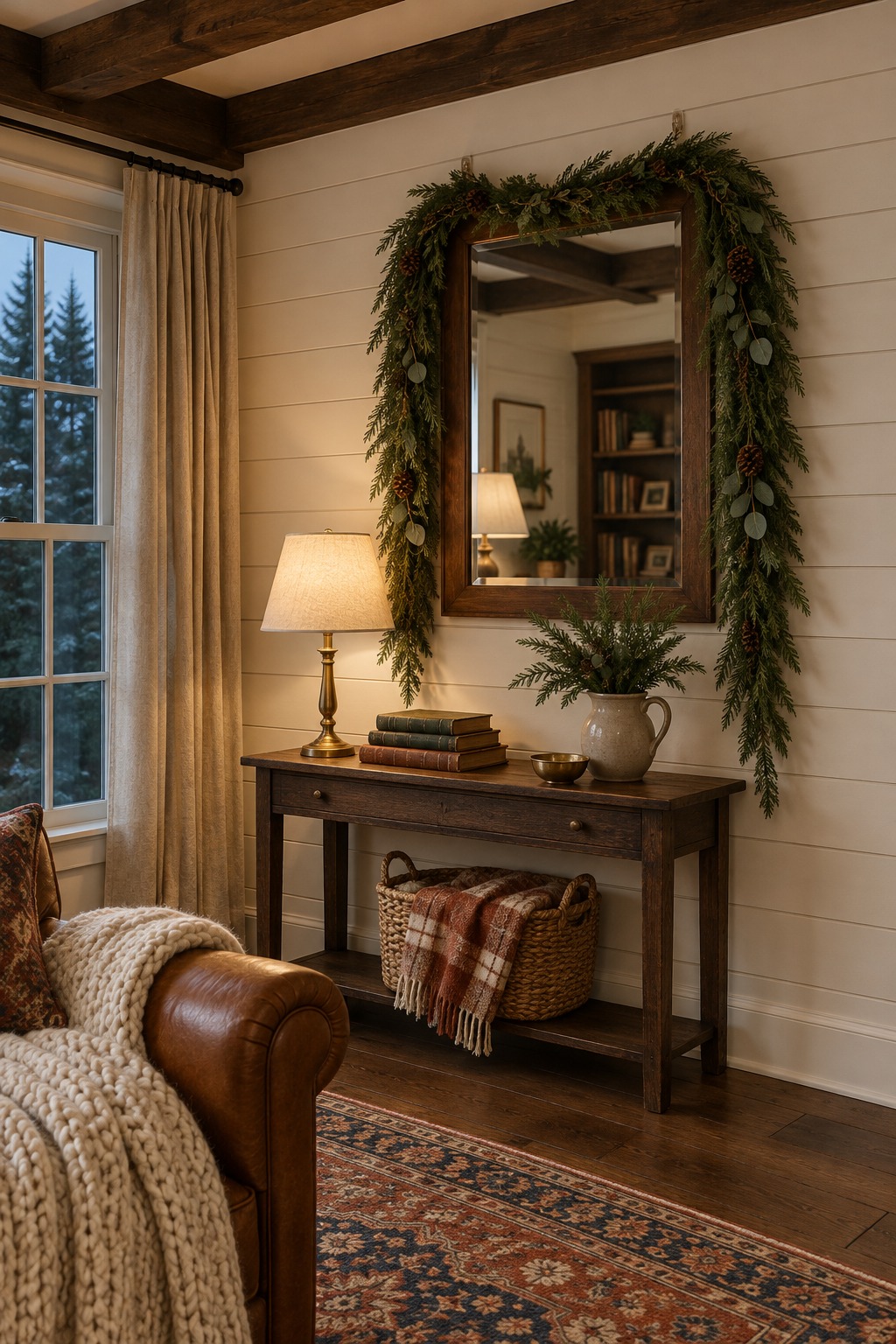
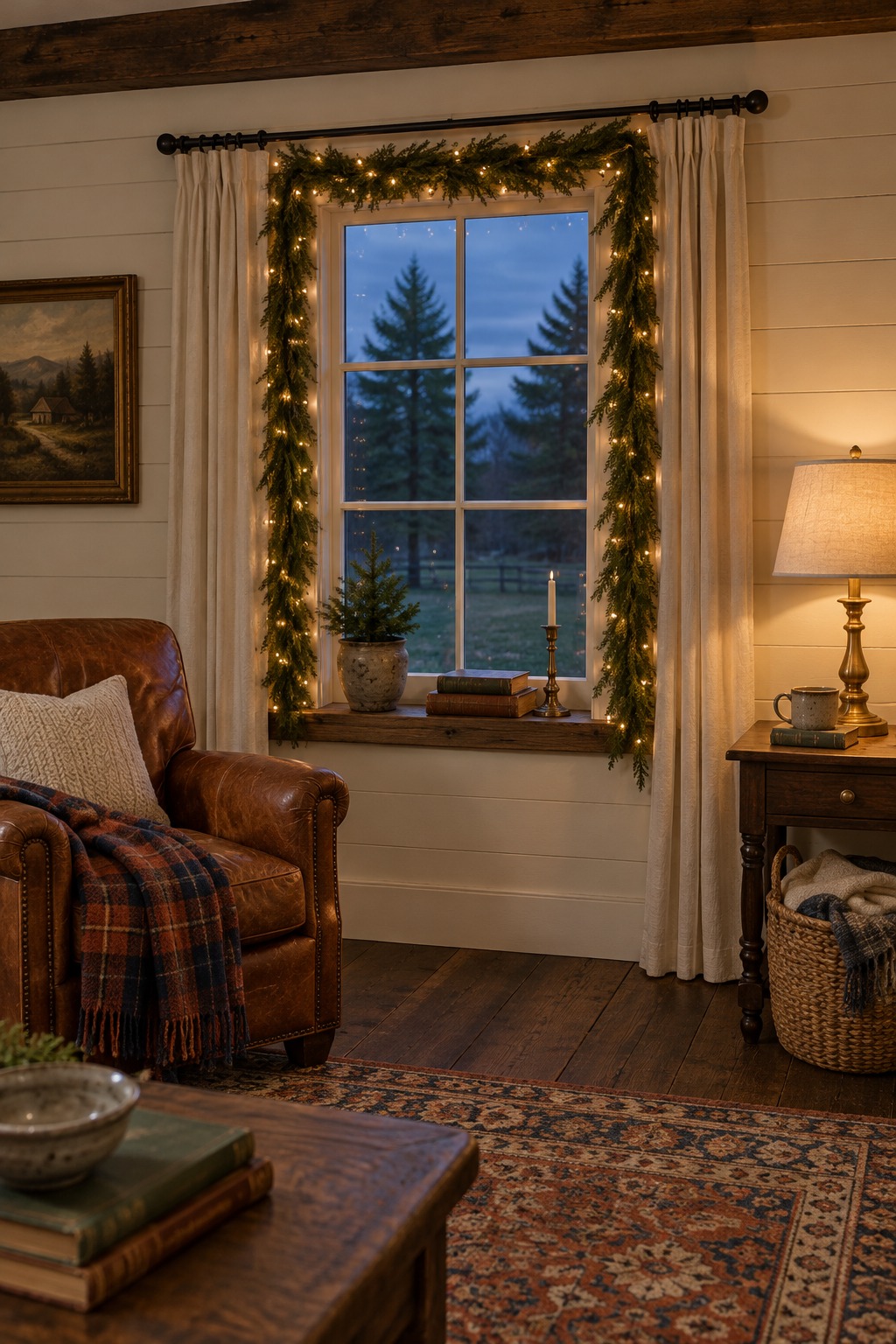
If you rent and the frame is wood, a few clear adhesive hooks along the top edge hold a light strand. The small rental bathroom guide shows this mirror treatment in a full room, and the balcony decor guide covers garland on a railing.
How Much Garland for a Christmas Tree?
Use 9 to 12 feet of garland per foot of tree height. A 6-foot tree takes 54 to 72 feet, and a 7-foot tree takes 63 to 84 feet, which is seven to ten 9-foot strands. A tree in a corner needs up to half as much, because only the front half shows. For tree ideas that fit a small room, see our small-space Christmas tree guide.
Is Real or Faux Garland Better?
Neither Christmas garland wins every time. Pick by how early you decorate and how much mess you will put up with.
| Fresh greenery | Faux garland | |
|---|---|---|
| Sold by | The foot, or in long rolls of about 25 feet | Fixed 6-foot or 9-foot strands |
| Smell | Cedar and fir make the house smell like Christmas | None unless you tuck in real clippings |
| Weight and mess | Heavier and drops needles | Light, and it does not shed |
| Cost over the years | Buy it again every season | Falls after the first year |
| Can go up in early November | Not if you want it green on Christmas Day | Yes |
Through the Christmas and holiday season, the middle path most people land on is faux for the long runs, like a stair rail, and a few fresh sprigs tucked in near a door or mantel where you can smell them. Southern Home and Hospitality suggests spritzing real clippings with water each day to keep them fresh. Keep any garland a hand’s width away from a lit candle.
How Do You Make Cheap Garland Look Full?
Fluff every tip in three directions, lay a second plain garland under it and offset the two, wire them together, then tuck in stems and lights. Sugar Design Co. walks through the full method, and the numbers below come from it.
- Fluff before you hang. Lay the strand on the floor and bend some tips up, some out toward you and some down, then a few back toward the wire spine to hide it.
- Scrunch it. Push a 9-foot strand together on 7 feet of mantel and it looks thicker than the same strand stretched to 9.
- Double it. Put an inexpensive plain strand underneath and shift the top one a few inches so its gaps land over the full spots. Wire them together every 12 to 18 inches with green paddle wire (opens Amazon in a new tab)As an Amazon Associate, we earn from qualifying purchases. Full disclosure.. Mixing two kinds of greens, like spruce under fir, reads more natural.
- Tuck in stems. Plan on 2 to 3 stems per foot, so 20 to 25 for a 9-foot strand, and make 5 to 8 of them pinecone or berry picks. Cut stems to 8 to 12 inches. These real-touch Norfolk pine stems (opens Amazon in a new tab)As an Amazon Associate, we earn from qualifying purchases. Full disclosure. come 18 inches long, so trim them.
- Add more light than you think. Many pre-lit 9-foot strands carry only 50 lights. Aim for 150 to 200 per strand and weave the cord deep, close to the spine. A set of battery fairy lights with a timer (opens Amazon in a new tab)As an Amazon Associate, we earn from qualifying purchases. Full disclosure. means no cord to hide on a mantel.
- Loop wide ribbon. Pinch 2.5-inch wired ribbon (opens Amazon in a new tab)As an Amazon Associate, we earn from qualifying purchases. Full disclosure. into a loop every 12 to 18 inches and wire it to the spine. It adds bulk and covers bare wire.
- Step back 10 feet. Up close you see branches. From across the room you see holes, so fill those last, with the lights on.
What you tuck into the gaps matters as much as how many. Mix in one shape that is not a pine needle: a few eucalyptus stems, magnolia leaf stems or a strand of beads. Dried orange slices, a conifer cone (the pinecone) and a glass ornament or two give the eye places to land. Interior design writers call this layering textures, and it is why a garland with three materials looks richer than one with more length. Keep your Christmas lights warm white so they blend with the greens, and add a ribbon bow for a festive finish.
How Do You Hang Garland Without Nails?
Use adhesive hooks rated for the weight, and spread the load. The National Tree Company strands above weigh about 2 to 3 pounds each, and the listing for Command medium clear hooks (opens Amazon in a new tab)As an Amazon Associate, we earn from qualifying purchases. Full disclosure. says each holds up to 2 pounds. So use four or five hooks along a mantel, not two. Command also makes a garland holder (opens Amazon in a new tab)As an Amazon Associate, we earn from qualifying purchases. Full disclosure. with strips, and its listing says not to use it on wallpaper.
On a mantel, tuck hooks under the front lip and loop floral wire around the garland and the hooks. On a banister, fabric ties or zip ties every couple of feet do the job, and a bow covers each one.
Garland Styling Mistakes and the Fix for Each
- Pressed flat to the wall. Greenery needs air behind it. Pull the run an inch or two proud with a longer hook.
- Two garlands in one view. Pick one hero run per room. If you can see two without turning your head, move one.
- Too many greens. Pick two. A third kind, like blue-toned cedar, is usually the one that fights the rest.
- A garland across the best thing on the wall. Run it around a mirror or window and keep the middle clear.
- Ribbon that looks like string. Use ribbon at least 2.5 inches wide on a full strand, cut the tails on a diagonal and loop it at the anchor points.
- Lights judged in store light. Plug the strand in at home, at the hour you use the room, before you redo anything.
- Garland that fights the room. Plaid ribbon suits a rustic wood shelf. A white or gray room takes a little sparkle instead: silver beads, frosted tips or a warm string of lights. For more decorating ideas, match one material in the room.
- Mismatched ends. Whatever you do at the top of a staircase, repeat at the bottom.
Getting It Up in One Afternoon
- Measure every run and write the numbers down before you buy.
- Divide by 9 and round up. When the number lands right on the line, buy the extra strand.
- Fluff or double the strands on the floor, not on the ladder.
- Hang the hooks first, then the garland, then the lights, then the extras.
- Stand in the doorway and fix the gaps you can see from there.
The Christmas garland that looks expensive is rarely the pricey one, and the warm glow of lights woven in does more than extra length. It is the one that was measured, doubled and woven. For the rest of the room, start at our small-space Christmas decor guide.
What to Read Next
- Christmas mantel decor for when garland is only the bottom layer of the mantel.
- Christmas card display ideas for a small home because cards tuck neatly into a garland run.
- Christmas front door decor for the door itself, since a door and its frame want different treatment.
- Indoor Christmas greenery that actually lasts for keeping fresh sprigs alive indoors.
- Fall garland ideas for the same treatment in autumn.
- Christmas staircase decor ideas gives nine ideas for small stairs.