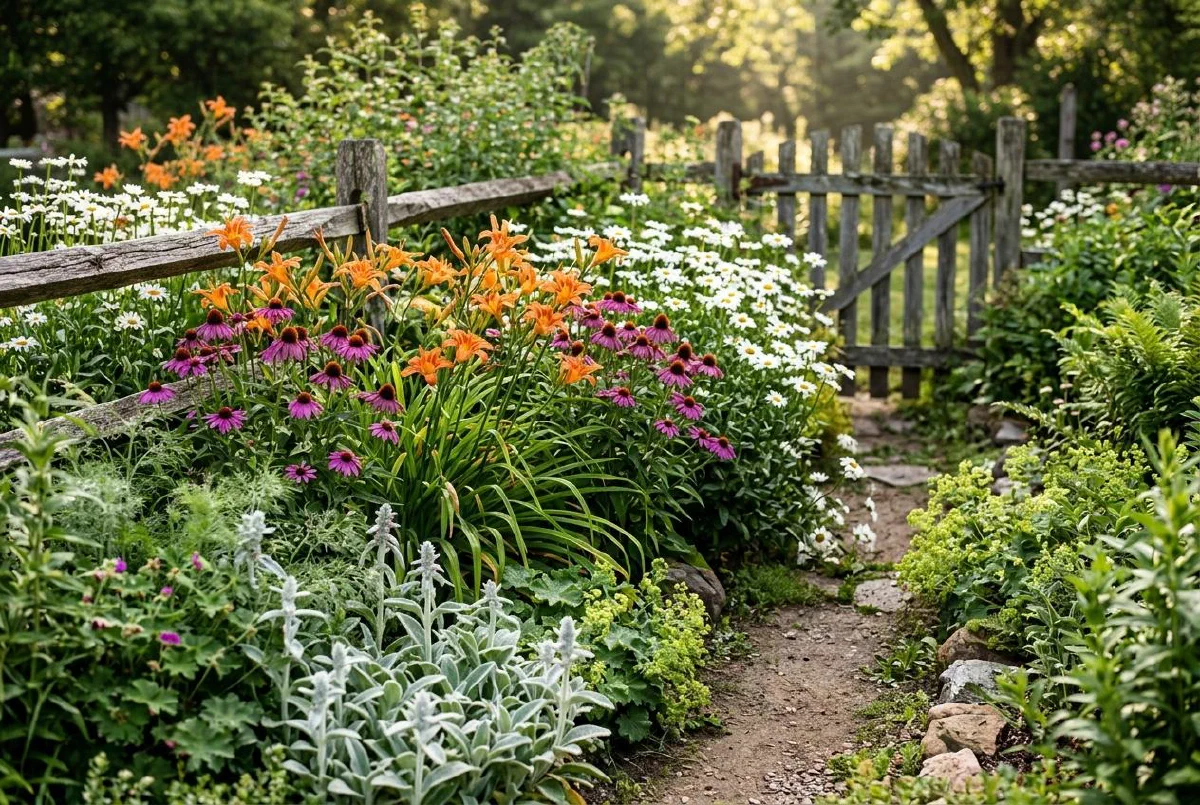
You can fill a cottage garden bed without buying a single plant. Seed swaps, divisions offered by neighbors, and authorized plant rescues stock gardens faster than most people realize. Start with a small bed and the plants available locally; tools, transport, and soil preparation may still cost money.
What You Need
| Item | Cost | Notes |
|---|---|---|
| Garden gloves | $0 (reuse old pair) | Any work glove works |
| Trowel or spade | $0 (borrow) | For digging divisions |
| Paper bags | $0 | For seed collecting |
| Cardboard boxes | $0 | For transporting divisions |
| Compost (optional) | $0-12 | Municipal programs often free |
Most cottage garden plants are perennials that divide easily. Availability depends on local gardeners and programs, not a hardiness-zone boundary.
Source 1: Neighborhood Plant Swaps
Join local garden groups on Facebook or Nextdoor. Spring and fall swaps happen in most suburbs. Ask for the plant name, mature spread, and any known pest problems before accepting a division.
Bring divisions from your own yard to trade. If you’re starting from scratch, bring seed packets (even store-bought ones) or offer to help someone dig their divisions.
Best months: April-May and September-October in Zones 5-7.
Source 2: Authorized Garden Rescues
Ask a homeowner or community garden coordinator whether plants are being removed during a bed redesign. Get permission before digging, identify the plant, and check its local invasive status. Public ownership or roadside access is not permission to collect.
Skip unidentified roadside plants. A free division is poor value if it introduces aggressive growth or a difficult weed to a small bed. Bring a container and take only the plants the owner offers.
Source 3: Seed Swaps and Seed Libraries
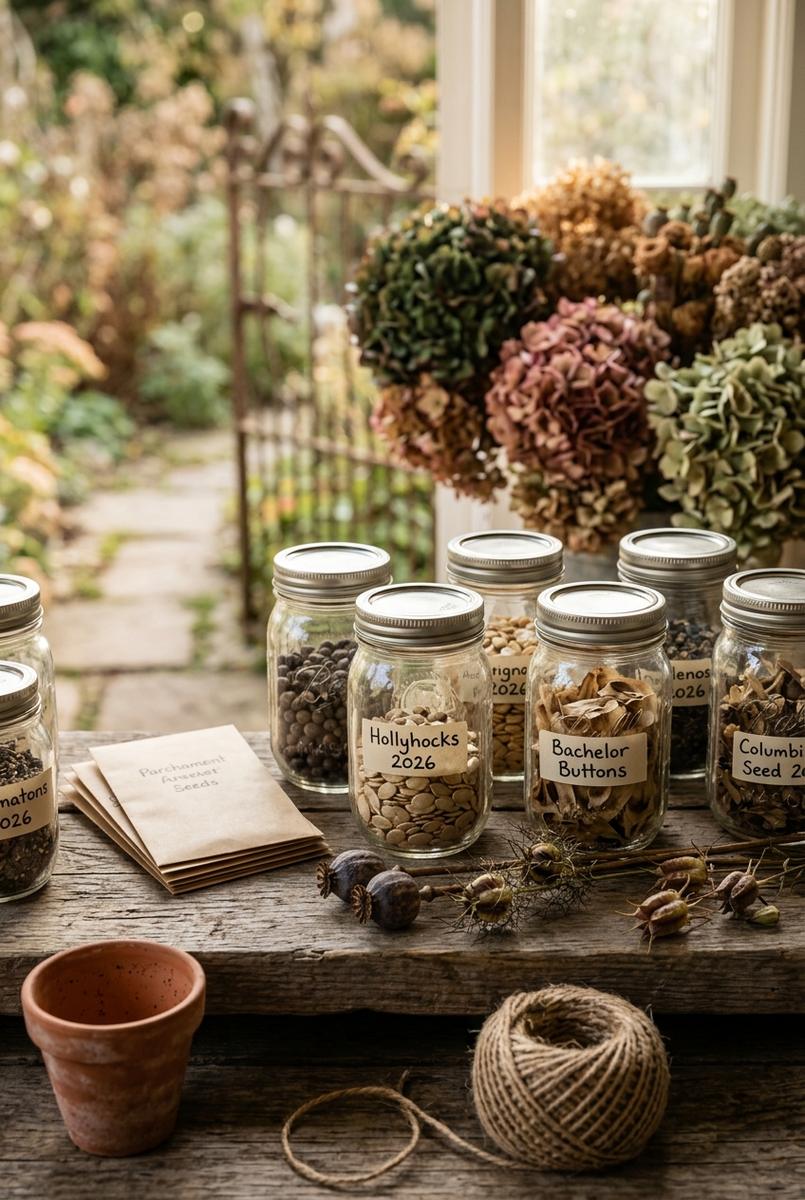
Public libraries in many states now host seed libraries. Borrow seeds in spring, return seeds from your harvest in fall. Possible cottage-garden species to ask about include:
- Hollyhocks (Alcea rosea)
- Calendula
- Bachelor’s buttons (Centaurea cyanus)
- Larkspur (Consolida ajacis)
- Nigella (love-in-a-mist)
Online seed swaps work too. Garden Web forums and r/seedswap on Reddit connect gardeners year-round.
Source 4: Divide Your Own Plants
If you have any perennials, divide them every 3-4 years. The number of usable divisions depends on clump size and the species; keep healthy roots and growth points on each piece. This is the fastest way to fill space.
| Plant | Division Timing | New Plants Per Clump |
|---|---|---|
| Hostas | Spring or fall | 4-6 |
| Daylilies | Fall (after bloom) | 6-10 |
| Shasta daisies | Spring | 3-5 |
| Bee balm | Spring | 4-8 |
| Lamb’s ear | Spring or fall | 6-12 |
Timing is the part people get wrong, and it varies by plant rather than by calendar. Iowa State University Extension puts early spring at the top of the list for hosta, bee balm, sedum, yarrow, and ornamental grasses, the moment new growth starts to appear, and notes that daylilies can be divided in early spring or in late summer into early fall.
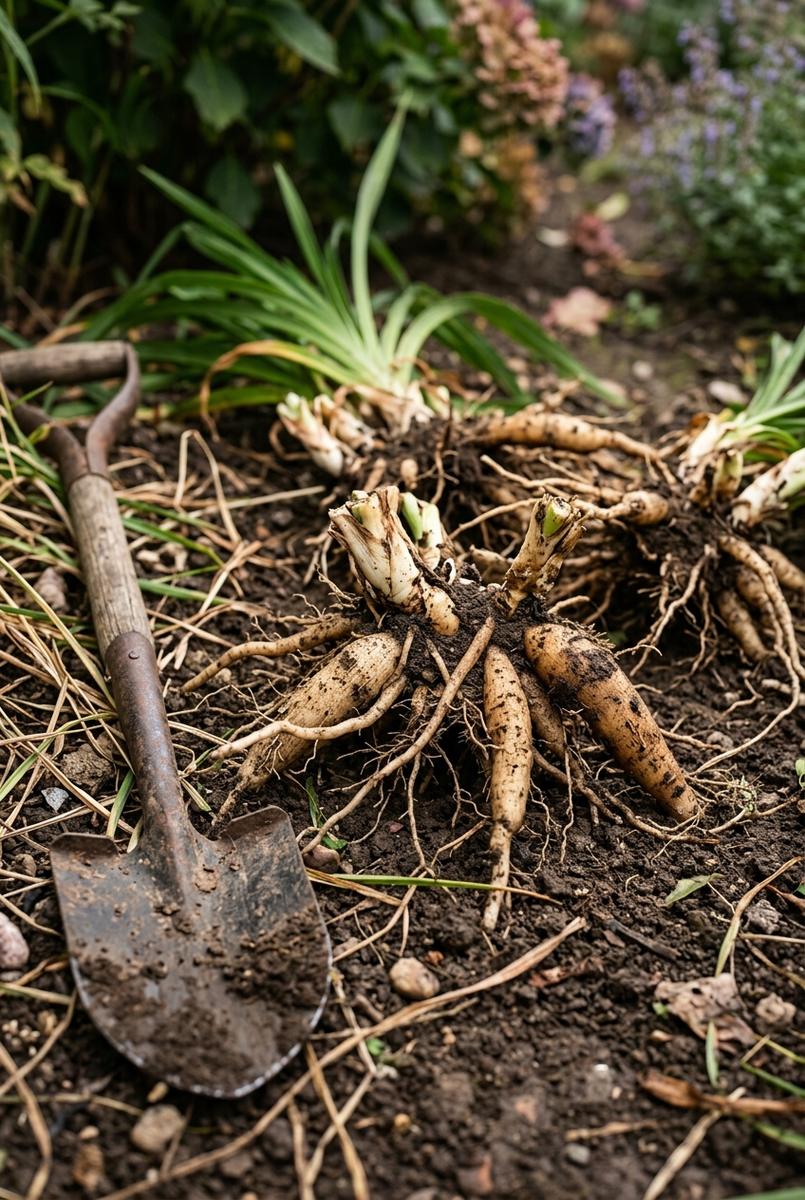
Dig the entire clump. Use two garden forks back-to-back to pry it apart, or slice through with a sharp spade. Replant divisions immediately and water well.
Source 5: Ask Neighbors for Divisions
Most gardeners divide perennials and throw away extras. Ask in spring when you see someone working in their yard. Offer to dig the divisions yourself.
Ask local gardeners about suitable divisions such as:
- Lily of the valley (Zones 3-8, spreads fast)
- Purple coneflower (Echinacea purpurea)
- Catmint (Nepeta, Zones 3-8)
- Creeping thyme (Thymus serpyllum)
- Sedum (multiple varieties)
Bring your own containers and gloves. Show up ready to work.
Source 6: Collect Seeds from Public Gardens
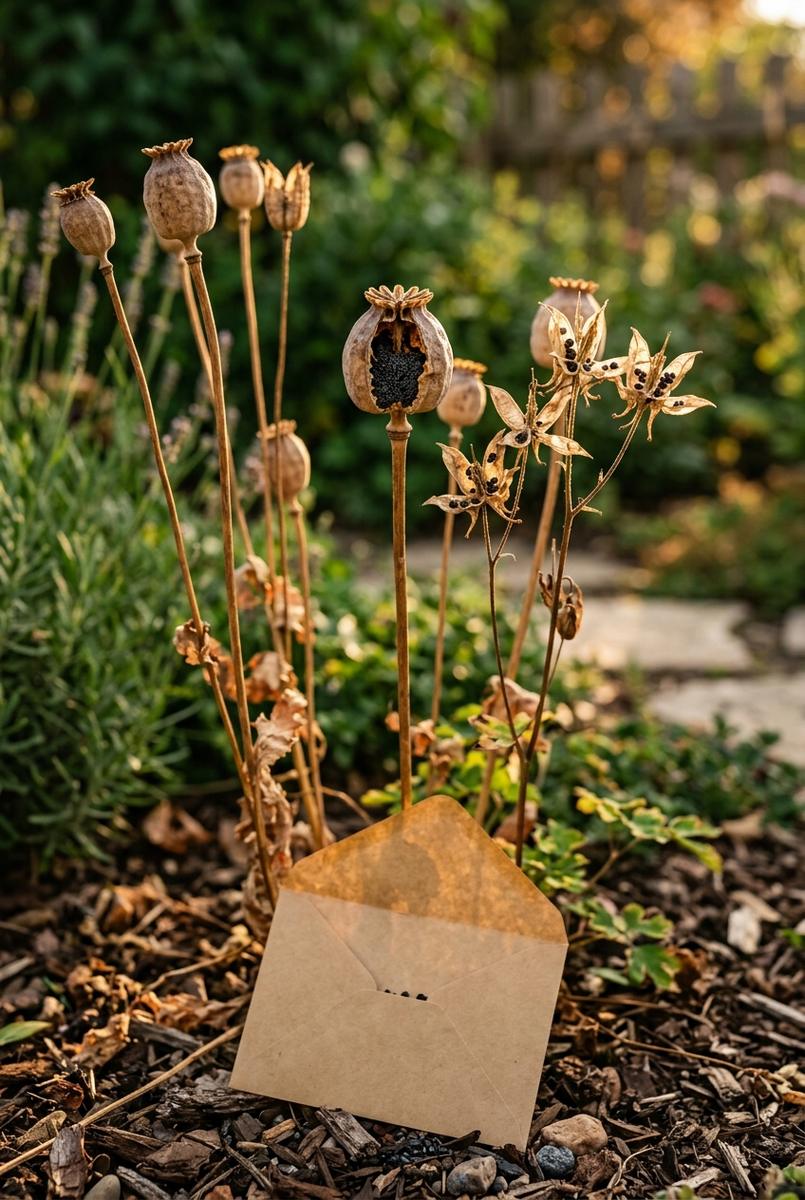
Get explicit permission from staff before collecting from a public garden or park. If collection is prohibited or a plant is protected, leave it alone. Wait until seed heads are brown and dry.
Cottage garden plants with easy-to-collect seeds:
- Columbine (Aquilegia)
- Foxglove (Digitalis, biennial)
- Hollyhocks
- Poppies (Papaver)
- Sweet William (Dianthus barbatus)
Store seeds in paper envelopes labeled with plant name and collection date. Keep them cool and dry until spring.
Source 7: Municipal Compost Programs
Many cities offer free compost to residents. Some programs include wood chips and mulch. Call your local public works department or check the city website.
Check quantity limits, pickup arrangements, and what the material contains. Soil texture is a local site condition; it cannot be inferred from a hardiness zone. Use seed-starting timing for the calendar decision, not as a soil classification.
Source 8: End-of-Season Plant Sales and Giveaways
Some garden centers discount or give away surplus stock at the end of their local selling season. Ask if they’re giving away plants that didn’t sell. Some stores compost them, others let you haul them away free.
Possible clearance plants include:
- Russian sage (Perovskia atriplicifolia, free instead of full garden-center price)
- Catmint (looked dead, came back strong)
- Salvia (multiple colors)
- Coreopsis (threadleaf varieties)
Inspect roots and crowns before taking a plant. Dormant foliage is different from rot, severe pest damage, or a root ball that has dried out completely; recovery is not guaranteed. Trim dead foliage, plant immediately, and mulch well before winter.
Check a Free Plant Before Bringing It Home
| Check | What to ask or inspect | Skip the plant when |
|---|---|---|
| Identity | Common and scientific name | Nobody can identify it reliably |
| Mature spread | How it spreads in that garden | You cannot contain or maintain it |
| Local suitability | Light, moisture, and invasive status | It suits the donor’s site but not yours |
| Root-ball weeds | Grass runners and unfamiliar roots | Persistent weeds are mixed through it |
| Condition | Healthy roots and growth points | Roots are rotten or pests are established |
Use the USDA map for perennial winter-hardiness, then check light and soil separately. A zone does not make an invasive plant a good choice or determine the date to move it.
Which month should you collect what?
Spring and fall are the two windows that matter, with a few plants that only move well in one of them.
| Month | Action | What to Collect |
|---|---|---|
| March-April | Divide perennials | Hostas, daylilies, shasta daisies |
| May | Attend plant swaps | Any divisions, seedlings |
| June-August | Collect seeds | Poppies, columbine, foxglove |
| Local fall planting window | Authorized garden rescues | Identified plants offered with permission |
| October | End-of-season sales | Clearance perennials |
Summer is the quiet stretch, and it is better spent on seed saving than on digging.
Quick Tip: Keep a cardboard box and trowel in your car from April through October. You’ll spot free plants when you’re not looking for them.
Before You Start
Budget cottage gardens take longer to fill than bought ones. Plan for 2-3 seasons to reach full density. Start with 8-10 free plants in year one, add 15-20 in year two through divisions and seeds.
Free plants often come with weeds in the root ball. Inspect divisions carefully and shake off excess soil before planting. Quackgrass or bindweed roots mixed into a division can create years of extra work.
Most free cottage garden plants are vigorous spreaders. This is why people give them away. Bee balm, lamb’s ear, and lily of the valley will take over a bed if you let them. Plan space accordingly or be ready to divide annually.
Can you start a cottage garden with only free plants?
Yes. Divisions and seed swaps can start a bed, but filling time depends on plant size, spacing, growing conditions, and what is available. Focus on plants that divide easily like daylilies, hostas, and coneflowers. Add self-sowing annuals like bachelor’s buttons and larkspur for first-year color.
What cottage garden plants spread the fastest from divisions?
Ask about local growth habit rather than relying on a fixed multiplication rate. Choose plants you can maintain at mature size, and divide when the species and site conditions call for it.
When should you move an offered plant?
Arrange collection with the owner during a suitable local division or transplanting window. Iowa State Extension gives species-specific division timing. Replant promptly and water during establishment; do not let a free root ball sit in the car.
What to Read Next
- Cottage garden front yard layout for the bed plan to drop all these free plants into.
- 10 easy cottage garden perennials for the shortlist worth dividing in the first place.
- Save flower seeds so you have something to trade back at next spring’s swap.