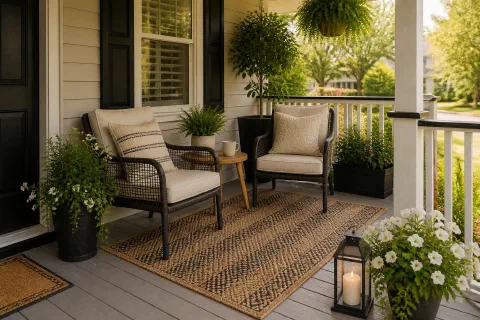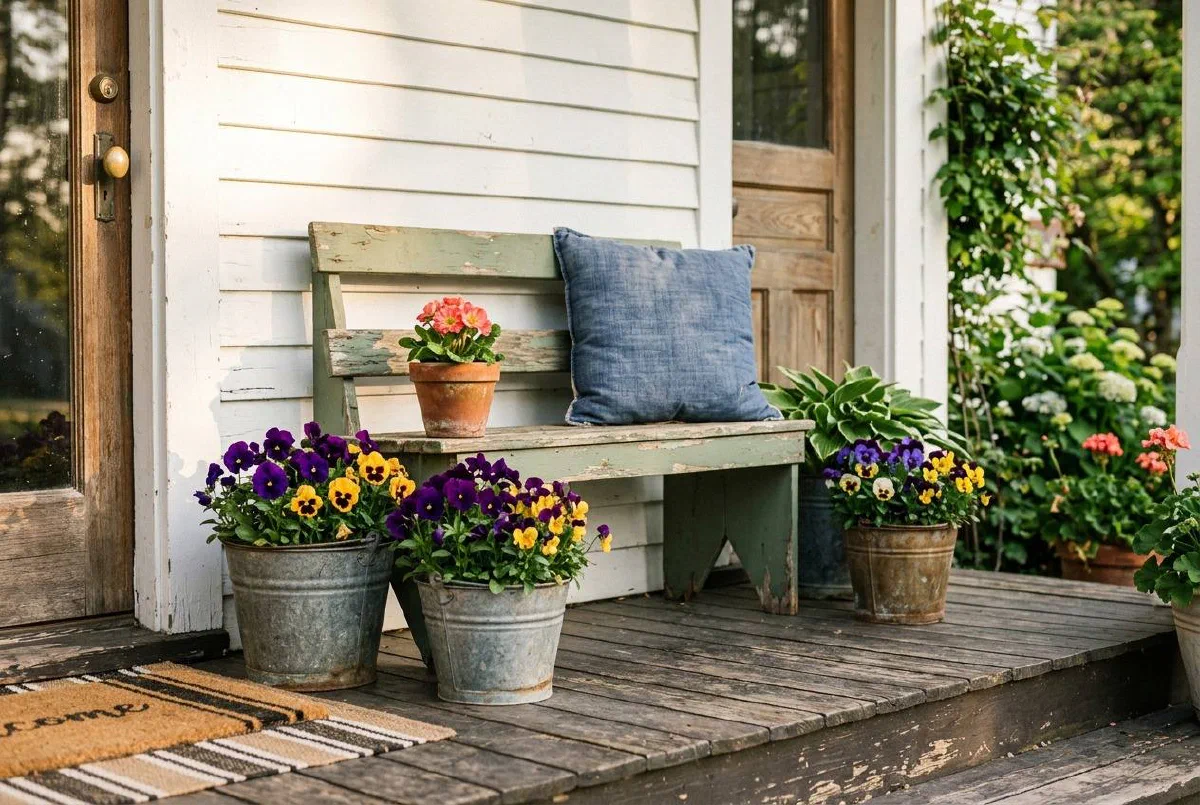
A cozy spring porch can start with a sound chair, a few containers and one outdoor textile. Reuse what works before buying a complete new arrangement. Choose plants for the light and current weather at the porch, rather than treating a hardiness zone as a safe March planting date.
Spring Porch Budget: Keep the Optional Pieces Optional
The earlier shopping ranges totaled $91 to $182, so they did not guarantee an under-$150 result. Use the following as an example allocation instead of a current-price promise.
| Item | Example ceiling | How to keep the cost controlled |
|---|---|---|
| Sound secondhand seat | Up to $40 | Reuse first; inspect before paying |
| Plants | Up to $30 | Buy a small grouping matched to available light |
| Containers | Up to $20 | Use suitable pots already owned |
| Container growing mix | Up to $15 | Calculate volume before buying |
| One cushion or mat | Up to $15 | Choose the detail you will use |
| Repairs, tax or reserve | Up to $30 | Leave this unspent until costs are known |
The allocation totals $150. Check delivered prices and the repair cost of used furniture. Skip decorative lighting if the essentials exhaust the budget; safe access lighting remains a separate need.
How to Set Up the Porch
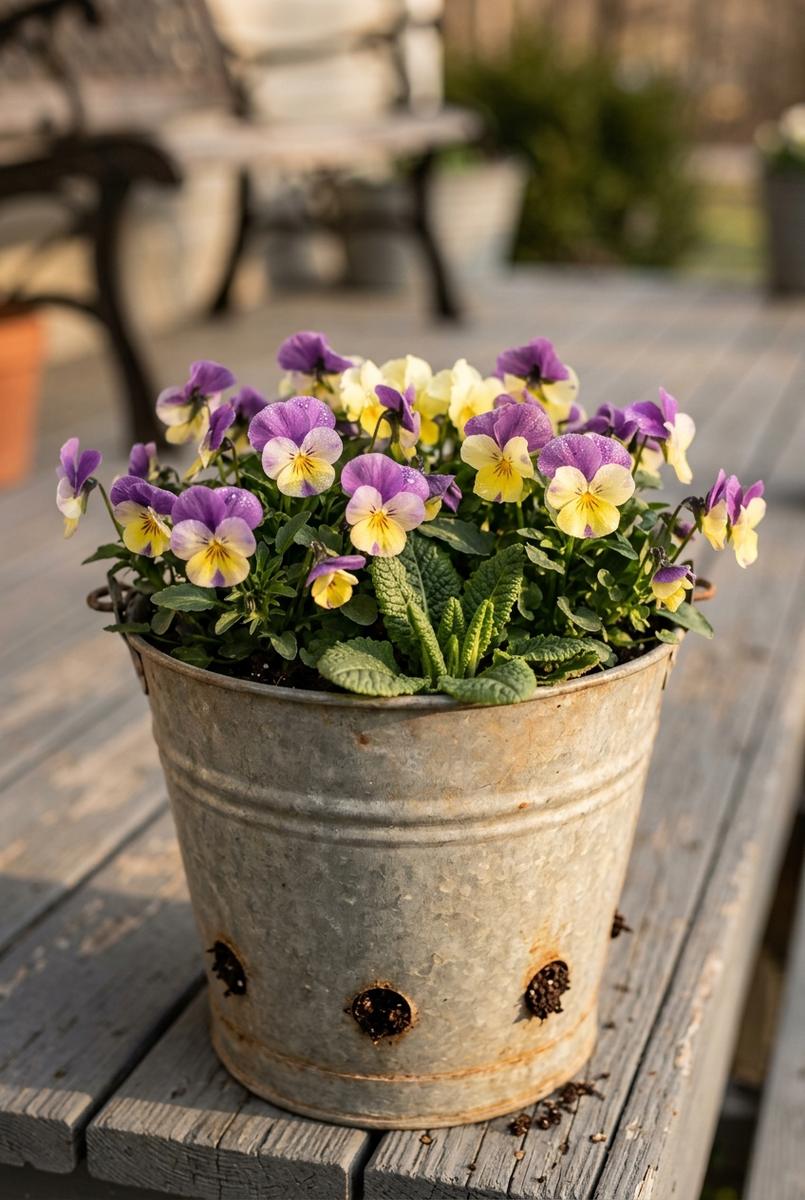
Inspect the furniture. Check joints, legs, corrosion and soft wood. A coat of paint does not make structural damage safe. Use the finish maker’s preparation and coverage instructions instead of assuming a quart will cover every project. Cornell’s chair-design guidance notes that a single ideal sitting posture does not fit everyone. Try the seat for comfort rather than choosing by a catalog photograph alone.
Check the route. Place seating where the door opens freely and visitors can walk past. Keep steps and the handrail accessible.
Observe the light. Count direct-sun hours at the planting position. Deep eaves can make the porch very different from the garden nearby.
Choose the plants locally. Pansies and violas are cool-season candidates; primrose and hellebore suitability depends on the species, cultivar and site. Ask whether nursery plants have been acclimated to outdoor conditions.
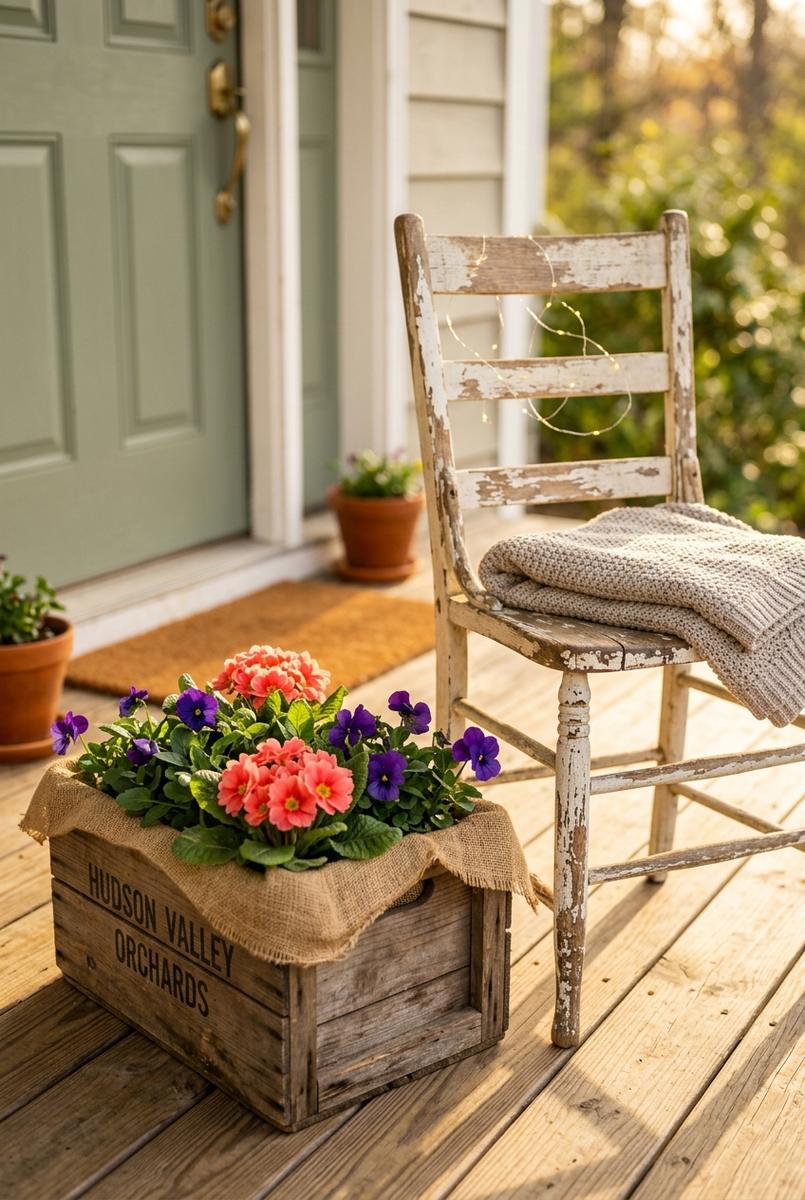
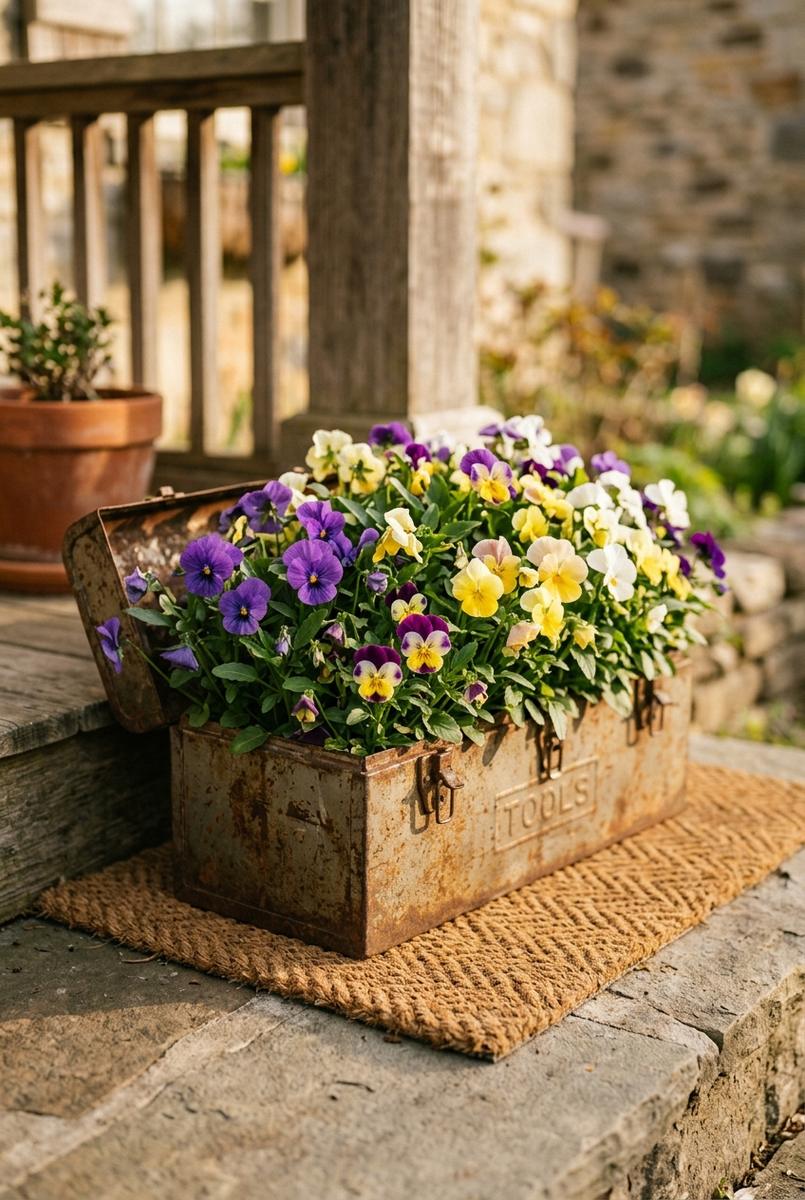
Choose usable containers. Match root space and drainage to the plants. A decorative crate or toolbox can be an outer cover around a proper pot; keep drainage clear and empty collected water.
Plant and finish. Use appropriate container mix and the plant label’s spacing. Add one textile and leave room to tend and move the pots.
When Is It Safe to Put Spring Pots Outside?
The USDA hardiness map describes average annual extreme minimum winter temperature. It does not supply a local last-frost date or a guaranteed safe spring planting day. Use your local extension guidance, the upcoming forecast and the plant’s actual condition together. See what to plant in March for the wider timing decision.
| Condition at the porch | Useful response |
|---|---|
| Mild days but a freeze forecast | Keep new pots movable; choose a suitable protected holding place |
| Plants just moved from a warm greenhouse | Acclimate as advised by the nursery |
| Covered porch with little direct light | Select for that exposure rather than the yard’s sunny conditions |
| Weather warming beyond cool-season plants’ needs | Plan a change of plants, not a fixed zone-based replacement date |
Cold-tolerant does not mean every new container survives the same temperature. Roots in pots, cultivar, exposure and acclimation matter. Avoid blanket promises of survival at 10°F or 20°F.
Frost Protection and Ongoing Care
Before a cold night, move manageable pots to a suitable sheltered location or use an appropriate frost cover following local guidance. Do not place plastic directly against leaves. Check moisture rather than automatically soaking every container before a freeze. A wilted plant may recover, but a guaranteed one-day recovery is not a sound diagnosis; inspect damage after conditions improve.
Water according to the growing mix, weather and container exposure. Check protected pots because a roof can exclude rain. Inspect drainage after watering and remove wet textiles for drying. Keep paint and sealer compatible with the material, and follow their maintenance instructions instead of a universal annual schedule.
Ideas for a Narrow or Shaded Porch
A narrow porch may work best with a stable plant stand and no chair. Do not lean a ladder full of heavy pots into a walking route. Check rated supports and the weight of watered containers before hanging them.
For a shaded porch, use plants whose labels match the available light. A covered location still receives wind-driven rain, so choose textiles and fixings for the actual exposure. Coordinate two flower colors or a repeated pot finish if you want a calmer arrangement; neither choice requires buying every container again.
What Should Come First on a Small Budget?
Safe seating and circulation, then healthy plants in suitable pots. Decorative lighting and extra cushions can wait. Record the actual total before purchasing, and plan the next seasonal planting from local conditions instead of a nationwide calendar.
What to Read Next
- What to Plant in March puts this month on a calendar if you are starting earlier than you think you can.
- Butterfly Garden Plants for Zone 7 is the warmer-zone version of the same plant timing question.
- Seed Starting Indoors for Beginners covers what to raise yourself instead of buying at the nursery.
- Front Porch Planter Ideas That Look Full All Season takes over in June, once the pansies give out in the heat.