To dry hydrangeas for fall arrangements, cut mature heads that have begun to feel papery, remove the leaves and stand a few stems in a little water. Let that water evaporate in a warm, dry place away from direct sun. Test a small batch first: variety, bloom stage and room conditions affect how the heads hold their shape and color.
How to Dry Hydrangeas for Fall Arrangements
Last updated:
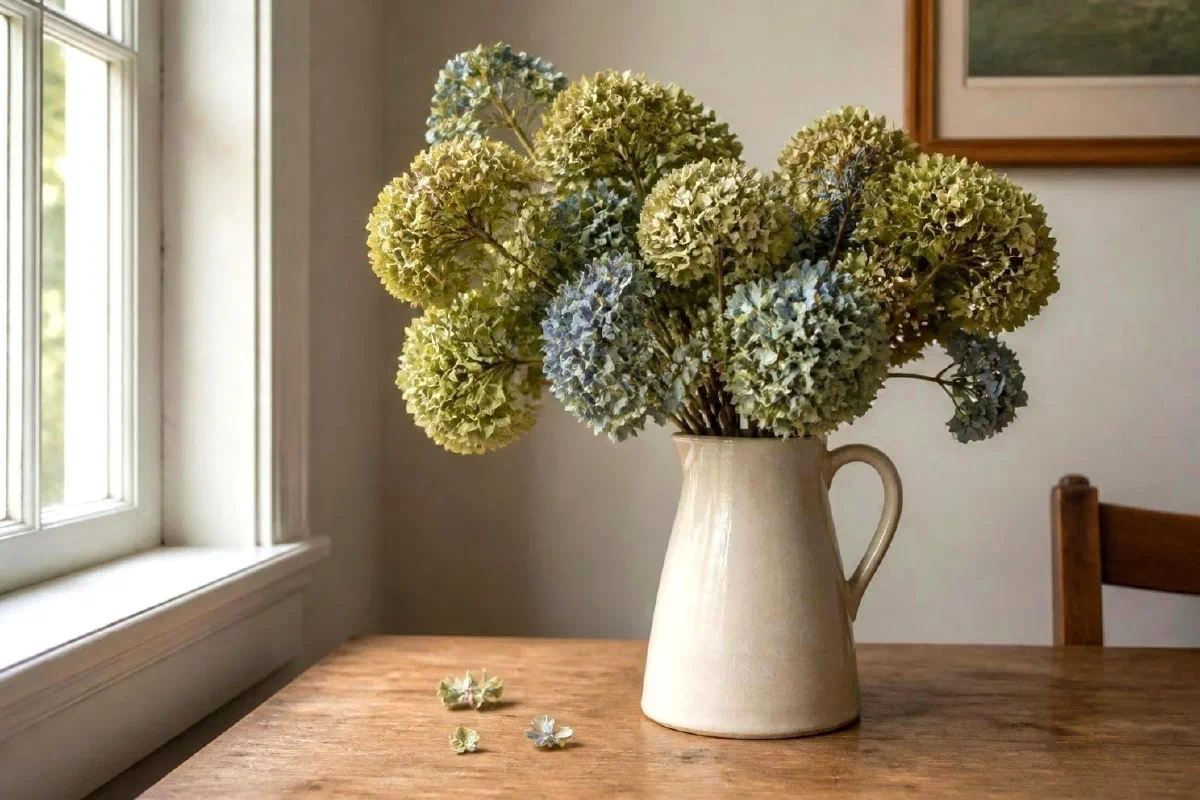
Illustrative scene, not a photograph of the linked products.
Choose flowers by their condition rather than a nationwide calendar date. Keep the finished arrangement dry and use flameless light around dried stems.
| Hydrangea drying at a glance | The number |
|---|---|
| When to cut | August through October, once the heads feel papery (The Spruce) |
| Stem length | 12 to 18 inches, leaves stripped |
| Water method | About 2 to 3 weeks (The Spruce, Gardenia) |
| Hanging upside down | About 2 to 3 weeks (Gardenia, Missouri Extension) |
| Silica gel | 3 to 7 days (Gardenia) |
| How long they last | Up to about a year (The Spruce) |
When to cut: feel the bracts
The best time to cut hydrangeas for drying is late summer to mid-autumn, roughly August through October, once the heads feel papery and the color has started to age. Cut in the morning after the dew has dried and the heat has not set in (Gardenia). If a head is still soft and green in late October, wait. A bloom that collapses under a light touch has not matured yet. Pinch one petal: it should feel papery, not soft.
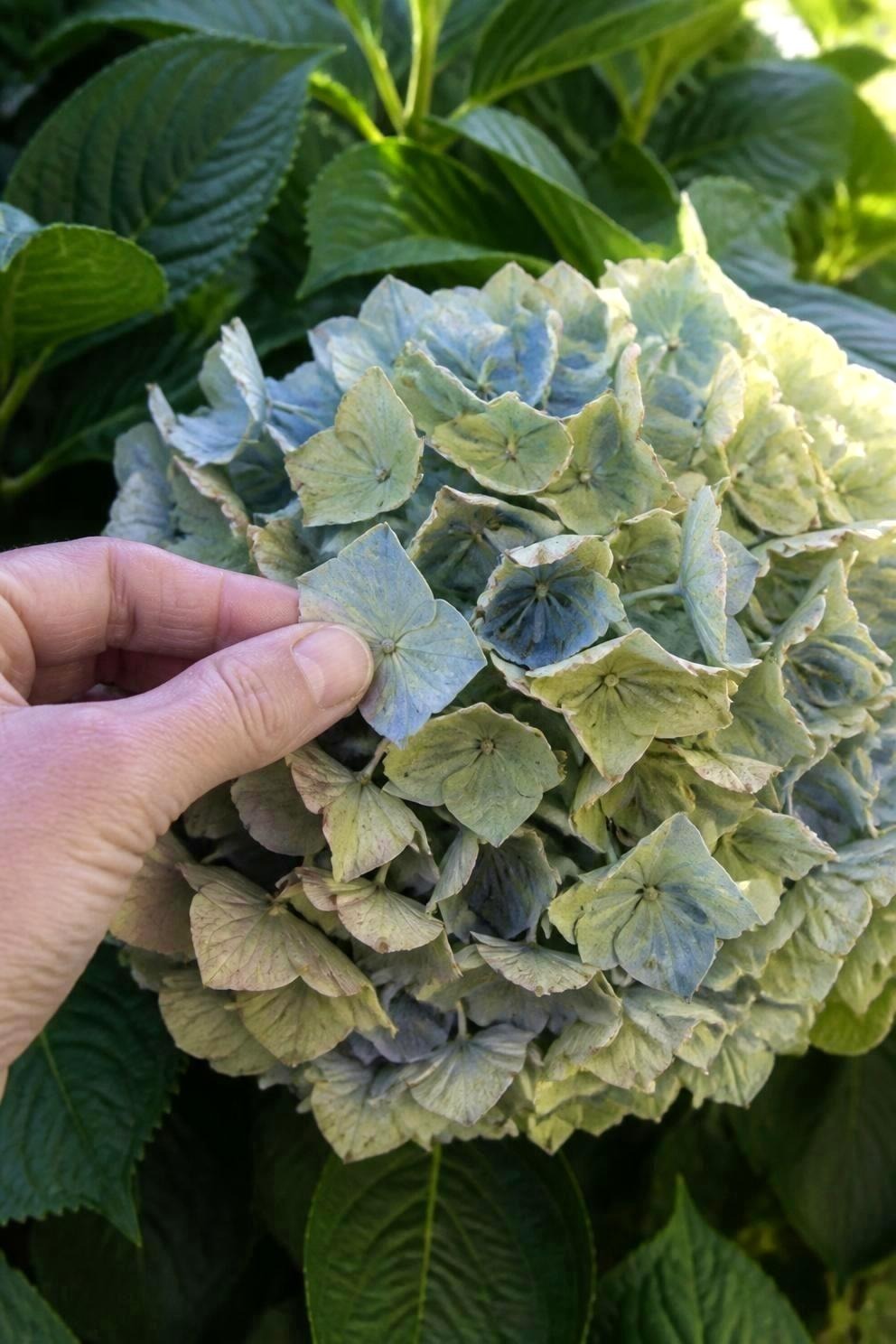
Chicago Botanic Garden’s hydrangea drying guide describes waiting for aging flowers, with a papery feel and a color change. White blooms may develop a green tint; colored blooms can take on an older, faded shade. Wilted flowers are poor candidates.
Check several heads on the shrub. They may reach that stage at different times. A fresh, soft bloom and a brown, crumbling one present different problems, so try a few that still have a shape you want to preserve.
| Head condition | Useful next step |
|---|---|
| Fresh and soft | Leave it longer if you plan to water-dry it |
| Firm, papery and still intact | Try a small drying batch |
| Wilted or badly damaged | Choose another head |
| Brittle and breaking apart | Leave it for the garden display or discard damaged material |
Do not cut so far into a shrub that you sacrifice growth or buds you intended to keep. Identify the hydrangea and check its pruning instructions. Harvesting stems is not permission for a heavy cut across every type.
Start with the water method
Clemson Extension’s drying guide describes placing hydrangea stems in a couple of inches of water and letting it be taken up and evaporate. It recommends a warm, dry, dark location.
- Select intact heads at the mature stage you want to try.
- Cut stems with a suitable clean tool and strip every leaf from each plant stem, because leaves left on can rot (Gardenia).
- Use a clean vessel and about two inches of water. Cut the stems 12 to 18 inches long.
- Leave space between the heads rather than packing the opening full.
- Let the water disappear gradually, keeping the vessel away from direct sun.
- Check that the heads have dried before moving them into the finished arrangement.
How long does it take to dry hydrangeas?
Plan on about 2 to 3 weeks for the water method and for hanging, and 3 to 7 days with silica gel. The Spruce says about two weeks, Gardenia says 2 to 3 weeks, and Martha Stewart notes that humidity and cool weather make it take longer. Check the heads by feel: the petals should be dry and papery, with firm stems. Once the water has gone, do not add more.
Hanging and silica gel are other options
Missouri Extension’s flower-drying guide explains hanging small, loose bunches in a dry, dark place and using desiccants. Gather flowers free of rain and dew. For air-drying, it gives a general two-to-three-week estimate, and Gardenia says the same for hydrangeas, bundling 5 to 10 stems upside down.
Can you dry hydrangeas without water?
Yes. Hang a small bunch of stems upside down in a dry, dim, well-ventilated spot out of direct sun. Expect about 2 to 3 weeks.
Silica gel requires an appropriate sealed container and careful handling so the granules support the flower without crushing it. Follow the drying product’s instructions for timing, handling and reuse. Do not substitute a microwave procedure or household chemical recipe without a specific appropriate method.
| Method | Time | Useful reason to try it | What requires attention |
|---|---|---|---|
| Water evaporation | About 2 to 3 weeks | A small batch that can stand upright | Bloom maturity, spacing and room dryness |
| Hanging upside down | About 2 to 3 weeks | Several loose batches | A secure hanging place and room between heads |
| Silica gel | 3 to 7 days | An individual head you want to preserve carefully | Product directions, container seal and gentle removal |
| Pressing | 2 to 4 weeks (Gardenia) | Flat heads for crafts | Not for arrangements |
There is no method that guarantees the same color or shape for every hydrangea. Label small trials with the variety and cutting date so you can compare the results in your own garden.
How to keep the color
Water drying, air drying and silica gel all keep a good share of the color, according to The Spruce. Glycerin turns the heads brown, so skip it if you want to keep the original color. Keep drying and display out of direct sun, because too much light washes the color out. A light mist of aerosol hairspray on finished heads is a common way to cut down on shedding and help hold color.
How to arrange dried hydrangeas
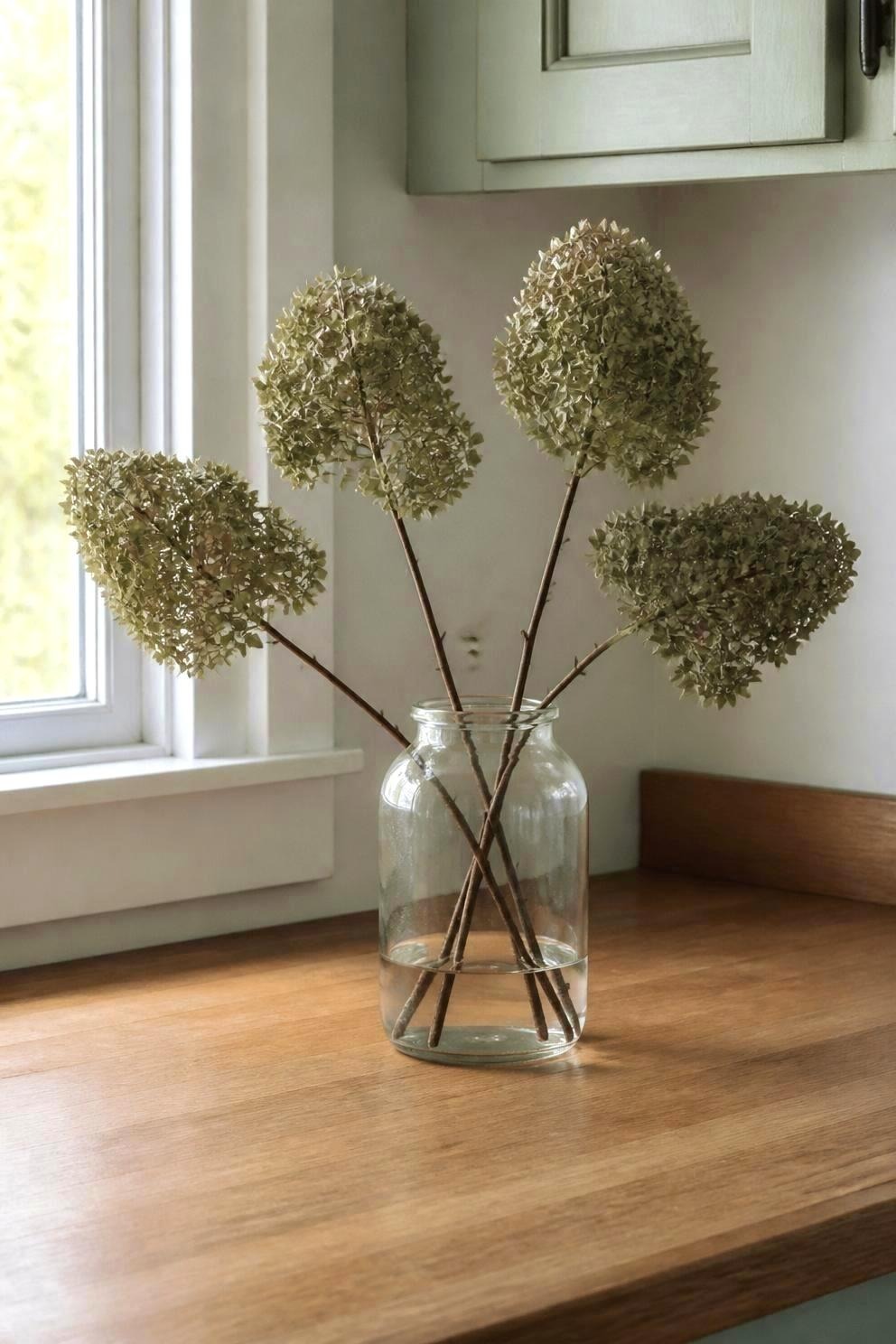
Try a pitcher with stems cut to different lengths, a shallow bowl with a few heads, or one small cluster on a wreath. Check the size of the flower heads against the vessel opening before trimming stems.
Start with three to five stems cut to different heights, and fill the vessel only partway so the heads can breathe. A large head can make a narrow lightweight container unstable. Arrange it on a level surface and keep it away from a busy edge. Remove broken pieces rather than hiding them inside the display.
For a wreath, attach the material securely to an appropriate frame and put it in a dry, sheltered location. Dried flowers outside can be damaged by wet weather and wind. Fall porch decor in wind and rain helps decide what should stay indoors.
Three supplies worth comparing
Use a vessel and cutting tool you already own if they fit the job.
| Current item | Why compare it | Check first |
|---|---|---|
| Fiskars bypass pruning shears (opens Amazon in a new tab)As an Amazon Associate, we earn from qualifying purchases. Full disclosure. | Cutting stems within the tool’s capacity | The listed 5/8-inch capacity and the hydrangea’s pruning needs |
| Creative Co-Op 28-ounce stoneware pitcher (opens Amazon in a new tab)As an Amazon Associate, we earn from qualifying purchases. Full disclosure. | A small upright group in a handled vessel | Opening, stability and stem length; head size decides how many fit |
| Vanselia 7.4-inch retro ceramic vase (opens Amazon in a new tab)As an Amazon Associate, we earn from qualifying purchases. Full disclosure. | A round vessel for a separate dry arrangement | Its 6.3-inch listed width and the actual opening |
All were in stock on October 11, 2026. Two vessels give shape choices; they are not necessary purchases or a forced price ladder.
How long do dried hydrangeas last?
Up to about a year, according to The Spruce, which is roughly when the next fresh batch can be cut. They last longest in a cool, dry place out of direct sun. Dust them gently and replace any that turn moldy.
What to do with dried hydrangeas
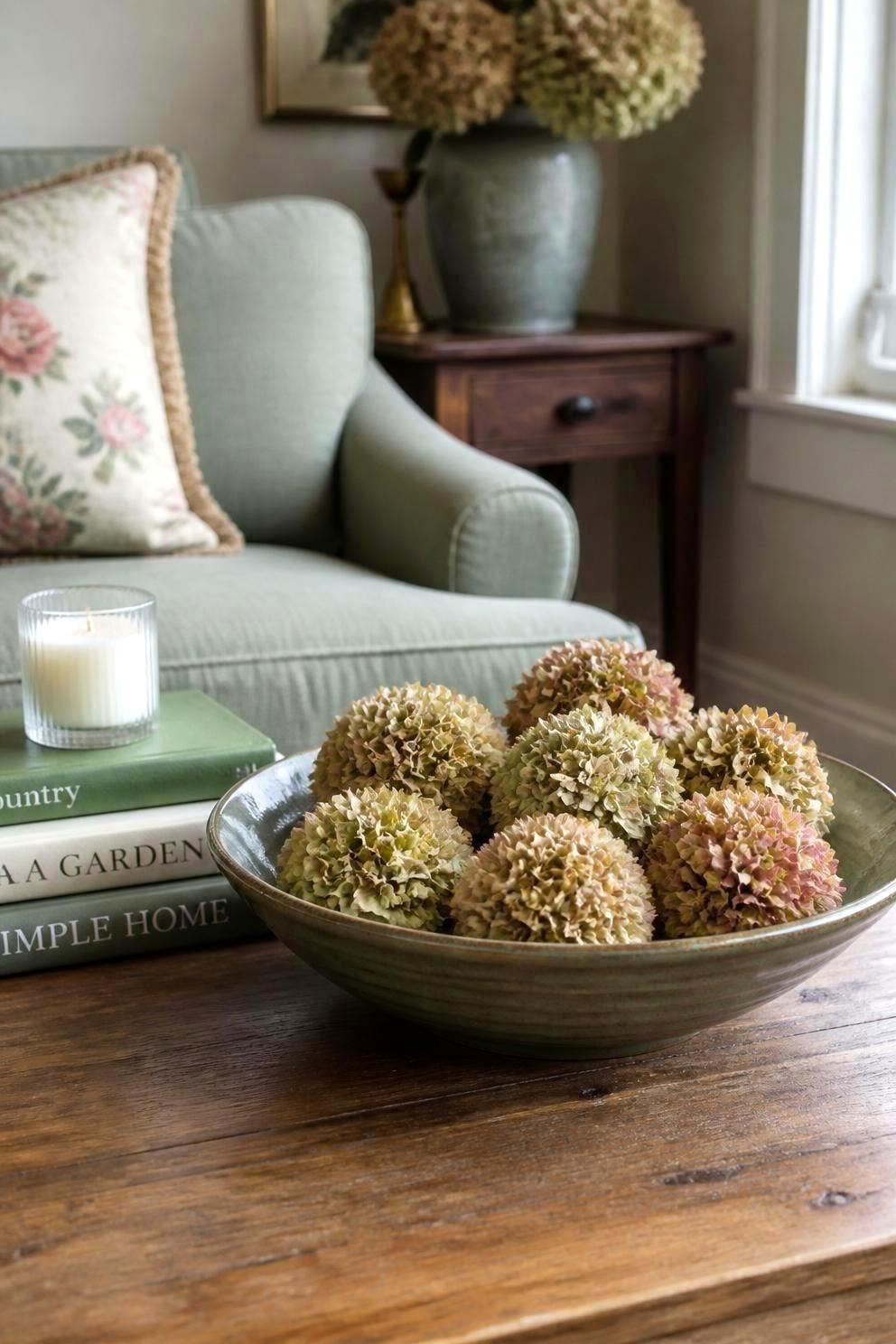
Use them in a pitcher or shallow bowl, on a wreath, or as a single cluster on a mantel. Gardenia also suggests mixing them with dried grasses or seasonal foliage. See a dried fall wreath that lasts past October for a wreath idea.
Store and display the heads dry
Keep dried material out of damp locations and direct sun. Handle the heads gently and dust carefully. Replace material that is moldy or badly damaged rather than promising that every batch will last a year.
Keep hydrangeas away from children or pets who may eat them. Drying a plant is not a way to establish that it is safe to ingest. Keep cuttings off the floor and use a protected display location.
For other garden flowers, see six flower-drying methods. For a finished display, dried flower shelf ideas focuses on keeping the arrangement out of the working space.