Mums in planters need sun, a pot that drains and water when the mix begins to dry. Check the soil every day and water at the base until excess drains out. Repot only if roots are crowded; a larger decorative planter cannot fix a root ball that stays wet.
Mums in Planters: Watering, Sun and Frost Care
Last updated:

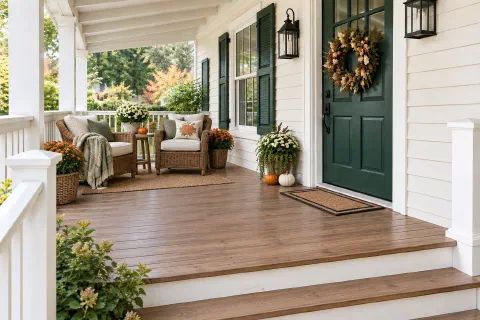
AI-generated styling illustration; not a photograph of a specific product or a completed reader project.
Choose a plant with unopened buds as well as flowers if you want more blooms to open at home. There is no fixed number of weeks it will last: cultivar, weather and care before purchase all matter.
What to Buy
Check the roots and drainage before buying anything. Choose only the piece that solves the problem:
- Quarut whiskey-barrel planters (opens Amazon in a new tab)As an Amazon Associate, we earn from qualifying purchases. Full disclosure. if their inside size fits the root ball.
- Moisture Control potting mix (opens Amazon in a new tab)As an Amazon Associate, we earn from qualifying purchases. Full disclosure. when a crowded plant needs repotting.
- Long-spout watering can (opens Amazon in a new tab)As an Amazon Associate, we earn from qualifying purchases. Full disclosure. to reach beneath the flowers.
- Self-watering pot set (opens Amazon in a new tab)As an Amazon Associate, we earn from qualifying purchases. Full disclosure. only if the selected pot’s reservoir and overflow suit the plant and site. It still needs moisture checks.
- Tall planters (opens Amazon in a new tab)As an Amazon Associate, we earn from qualifying purchases. Full disclosure. if there is room beside the door. Match the root space and drainage as well as the outside height.
Compare the current listing’s size options before ordering. Keep a usable nursery pot if it already does the job.
Check the nursery pot before repotting
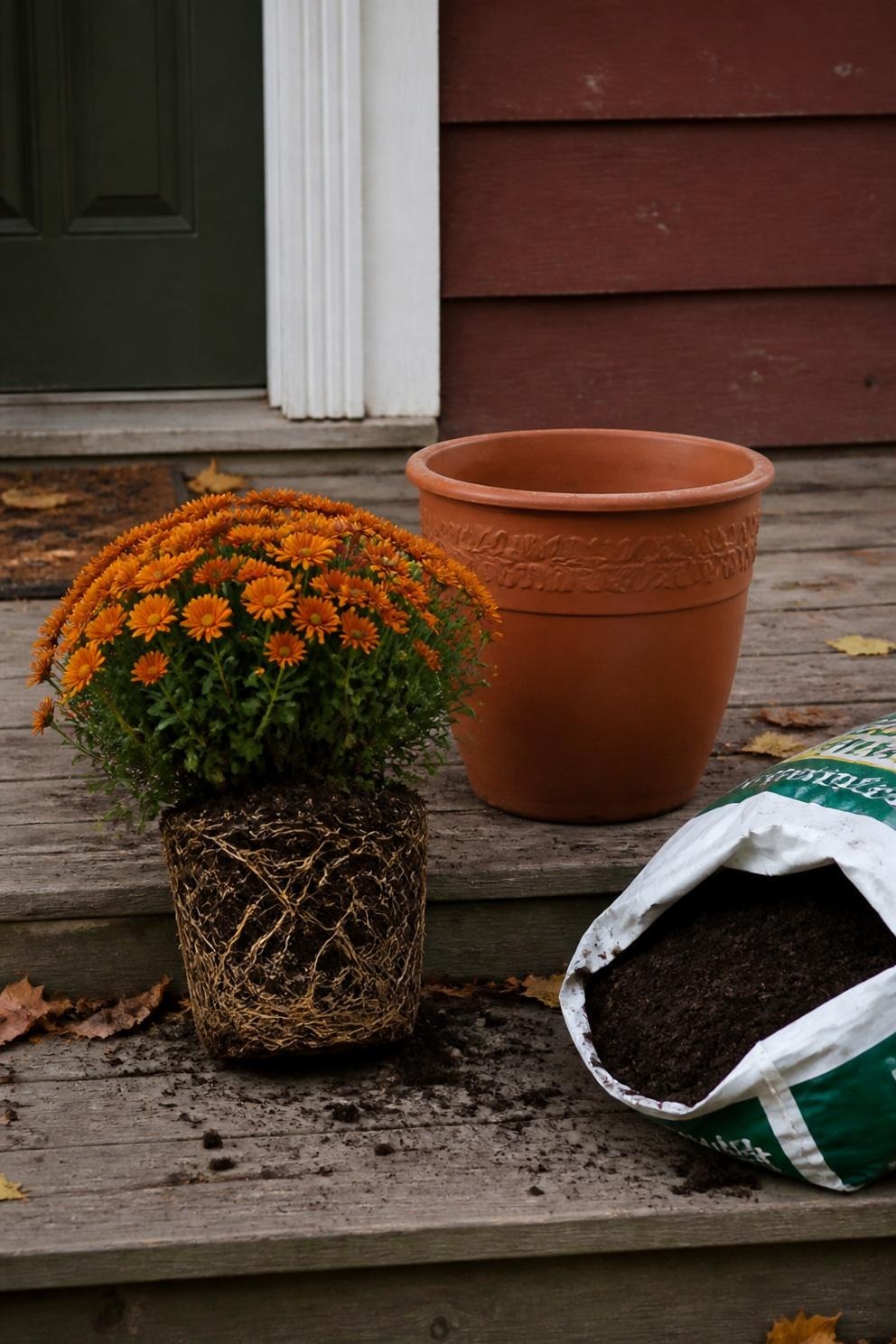
Look for blocked drainage holes, then gently inspect the root ball if the pot dries unusually fast. Roots circling densely or pushing through the holes may need more room.
Move a crowded root ball one pot size larger, with drainage and fresh potting mix. If roots still have room and the mix holds moisture, leave the plant in its nursery pot for now. Penn State’s repotting guide explains why an oversized pot can stay wet.
Quarut whiskey-barrel planters (opens Amazon in a new tab)As an Amazon Associate, we earn from qualifying purchases. Full disclosure. and tall front-door planters (opens Amazon in a new tab)As an Amazon Associate, we earn from qualifying purchases. Full disclosure. are two container options. Compare their usable inside dimensions with the root ball, including room for water below the rim.
Use potting mix suited to containers, such as Moisture Control mix (opens Amazon in a new tab)As an Amazon Associate, we earn from qualifying purchases. Full disclosure.. Check its watering instructions; moisture-retaining mix still needs drainage.
How to water mums in pots
Put the spout under the leaves and water the soil until excess drains from the bottom. Empty any saucer or decorative cover afterward. Iowa State’s potted-mum care advice uses soil dryness as the watering cue.
Check daily, and check again in hot or windy weather. Feel below the surface rather than judging by the color of the top layer. A wet pot does not need another drink.
A long-spout watering can (opens Amazon in a new tab)As an Amazon Associate, we earn from qualifying purchases. Full disclosure. makes it easier to reach the soil without soaking the flowers.
How to care for mums in pots
- Check the mix daily and let excess water drain.
- Give outdoor garden mums at least six hours of direct sun.
- Remove spent flowers without clipping off unopened buds.
- Check the plant tag for its variety and cold hardiness before deciding how to keep it through winter.
Do mums need sun or shade?
Outdoor garden mums do best in full sun. Iowa State recommends at least six hours of direct sun. A deeply shaded porch may look like a good display spot but offer too little light for the plant.
Hot, sunny steps can dry a container faster. Check the mix rather than watering twice a day by default.
If you keep a garden mum through summer, avoid a site beside a light that shines through the night. Mums set buds in response to shorter days and longer nights; artificial light can interrupt that cycle.
How to deadhead mums in pots
Pinch or snip each spent flower just above the next healthy leaves or side bud. Use clean snips if the stem tears instead of pinching neatly.
Work through the plant a few flowers at a time. Shearing the whole dome can remove unopened buds too. Removing spent flowers tidies the plant, but it cannot promise another bloom cycle from a mum already in full flower.
Why are my mums dying?
| What you see | What to check first |
|---|---|
| Wilted leaves and dry potting mix | Water the root ball at the soil line and let it drain |
| Yellow lower leaves and wet mix | Open drainage holes and empty collected water |
| Brown, soft flowers or gray fuzz | Remove damaged blooms and check for a disease problem |
| Long, leaning stems | Whether the spot gets enough sun |
| Flowers fading on an otherwise healthy plant | Whether most blooms were already open when you bought it |
These are starting checks, not a diagnosis. A mum with wet soil needs a different response from one with a dry root ball.
How long do mums last
There is no reliable week count for every potted mum. Use its bloom stage to decide what you are buying:
| Bought as | What to expect |
|---|---|
| Mostly open flowers | Immediate color, with fewer buds left to open at home |
| Open flowers plus visible buds | Color now and more flowers still to come |
| Mostly closed buds showing color | A slower start, with more of the display ahead if the plant remains healthy |
Hot, dry weather can shorten the display. Check the plant’s roots, leaves, and potting mix as well as the flowers before buying.
When to buy and plant mums in pots
Choose by the plant’s condition rather than a nationwide date. Look for healthy foliage, some buds showing color and a moist root ball. Hot weather can make a blooming porch pot harder to keep watered.
For a perennial garden mum, spring planting gives it more time to establish before winter. That is different from buying a flowering pot for an autumn display.
Are mums better in pots or in the ground?
A pot lets you move the display when the light or weather changes. It also dries and cools faster than garden soil, so check it more often.
If you want a perennial, choose a garden cultivar rated for your USDA zone and plant it where the soil drains. A flowering fall purchase is a less reliable route to an established garden plant than a spring planting.
Hardy mums vs florist mums
| What you want | What to ask for |
|---|---|
| Color for this fall’s porch | A healthy flowering mum; check buds and root condition |
| A perennial for the garden | A named garden cultivar with a hardiness rating for your zone |
| An indoor flowering gift | A florist mum, with its indoor care instructions |
Do not identify the plant solely by the store selling it. Read the tag or ask the grower.
Cold hardiness varies by cultivar. Some University of Minnesota garden mums are bred for Zones 3 to 9. A florist mum sold for temporary display may not survive a cold outdoor winter; that does not mean every plant sold in fall is the same kind.
Potted mums through the first frost
Check the forecast and the cultivar’s care instructions. If a freeze is coming and you want to protect the remaining flowers, move a portable pot to sheltered, frost-free storage for the night. A covered porch can still freeze.
Keep the steps clear when moving pots. Put the plant back in suitable light when conditions allow.
Mums in pots over winter
Check that you have a hardy garden cultivar first. An exposed container gives roots less insulation than the ground, so surviving a winter outdoors is less certain.
An unheated, sheltered garage or shed is one option for a dormant garden mum. Check the mix during storage: keep it from drying completely, without leaving it wet. Wait for new growth in spring before deciding where to cut back the old stems. Maryland Extension explains the options for overwintering potted mums.
If planting in the ground is possible, use a well-drained site that suits the cultivar. Spring is the better time to establish a new perennial; a plant bought in full bloom late in fall has less time before cold weather.
Keep the container if the plant does not return. You can reuse it for the next season.
Fall planter ideas with mums
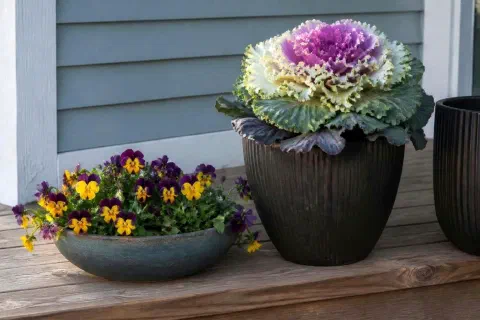
Try ornamental kale beside a mum, or add a small pumpkin without planting anything else. Heuchera and dusty miller can also work when their light and watering needs fit the pot. Check the companions’ mature sizes before filling the container.
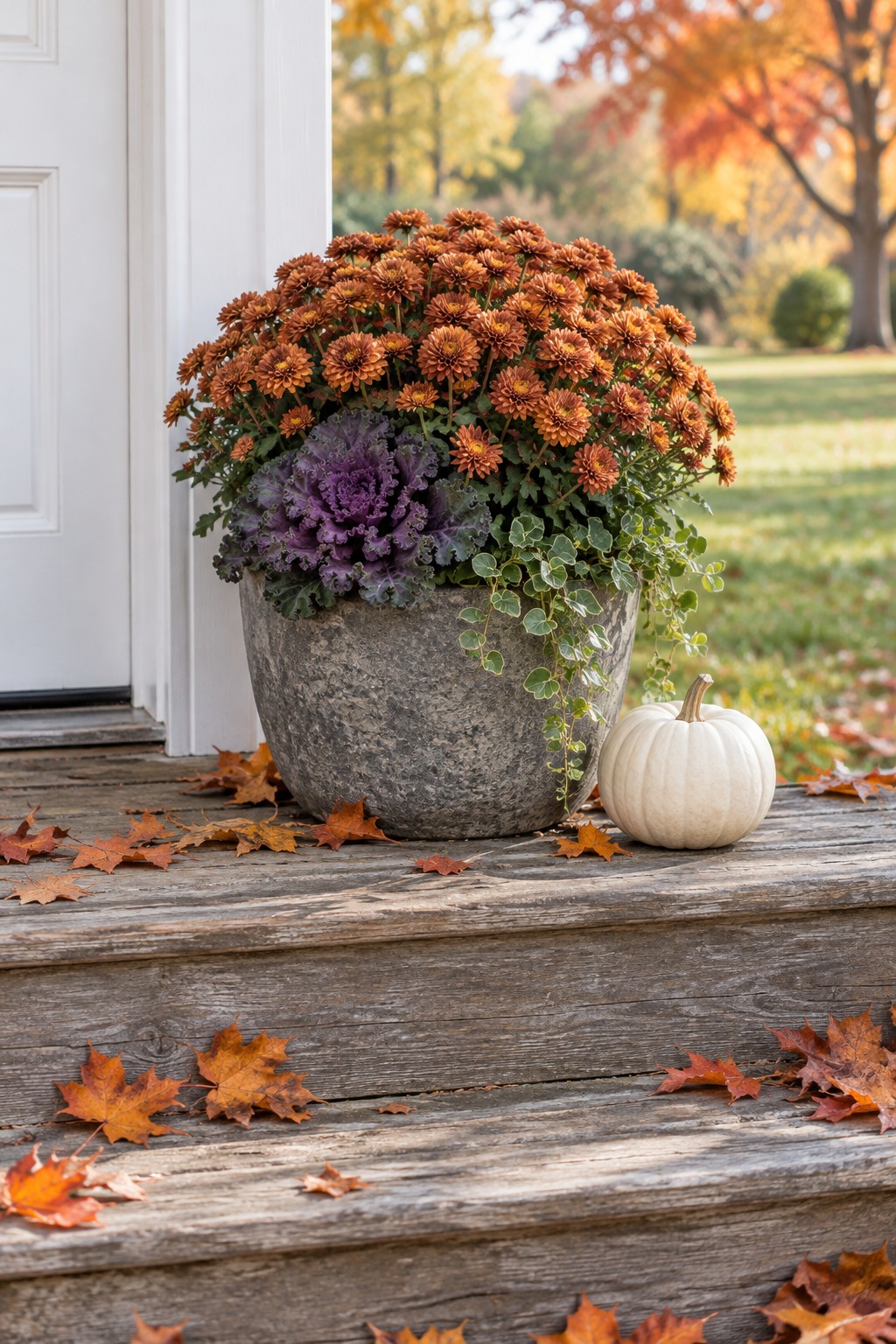
Plant at the original depth and leave access to the soil for watering. A full display still needs room to drain.
Fall planters for a front porch
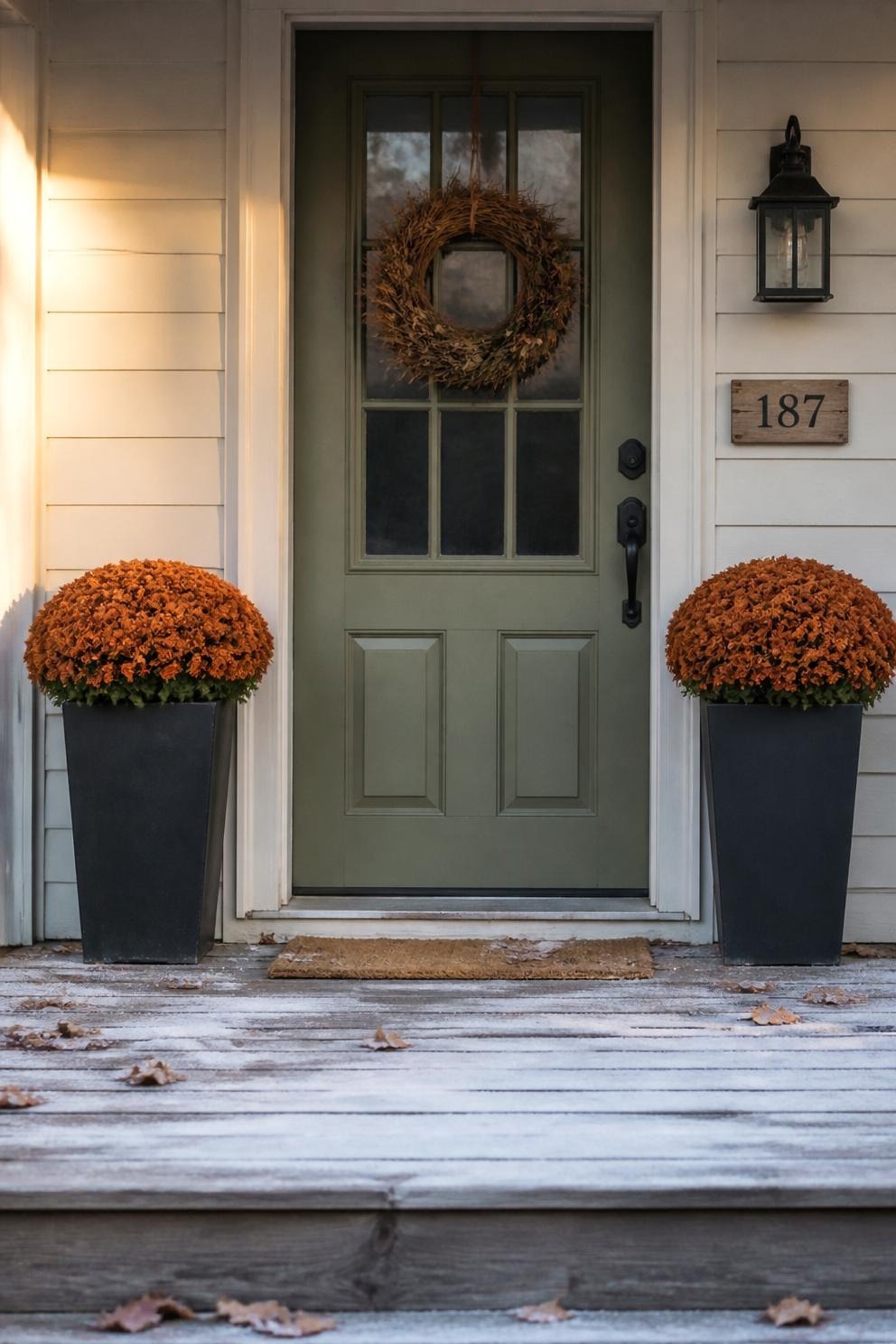
Measure the doorway and walkway before buying tall pots. Place a pair outside the door swing, then check the view from the path. You may need only one pot if two would narrow the steps.
Choose a broad, stable container for an exposed site. Maryland Extension says a layer of gravel does not improve container drainage. Keep the drainage holes open and use potting mix through the growing space.
Mums care: the short version
- Buy a healthy plant with some unopened buds.
- Repot only if roots are crowded.
- Keep drainage holes open and empty saucers.
- Check the mix daily, then water at the soil line when needed.
- Give outdoor garden mums sun and remove spent flowers.
- Check cultivar hardiness and the forecast before frost.
Use fall flowers for pots to choose companions, or the first-frost checklist when cold nights are forecast.
What to read next
- Container Soil Drying Out Too Fast? Fix This Before Buying More Plants helps you check a pot that dries too quickly.
- First Frost Checklist for Pots and Small Gardens is the night-before routine when a freeze is in the forecast.
- Fall Planter Ideas for Cool-Weather Flowers has the alternatives if you want color once the mums are done.
- Front Porch Planter Ideas That Look Full Without Constant Replanting helps arrange pots around the door and walkway.
- Fall window box ideas after frost offers seven options for after the first frost.