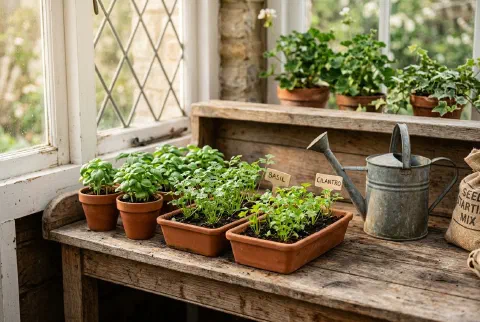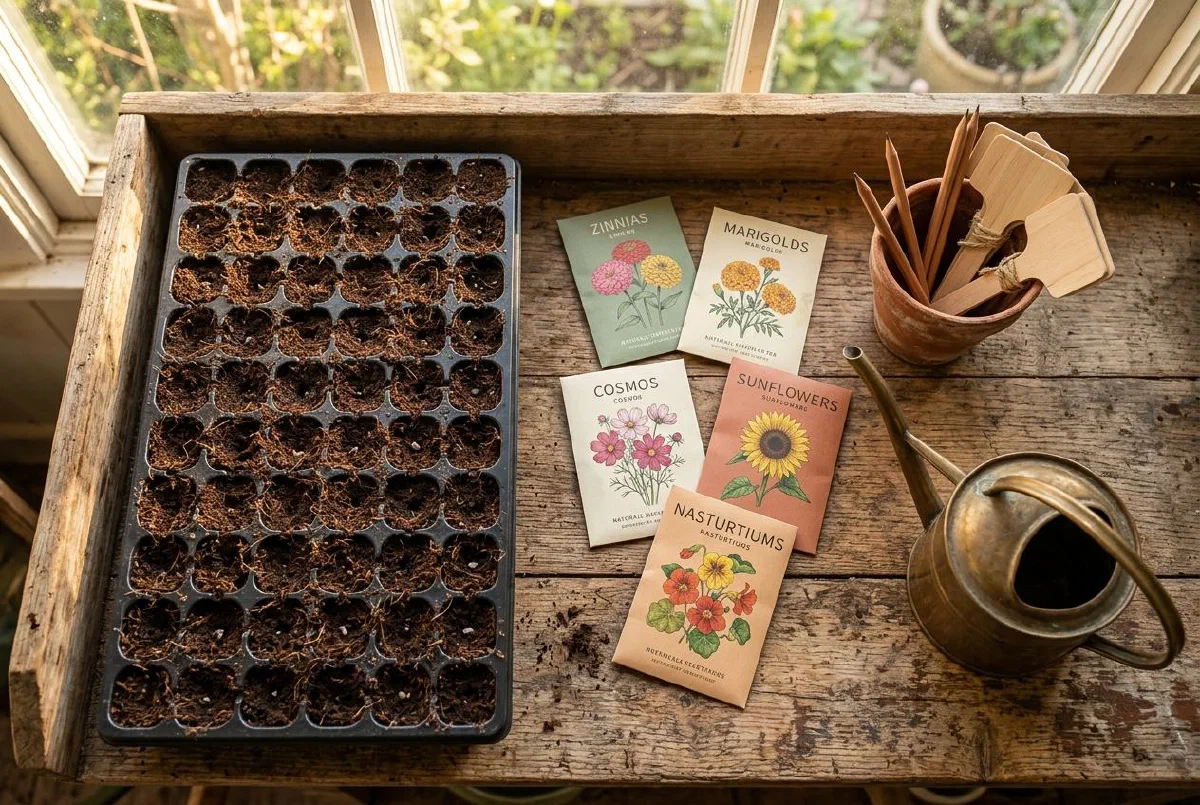
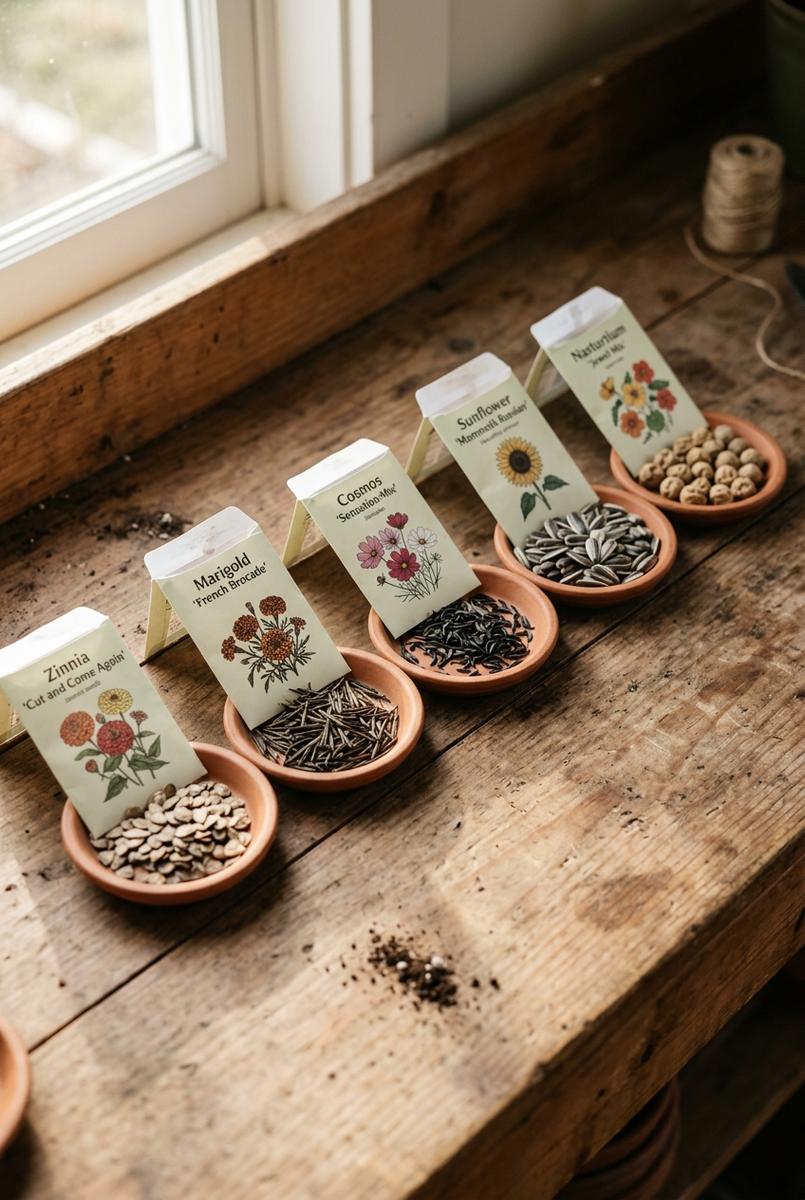
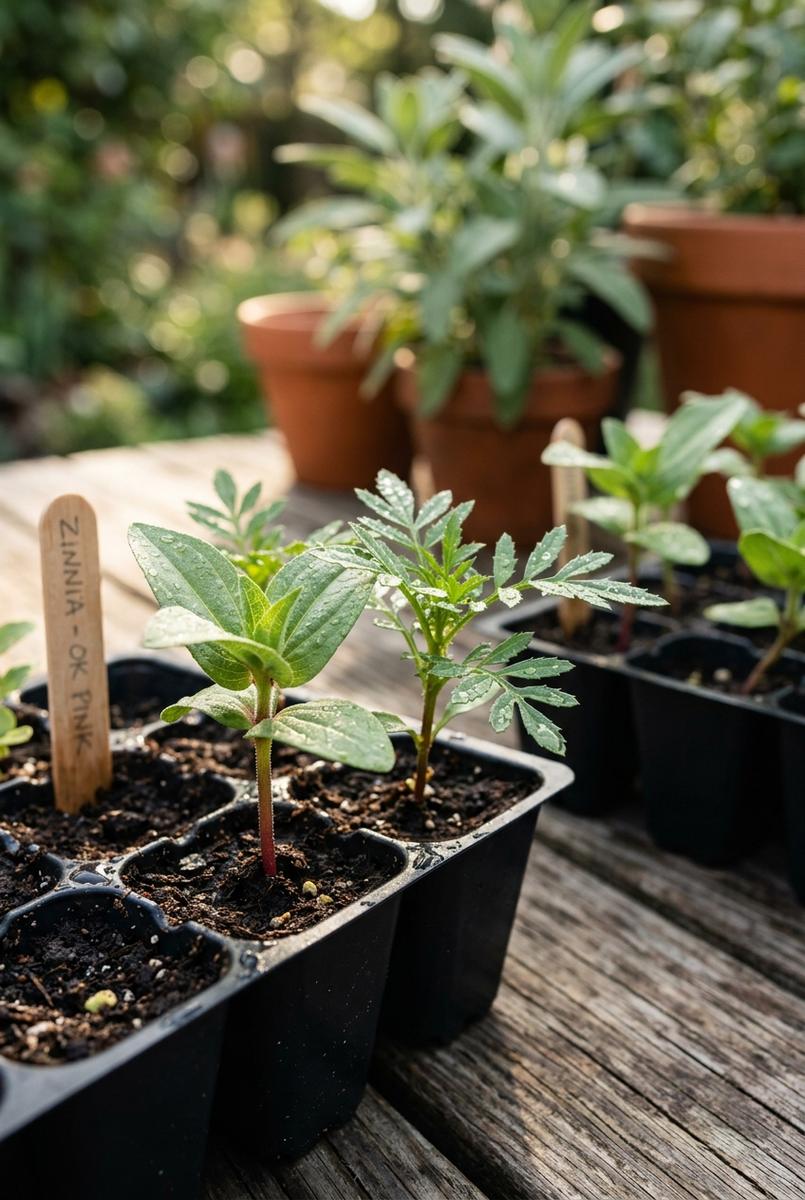
Start with one tray and one or two flower varieties. Marigolds and zinnias are useful first choices; cosmos, sunflowers, and nasturtiums can also be grown from seed, but direct sowing may save work and avoid disturbing their roots. Follow the packet’s depth, temperature, and indoor lead time rather than treating all five flowers alike.
Before sowing, check where the seedlings will live until transplanting. They need drainage, suitable light, and room to grow. University of Minnesota Extension covers those setup needs and recommends using the instructions for the particular seed.
Choose Flowers That Fit the Final Space
| Flower | A useful reason to choose it | What to check first |
|---|---|---|
| Zinnia | Color for a sunny bed or cutting patch | Mature height and spacing; compact and cutting varieties differ |
| Marigold | Compact plants for a pot or bed edge | French and taller African types need different amounts of space |
| Cosmos | Loose, tall flowers in a sunny border | Whether a tall plant will shade or crowd its neighbors |
| Sunflower | A strong focal flower | Dwarf versus tall, and single-stem versus branching habit |
| Nasturtium | Trailing or bushy growth for pots | The variety’s growth habit and room for a full root ball |
If the packet recommends direct sowing, it is fine to skip the indoor tray. An earlier indoor start is useful only if you can keep the seedlings healthy and transplant them at the right time. Our small-bed cut-flower guide helps with the outdoor choice.
Seed Starting Mix, Containers, and a Grow Light
- Clean containers with drainage holes and a tray to catch water.
- A fine-textured seed-starting mix.
- Labels showing the variety and sowing date.
- A suitable light source, with space to adjust its height.
- Seeds for the number of plants you can actually use.
Reuse containers that can be cleaned and disinfected safely. A heat mat and humidity dome are optional tools, not automatic requirements. Price the complete setup locally; a budget that leaves out the seeds or light is misleading.
Place the tray where spilled water will not damage furniture. Avoid putting it on a water heater or other appliance as a makeshift heat source. Keep cords, water, children, and pets in mind when choosing the shelf.
Count Back From Your Local Planting Date
The USDA hardiness map describes winter minimum temperatures for perennial survival. It does not give a last-frost date for annual flowers. Look up local frost-risk information, then check the packet’s outdoor temperature requirements and indoor lead time.
For example, a packet asking for a four-week indoor start before a May 15 transplant date would be sown around April 17. That is arithmetic for an example, not a recommended date for every Zone 6 garden. Our planting calendar explains how to find the date for your own area.
Seed Starting Indoors: Setup Steps
- Moisten the mix and fill the containers without packing it hard.
- Sow at the packet’s depth. Some seeds need surface light; others need covering.
- Label the cells before starting a second variety.
- Keep the mix moist while seeds germinate, without leaving the tray in standing water.
- Check daily. Provide suitable light as seedlings emerge, and adjust any cover so the tray does not stay hot and wet.
- Thin crowded cells by snipping unwanted seedlings rather than pulling through neighboring roots.
- Check roots and pot up seedlings that outgrow their cells before outdoor conditions are ready.
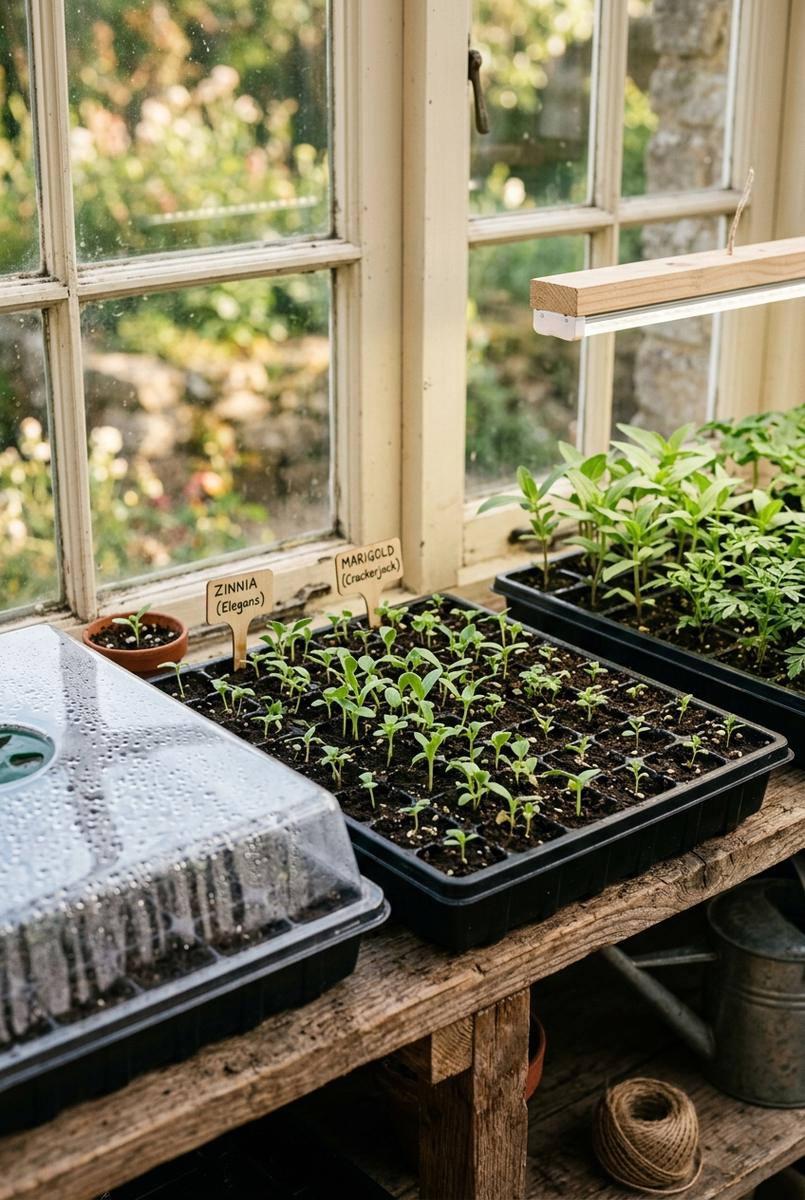
Set the light distance using the fixture’s instructions. A strong LED is not interchangeable with a fluorescent tube placed a few inches above leaves. Grow lights that fit a living room covers the room side of the choice.
Seedling Care and Mistakes to Watch For
Thin, leaning seedlings usually need a light check. Crowding can make the problem worse. Give leaves room and assess the fixture before adding fertilizer.
Collapsed stems at the soil line may be damping off. Remove affected plants, check excess moisture and airflow, and use clean containers and mix for a new sowing. Bottom watering alone cannot guarantee prevention. Iowa State’s damping-off guide explains the disease and growing conditions that favor it.
Yellow leaves can have several causes, including excess water or a depleted mix. Check moisture and the mix’s fertilizer charge before feeding. Use a product labeled for seedlings at its instructed dilution.
Harden Off Before Planting Outside
Introduce seedlings gradually to sheltered outdoor conditions, then increase their exposure to sun and wind. Bring them back under cover when conditions would damage them. A fixed ten-day calendar cannot account for a sudden cold snap, heavy rain, or unusually strong sun.
Keep the root ball intact at planting and follow mature spacing on the packet. Young plants still need establishment care outdoors; do not count indoor germination as the end of the project.
What to Read Next
- Grow lights for a living room helps when the seed shelf shares your living space.
- The baggie method tests an older seed lot before it takes up tray space.
- Start herbs indoors from seed applies the setup to a kitchen herb project.