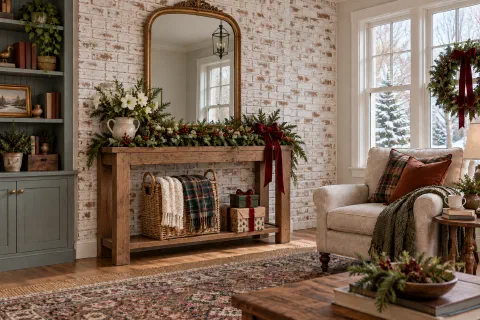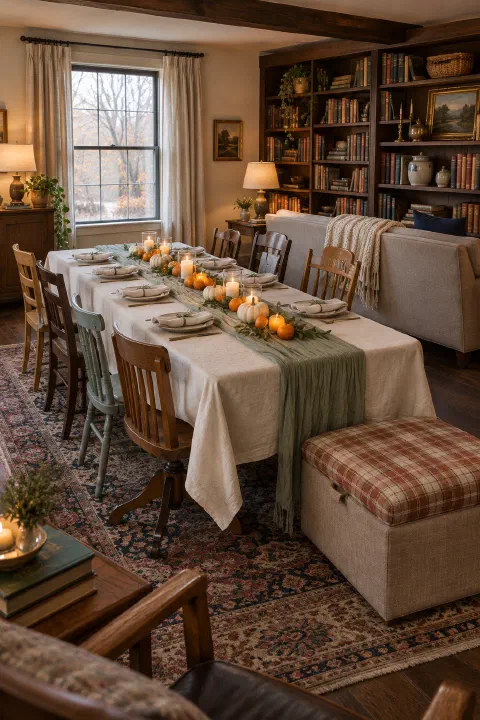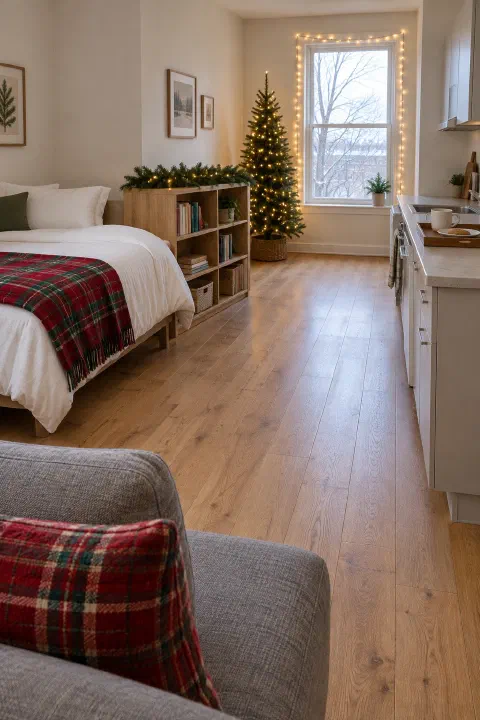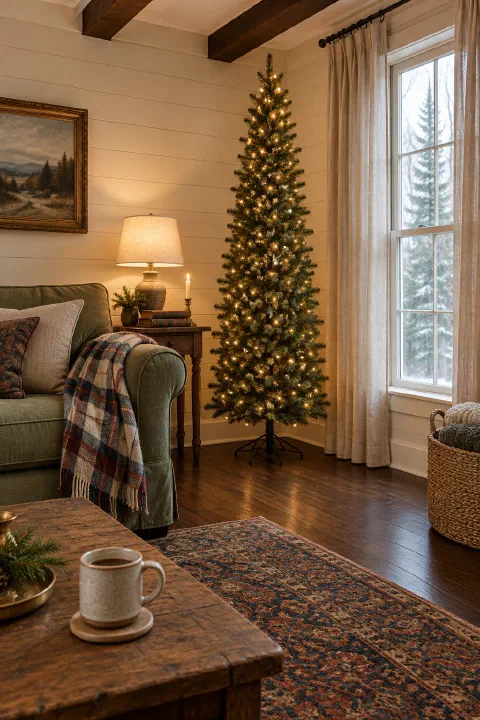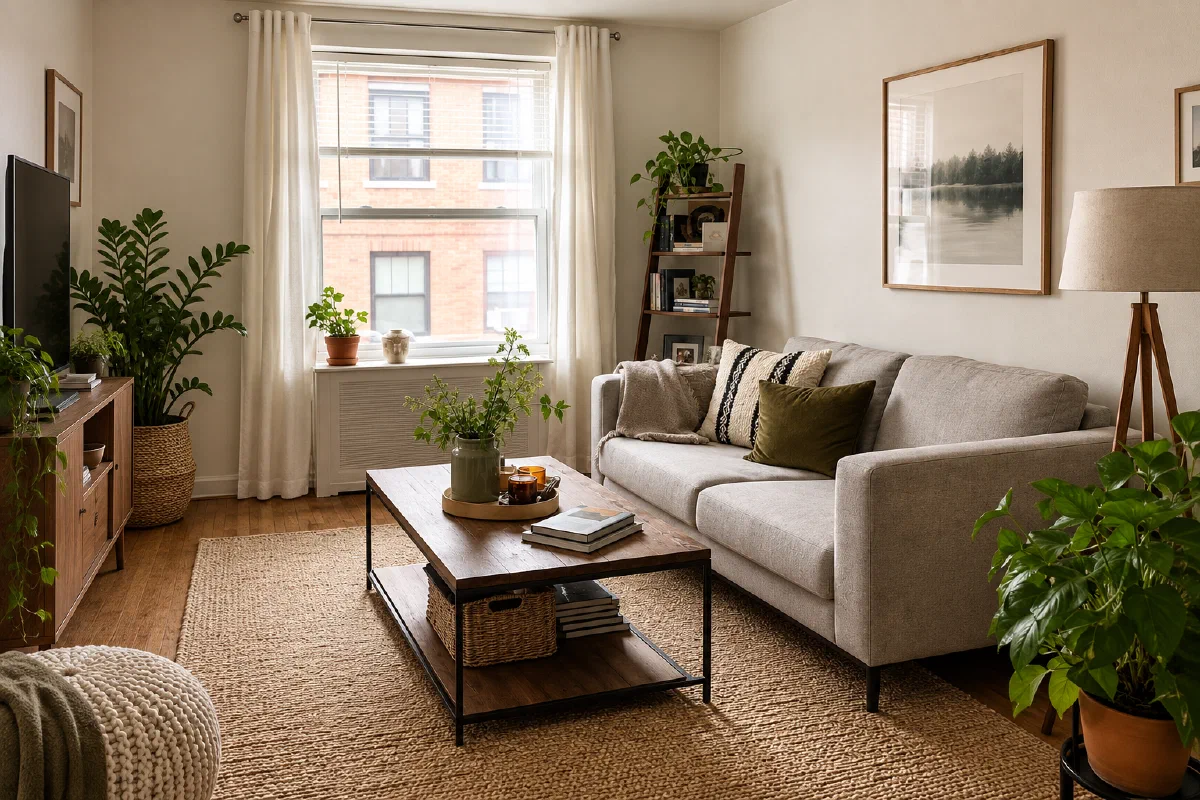
A small sofa on a rug, a lamp beside the seat, and a plant near the window can give a rental living room somewhere comfortable to spend an evening. Start with the corner you want to use, then choose furniture and details that let you use it. You can make a room feel personal through fabric, light and art before changing a wall finish.
These 10 small apartment living room ideas for renters cover different jobs: seating, table space, storage, lighting, walls and the window. Choose the one that would improve your ordinary day first. Use what you own to test the arrangement before shopping, and take the room’s shape seriously; a photo of a small sofa doesn’t tell you whether it fits your doorway.
1. Make a compact sofa the center of a usable seating area
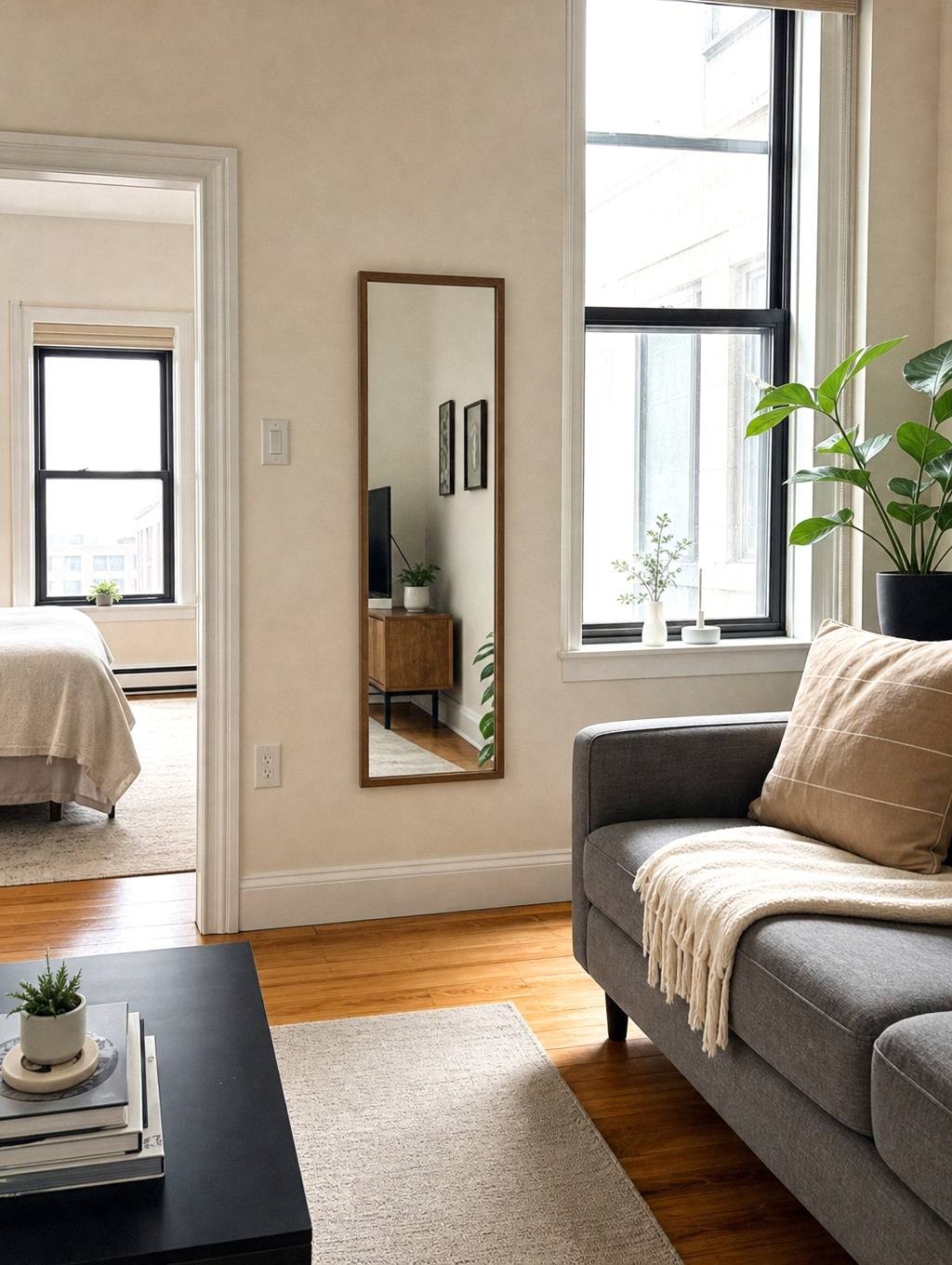
A loveseat or apartment sofa with plain upholstery leaves room for a patterned cushion, a blanket and your own art. Choose the seat for the people who actually use it. A small household might prefer one compact sofa; another may need a full sofa and fewer separate chairs. The useful choice gives everyone a comfortable seat without narrowing the route into the room.
Measure the complete footprint, including arms, plus doorways and stair turns before ordering. Mark it with tape and walk past carrying a basket. Open nearby cabinets and doors. The U.S. Fire Administration’s escape-plan guidance recommends keeping doors and windows unblocked, so a good-looking seat can’t claim those spaces.
2. Use a rug to define the living room within a shared space
A rug can mark the sitting area when the room also holds a dining table or opens straight onto the kitchen. Put the sofa’s front legs on it where practical, and see whether the chair joins the same area. That connection is easier to read than a small mat floating between the furniture.
Measure the seating arrangement rather than shopping by the room’s floor area alone. Reposition an existing rug first; it may work better turned the other way. On hard floors, choose a pad suited to the floor and rug. On carpet, check for shifting or raised edges. Keep corners flat and doors free to open. You shouldn’t have to step over a curled edge to reach the sofa.
3. Trade a crowded coffee table for a movable side table
In a narrow living room, a small side table next to the sofa can hold the mug and book without occupying the center route. A nesting pair gives you a second surface to pull out for guests, then tuck away. Test the table at the seat where you’ll use it: you should be able to reach the top without leaning across the room.
Check the base as well as the top. A wide base can take more floor than the photograph suggests, and a very light table may wobble under a full drink. Use a tray on an ottoman only when the top supports it stably. Keep the middle of the room clear enough to open a sofa bed or make space for everyday use.
4. Give the sofa its own warm reading light
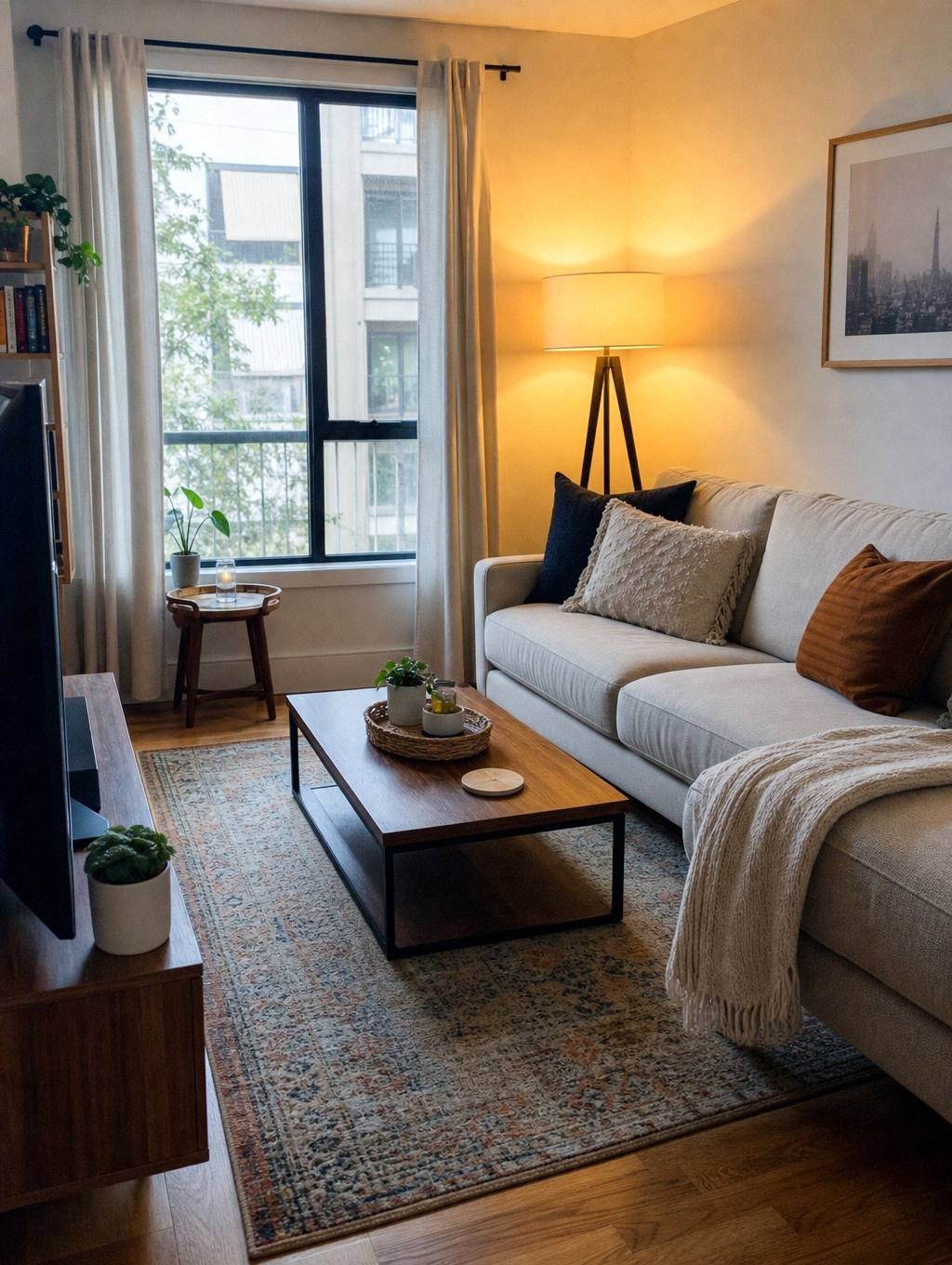
A lamp beside the seat makes the living room more useful after sunset, even when the ceiling fixture is plain. Try an existing floor or table lamp before buying another. Position the shade to light the page while keeping the bare bulb out of your normal sightline. A second light in a dark corner can help when the first leaves half the room hard to see.
Warm white is a useful starting point, rather than a required brightness. ENERGY STAR’s lighting guide explains color appearance and bulb labels. Compare suitable bulbs in the room itself, and retain enough light for reading and walking. Route cords along walls, away from the main path. A plug-in sconce also needs a permitted mounting method.
If you’re planning a separate chair, compare the small-space reading-nook layouts before buying its lamp and table. For a room that also needs heat, the electric fireplace guide for apartments covers the separate lease, placement and power decisions.
5. Make a blanket basket and an ottoman do different jobs
Use a basket beside the seat for the blanket you reach for and a storage ottoman for things you use less often. Giving each one a specific job stops both becoming containers of mixed clutter. The basket can provide woven texture; the ottoman can supply a place to put your feet without introducing another chair.
Check the ottoman’s lid clearance and the space your legs need when it’s in use. If opening it requires moving the table every time, store occasional items there instead of everyday essentials. Choose one useful container before adding another. The earthy apartment texture guide gives examples of wood, woven fiber and fabric that don’t require another large furniture purchase.
6. Use low storage to keep the floor around the entrance open
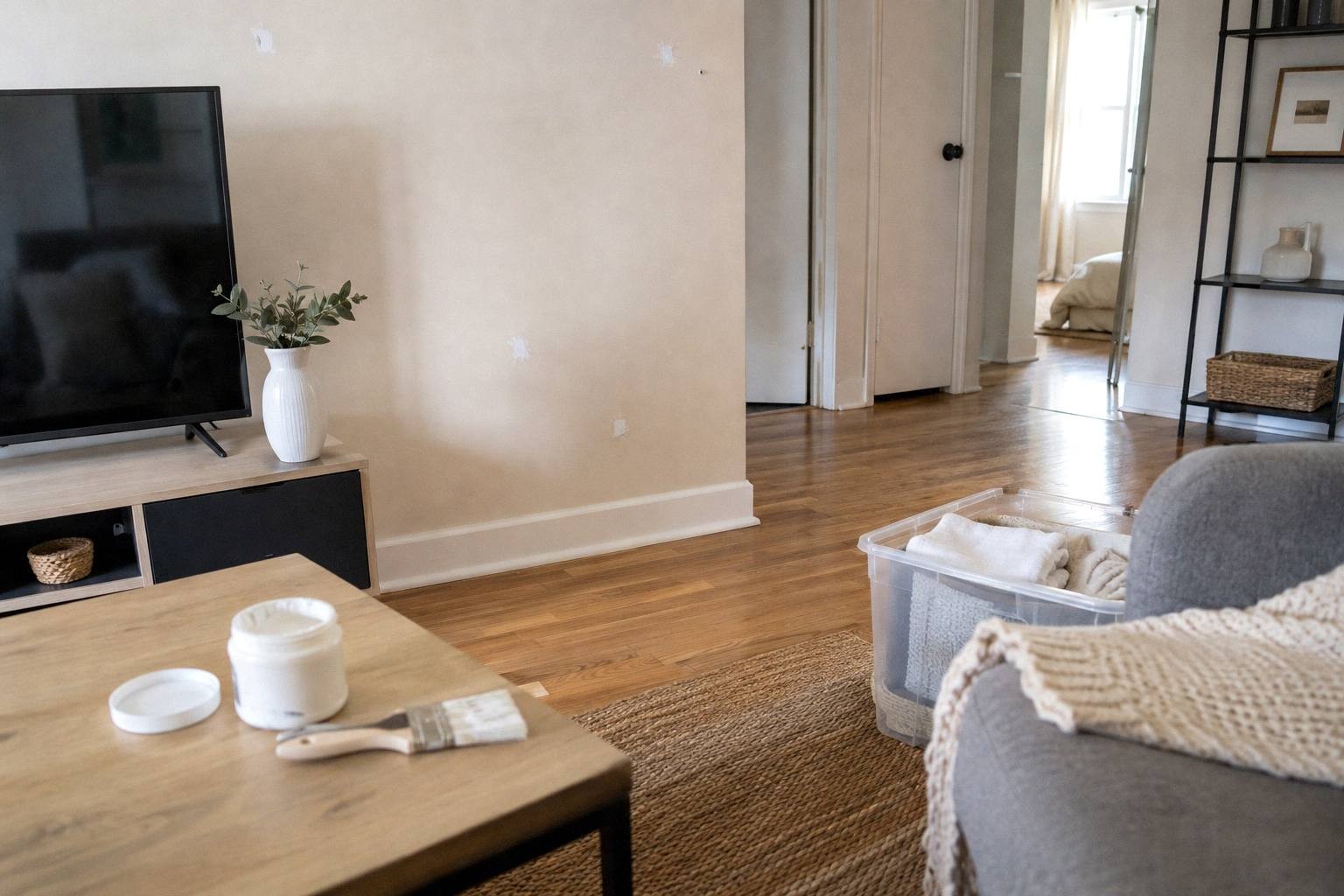
A low cabinet or TV console can hide the chargers, games and books that otherwise spread across the coffee table. Put frequently used things in the section nearest the seat. Leave a clear surface for the screen or one personal object, rather than turning every shelf into a display.
Match the cabinet’s depth to the route beside it, and open every door or drawer during your taped layout test. Follow the manufacturer’s anchoring requirements even for furniture sold as freestanding. The CPSC’s Anchor It guidance covers tip-over prevention. If bags and shoes are filling this corner, the small entryway guide can help give them a place outside the seating area.
7. Hang a small group of art with a clear arrangement
A few botanical prints, drawings or photographs above the sofa give the room something personal to look at. Start with the pieces you want to keep, then arrange paper outlines on the floor or wall before choosing attachments. A shared frame color or a common top line can connect different images without making them identical.
Read the lease before hanging. For adhesive products, use the actual frame weight and the exact package directions. Command’s weight-limit guide varies by product; its FAQ also explains surface suitability and removal. A strip isn’t suitable for every paint finish. Keep photos of the wall and attachment instructions. The gallery-wall guide helps with the arrangement itself.
8. Add pattern on one wall if the surface allows it
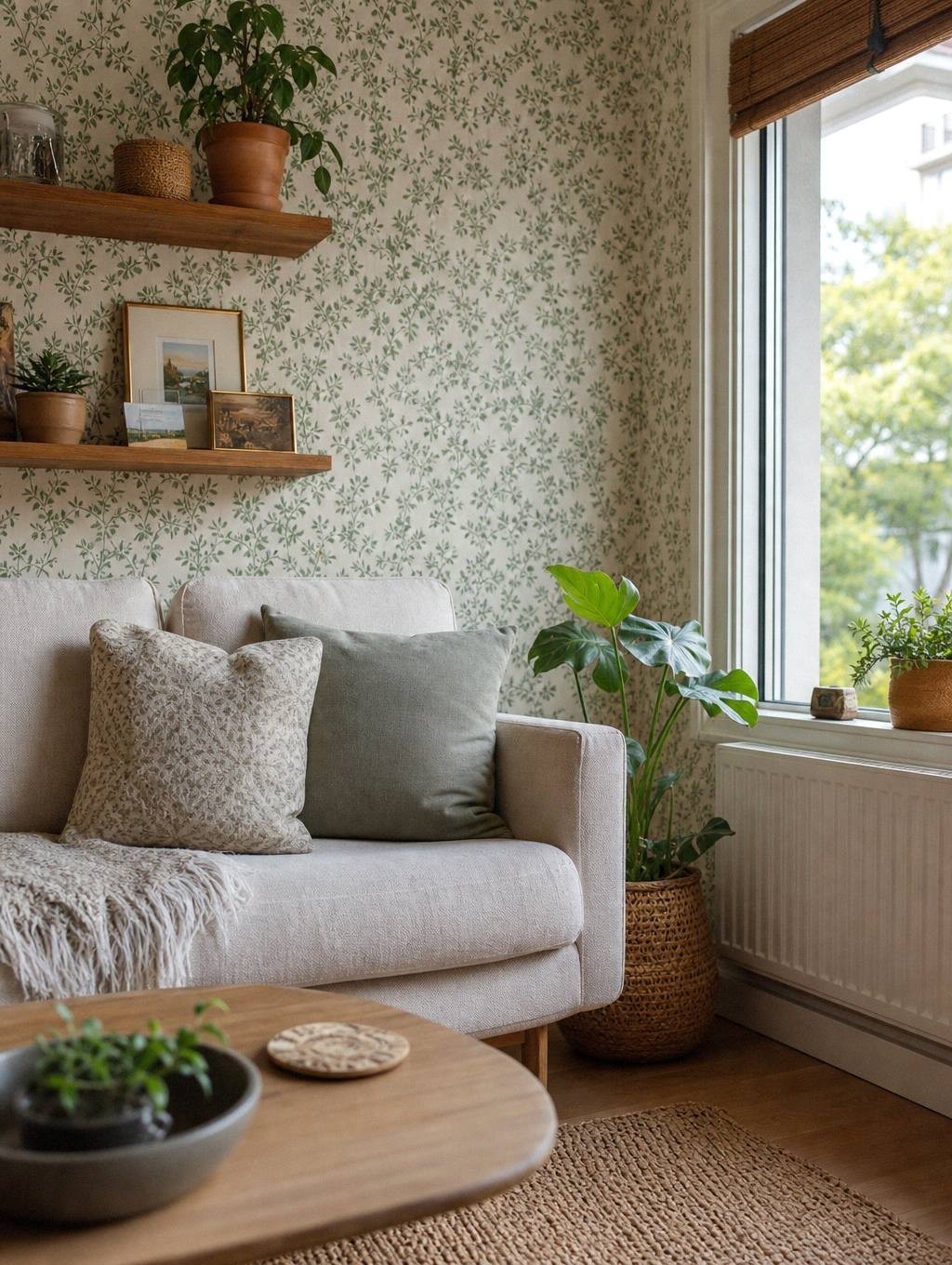
A small area of removable wallpaper behind the sofa can give plain rental furniture a backdrop. Pick a pattern that works with the colors you already own, and use one wall rather than introducing several competing prints. A washable cushion or framed print can repeat a color from it elsewhere in the room.
Check permission and the wallpaper manufacturer’s surface guidance, then test a sample in an inconspicuous place. Follow the removal instructions and inspect the result before ordering enough for the wall. Paint condition and finish affect removal; “removable” doesn’t guarantee that every wall will stay intact. If the sample lifts paint, use fabric, art or the furniture arrangement to supply the color instead.
9. Put a mirror where the reflection improves the view
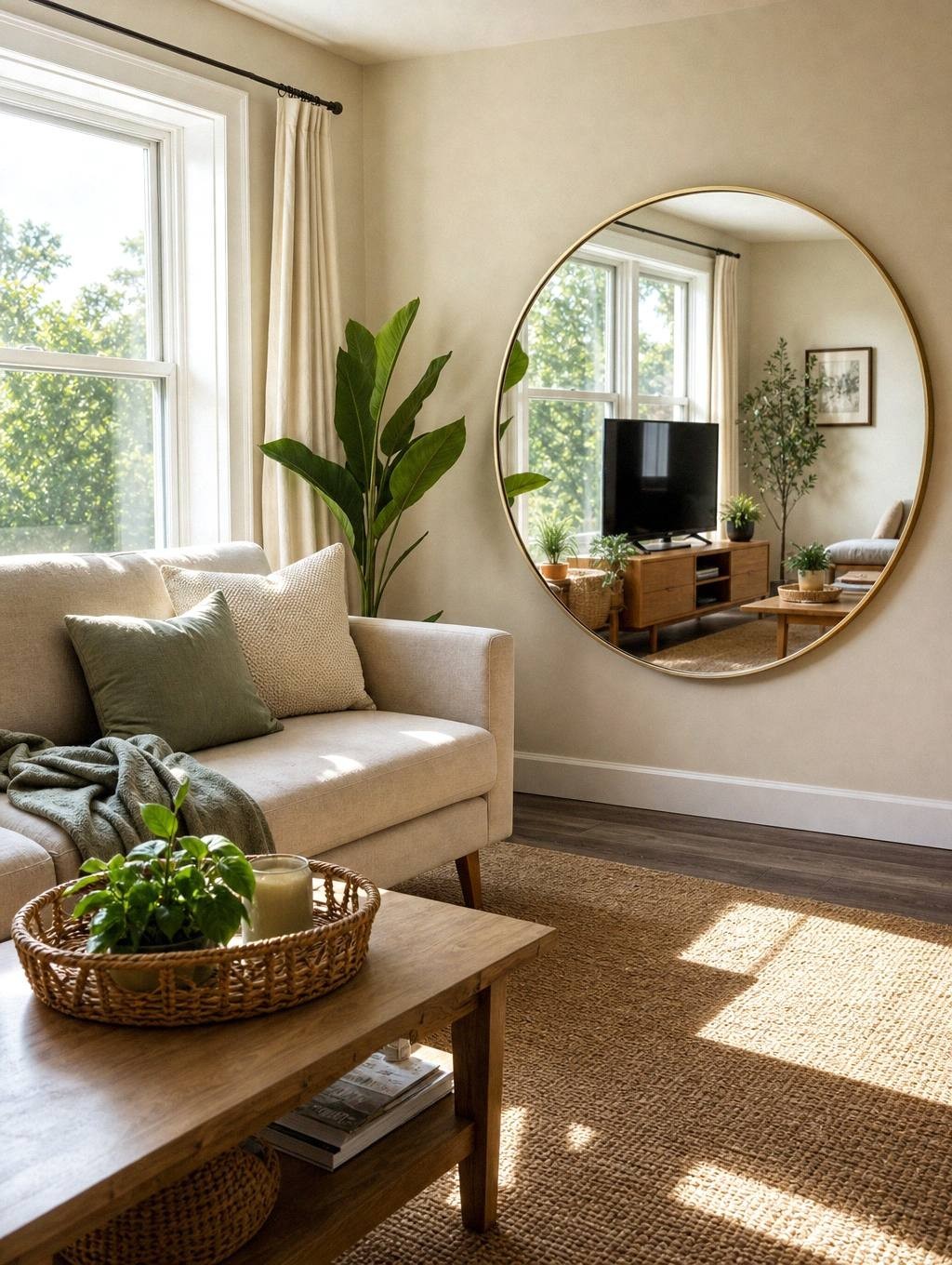
A mirror can show the window or a plant from another part of the room. Choose the reflected view before choosing the spot: the television, a bare bulb or an untidy doorway may be less enjoyable than the wall you had. Look from seated height as well as from the entrance.
Use the manufacturer’s secure installation method and get permission for the necessary fixing. A heavy mirror needs more than a decorative lean against the wall. Keep it away from a door swing or a route where people could knock the base. If you can’t mount it safely, use a lighter piece of art. The room can feel finished without a mirror purchase.
10. Give the window one plant and a reachable place to sit
A plant beside the window and a chair or sofa end nearby can make a plain corner somewhere you want to spend time. Keep the pot at a height that suits the plant’s light needs and lets you water without reaching over upholstery. Use a saucer and protect the floor or furniture from runoff.
Choose the plant for the available daylight rather than the size of the empty corner. The living-room plant guide can help with that match. Leave the window free to open and keep foliage clear of heaters. In a studio, the sofa back can mark the seating edge without a solid divider; compare the studio apartment layouts before blocking daylight with storage.
Test the room before buying the missing piece
Use tape, boxes and furniture you own for a one-evening layout test:
- Mark the full footprint of the proposed sofa, table, storage and lamp.
- Walk from the door to the kitchen and window with a laundry basket.
- Open cabinets, the sofa bed and windows inside the layout.
- Sit down and check table reach, light and screen glare.
- Change the piece that causes a daily obstruction before buying anything larger.
| If the room’s problem is… | Try first | Delay until the layout works |
|---|---|---|
| A crowded center | Side table or movable nesting table | A larger coffee table |
| Harsh evening light | Reposition an existing lamp | More decorative objects |
| Loose blankets and chargers | One basket or useful cabinet section | Another storage unit |
| Bare rental walls | A planned group of light art | Wallpaper or paint |
Keep the rental easy to care for and reset
Keep original move-in photos, permission for alterations and product instructions together. Check rug edges, furniture hardware and lamp cords as you use the room. Removal instructions belong with the adhesive products, not in a folder you won’t find until moving day.
Before leaving the rental, compare its condition with the move-in photos. Remove attachments as directed and agree any repairs or paint matching with the landlord. Photograph the room afterward. Good records make the condition easier to discuss; they don’t guarantee a deposit outcome.
Related reading for your next small-home choice
- Renter decor ideas that do not cost your deposit covers reversible choices beyond the living room.
- Studio apartment floor layout plans helps connect sleeping and seating areas without crowding the route.
- Earthy textures for a small apartment offers materials to add after the furniture fits.
- Paint colors that make a room feel peaceful, not cold helps choose a color when a documented paint change is allowed.
- Warm living room color palettes helps coordinate the furniture and textiles you already own.
- Tall indoor plants by height shows which ones fit a corner under a standard ceiling.