
Star jasmine can grow beside a door where it has suitable light, well-drained soil and a support for its twining stems. It is an evergreen vine with fragrant white flowers, generally suited to USDA zones 8 to 10. Keep the doorway and path clear, and plan how you will prune and maintain the support before planting.
Star Jasmine by the Door: Zones, Support and Care
Last updated:
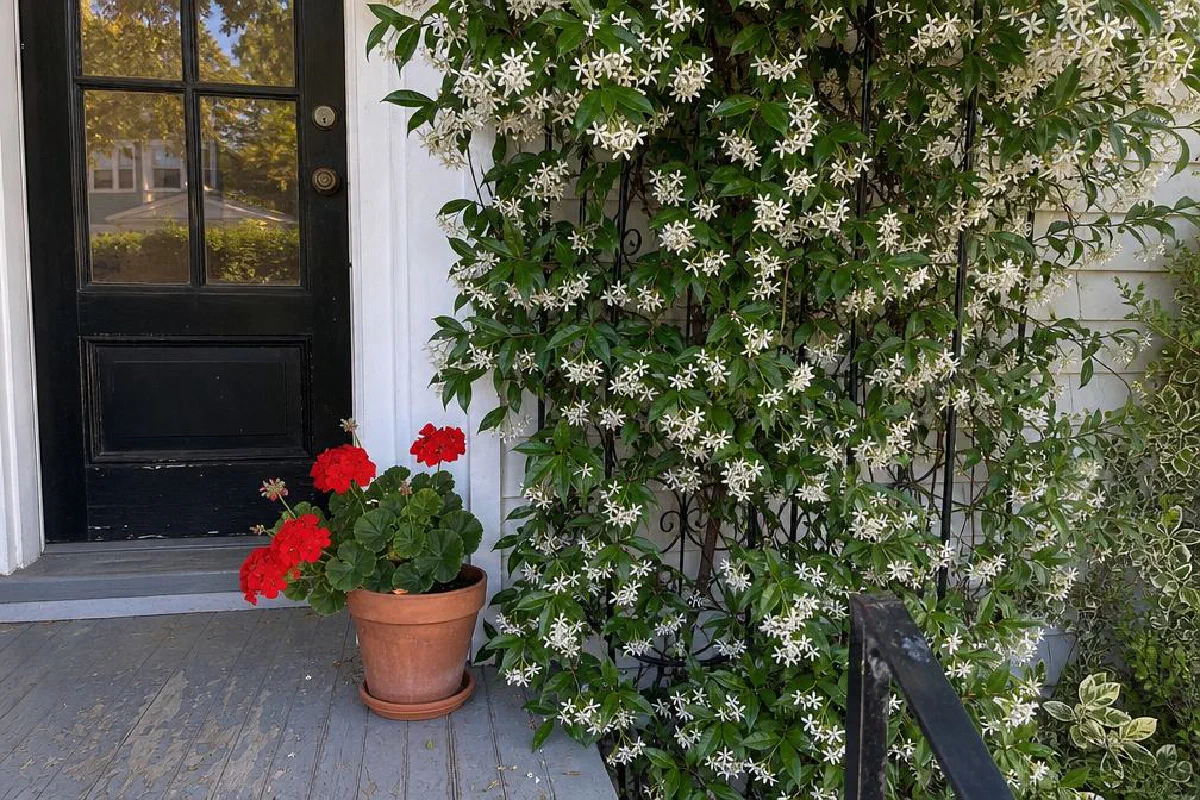
Illustrative scene, not a photograph of the linked products.
It does not cling to a flat wall by itself. A trellis gives the stems something to wind around and makes it easier to direct growth away from hinges, gutters and the walking route.
Check the plant and the site
NC State Extension’s star jasmine profile lists full sun or partial shade, good drainage and a sheltered site. It identifies the plant as Trachelospermum jasminoides, in the dogbane family. It is not a true jasmine.
| Decision | What to check |
|---|---|
| Winter suitability | Your zone, local exposure and the nursery’s advice for the exact plant |
| Light | The actual sun at the entry, including shade from the roof |
| Soil | Whether water drains away rather than leaving the root zone saturated |
| Support | A structure and attachment system suited to a mature vine |
| Access | Room to open the door, walk past and reach the plant for maintenance |
NC State lists zones 8a through 10b and growth up to about 20 feet. Those are planning guides, not a promise that every plant will reach that size or survive every exposed spot within those zones. Check your location on the USDA hardiness map and ask a local nursery about winter conditions.
Choose the support before planting
A freestanding trellis, a properly mounted lattice or a suitable arbor can carry the vine. Check the structure, fasteners and installation instructions for the load and exposure. Get permission for attachments to a rented home.
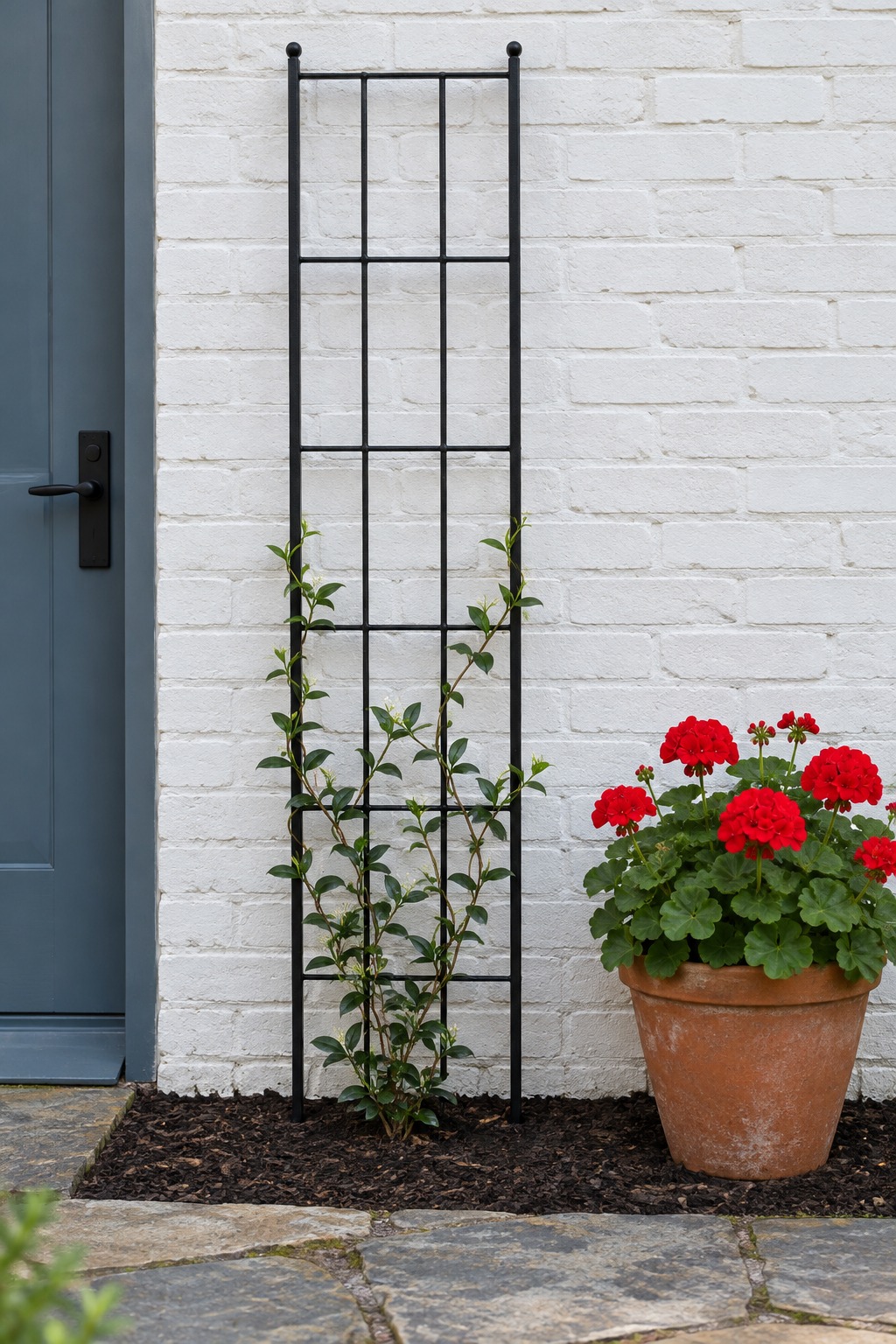
Leave access for inspection and pruning. There is no single wall gap that makes every siding material and mounting system safe. Keep growth out of vents, guttering, shutters and door hardware.
Two current options are:
| Exact listing | Useful starting point | Limitation to check |
|---|---|---|
| Macteyia black metal trellis, two-pack (opens Amazon in a new tab)As an Amazon Associate, we earn from qualifying purchases. Full disclosure. | Panels listed at 70.8 by 19.7 inches for a narrow planting area | Check anchoring and whether the support will suit the mature vine |
| CJGQ expandable wooden lattice, two-pack (opens Amazon in a new tab)As an Amazon Associate, we earn from qualifying purchases. Full disclosure. | A lattice arrangement whose width can be adjusted | Check the installed dimensions and mounting; expansion does not establish a load rating |
Both were in stock on October 11, 2026. These are support options, not a guarantee that a vine and planter can stand unsupported in wind.
Plant and train the vine
- Place the support where you can maintain it and check the route around the door.
- Follow the nursery’s planting directions for the root ball and existing soil. Check drainage before putting a plant in a persistently wet spot.
- Water during establishment according to soil moisture, weather and nursery advice. Drought tolerance in an established plant does not mean a new plant can be ignored.
- Guide young stems onto the support with suitable ties, leaving room for growth. Check ties as stems thicken.
- Redirect or prune stems before they obstruct the entry or work into building fittings.
Avoid promising a fixed first-year height or a flowering date. Plant size, weather, pruning and conditions affect establishment. Choose a plant for the site you have, rather than expecting a small transplant to cover the doorway by summer.
Prune after flowering
NC State advises pruning after flowering. Use that timing when shaping the vine, rather than making a heavy routine cut before the bloom you want to keep. Remove damaged growth as appropriate and keep the entry usable.
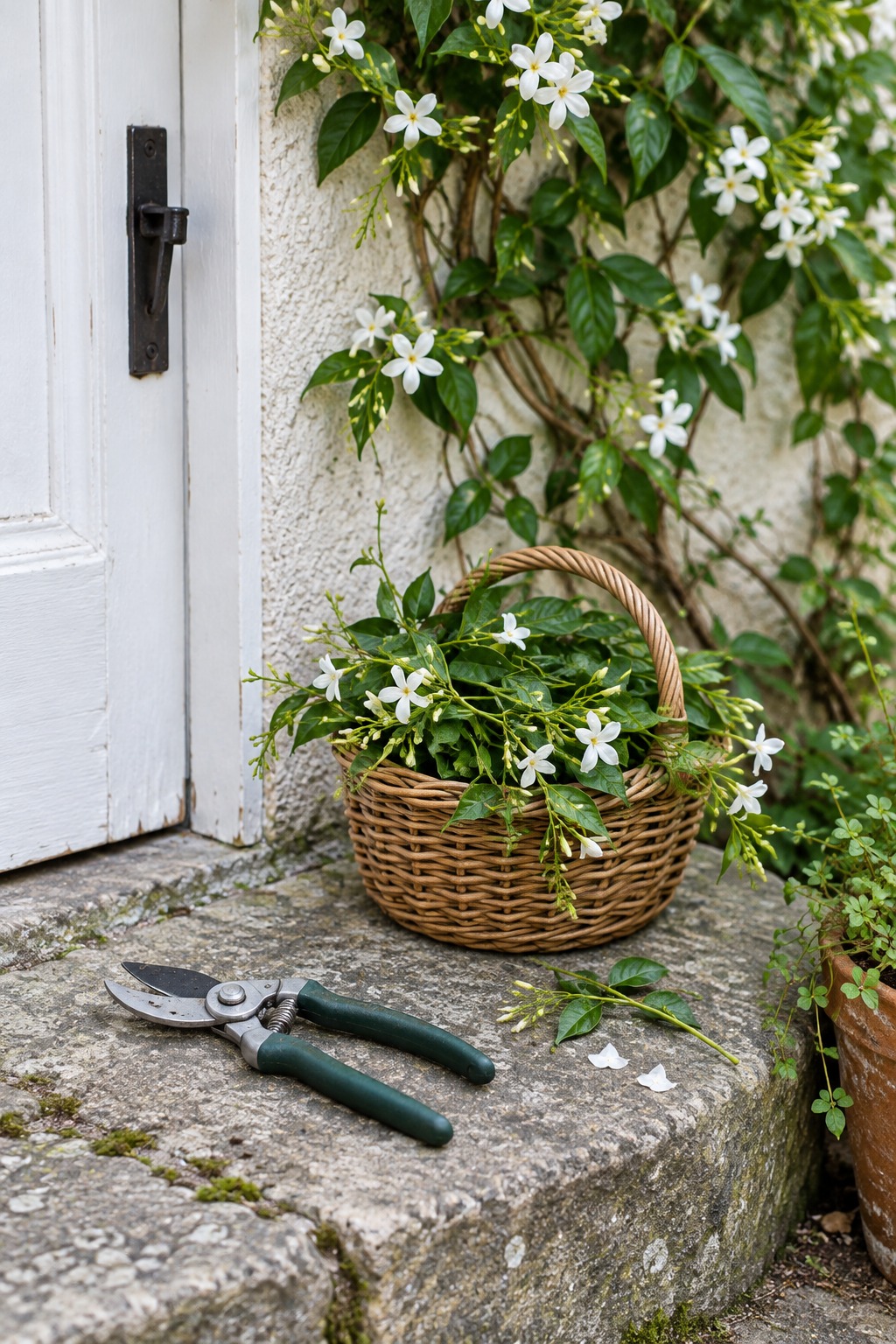
Check the support and attachments while the foliage is being cut back. Maintenance is easier when you can still reach the plant, the wall and the soil surface.
Growing it in a container
Choose a container with suitable drainage and root space for the plant you buy. Read the nursery’s growing and overwintering advice before treating a pot as a way around the local winter climate.
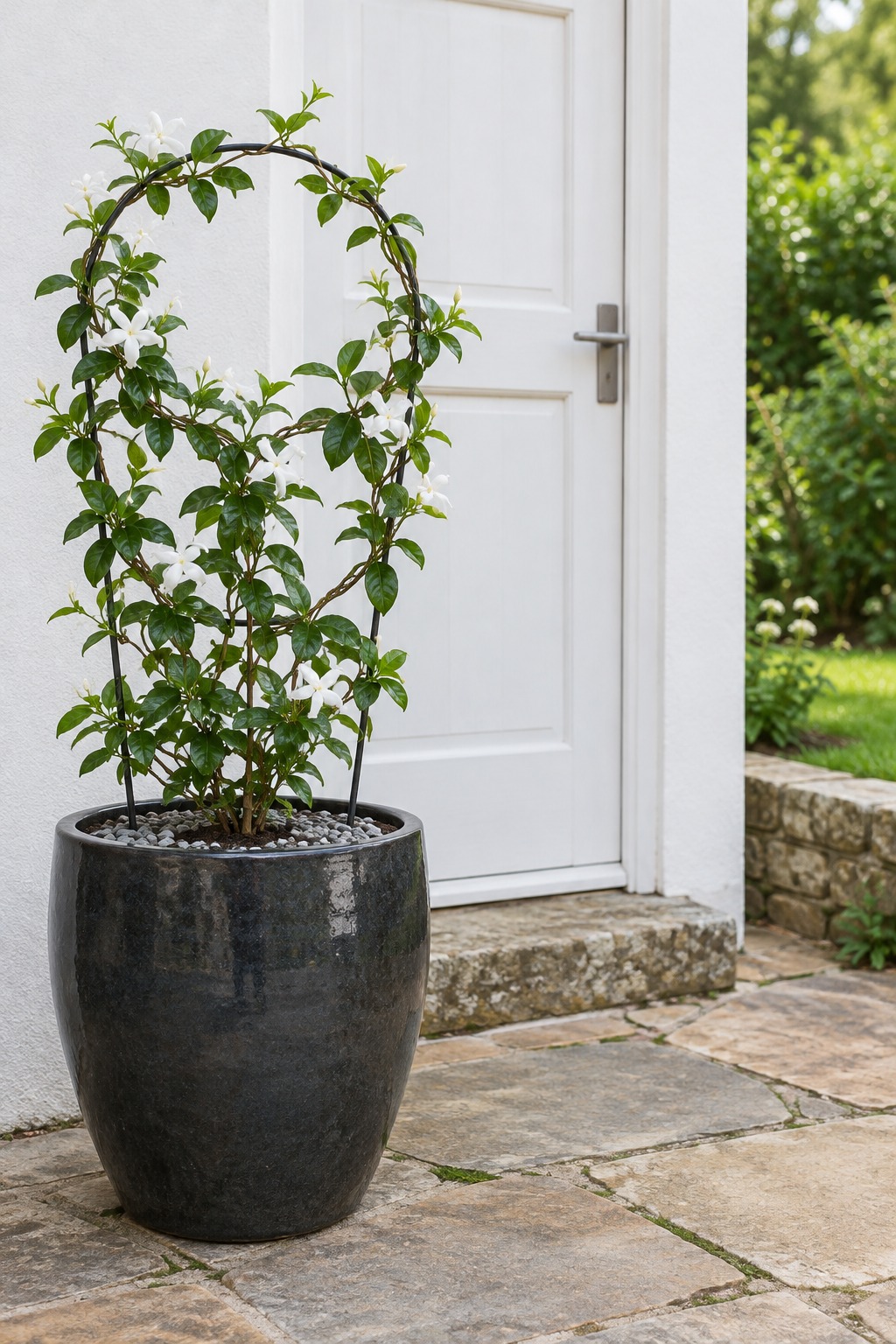
A container outside has different exposure from roots in the ground. In a cold climate, moving an evergreen vine indoors also requires a suitable bright location and a watering routine. A dark garage or basement is not automatically a workable winter home.
Check the weight of the planted pot and how the support is secured. If it must move seasonally, plan the move before stems grow into a fixed structure. See porch container choices for drainage and arrangement questions.
Names and alternatives
Confederate jasmine is another common name for star jasmine, not a separate fragrant alternative. Asian jasmine, Trachelospermum asiaticum, is a different plant often used as groundcover; do not substitute it based on the word jasmine alone.
If supporting wildlife is the priority, NC State’s coral honeysuckle profile describes Lonicera sempervirens, an eastern US native whose tubular flowers attract hummingbirds. Its flowers are non-fragrant, so it does a different job from star jasmine.
For another vine, start with local suitability, mature size and invasive-plant guidance. Do not choose an aggressive climber just because it promises fast coverage. Privacy vines for a fence explains why support and season matter.
Will it make the whole porch fragrant?
The flowers are fragrant, but there is no reliable radius to promise. Bloom, wind and the position of the plant change what you notice. Put the plant where it can grow well and where you can maintain it. Fragrance is a benefit of the flowers, not a reason to crowd the door.