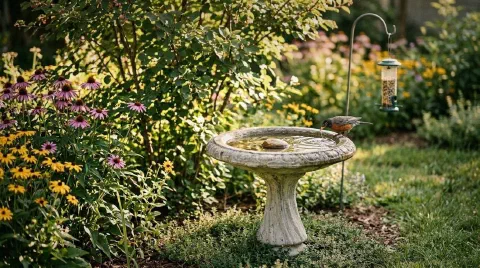
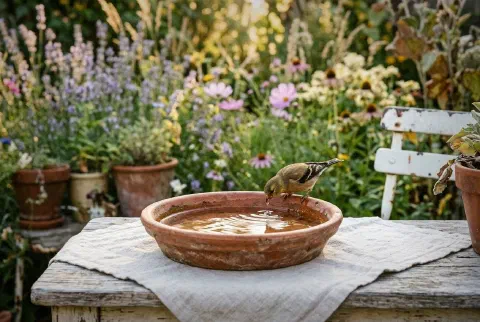
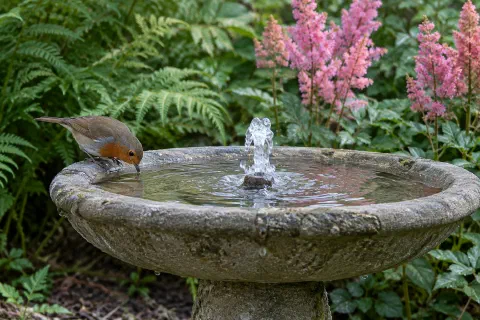
For a backyard corner, compare bird baths by bowl depth, cleaning access and stability before choosing a decorative style. A shallow, gently sloping basin is useful to birds; a bowl you can lift or empty is useful to you. Match the base to soil, paving or a deck, rather than assuming every pedestal can go anywhere.
Bird Baths for a Backyard Corner: 5 Styles
Last updated:
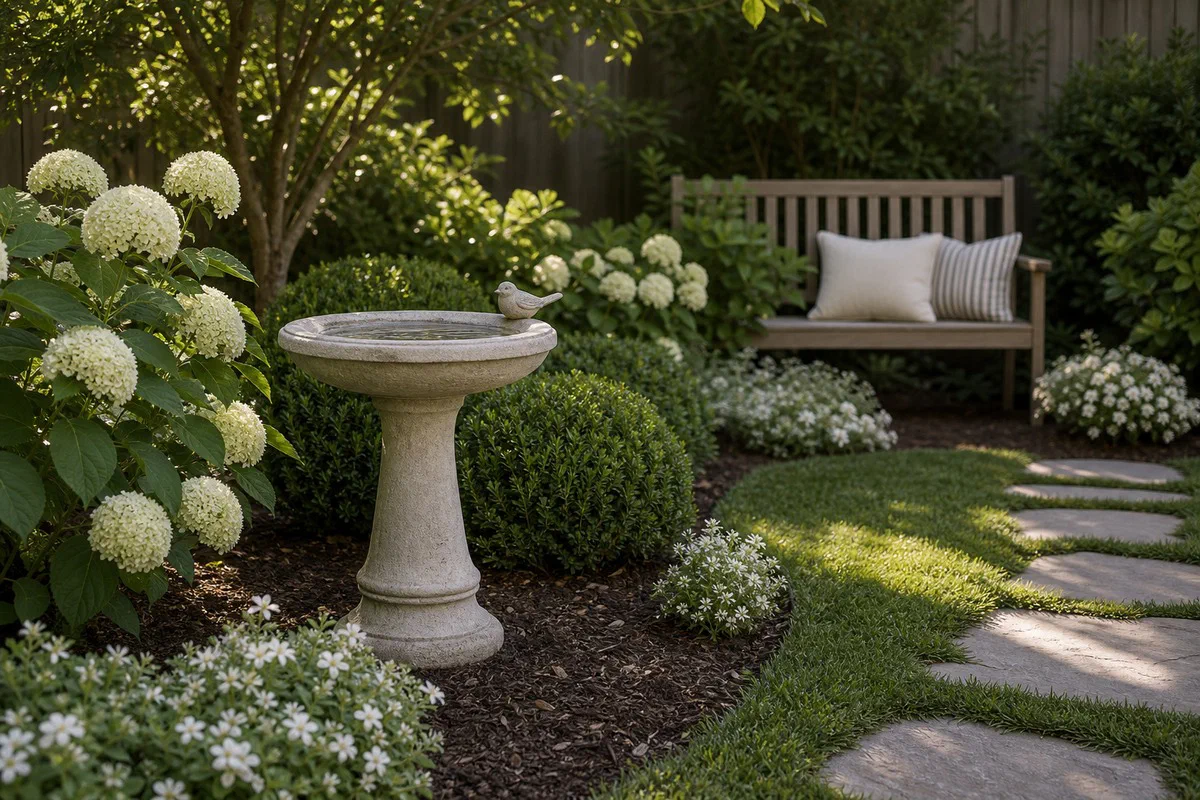
Illustrative scene, not a photograph of the linked products.
If you are comparing Walmart bird baths, use the five styles below as a shopping checklist. The linked buying options are current Amazon listings, checked separately; they are not claims about Walmart’s stock or identical models at both retailers.
Five styles and where they fit
| Style | Where it can fit | The question to settle first |
|---|---|---|
| A metal stake bath | A soil bed where a stake can be installed securely | Can you remove the bowl without disturbing the base? |
| A freestanding pedestal | A level, firm surface beside a border | How heavy is the filled bath, and can you empty it safely? |
| A shallow ground dish | A level spot with a clear approach | Will pets, soil splash or hidden cats make the spot unsuitable? |
| A decorative glass basin | A sheltered location on its intended stand | Is the wet surface secure, and is the actual water shallow enough? |
| A fountain or heated bath | A site suited to its power and care requirements | Can you maintain the equipment as well as the water? |
The Cornell Lab’s water guidance favors shallow, sloping basins. Its depth guideline is no more than 1 inch at the edges and 2 inches in the middle. Measure the filled water, not just the outside dimensions on the listing.
1. Metal stake baths for a planted border
Stake baths are convenient where the soil can hold the intended base. They are less suitable for a paved corner unless the manufacturer provides another mounting method. Check the installation depth and access for lifting out the bowl.
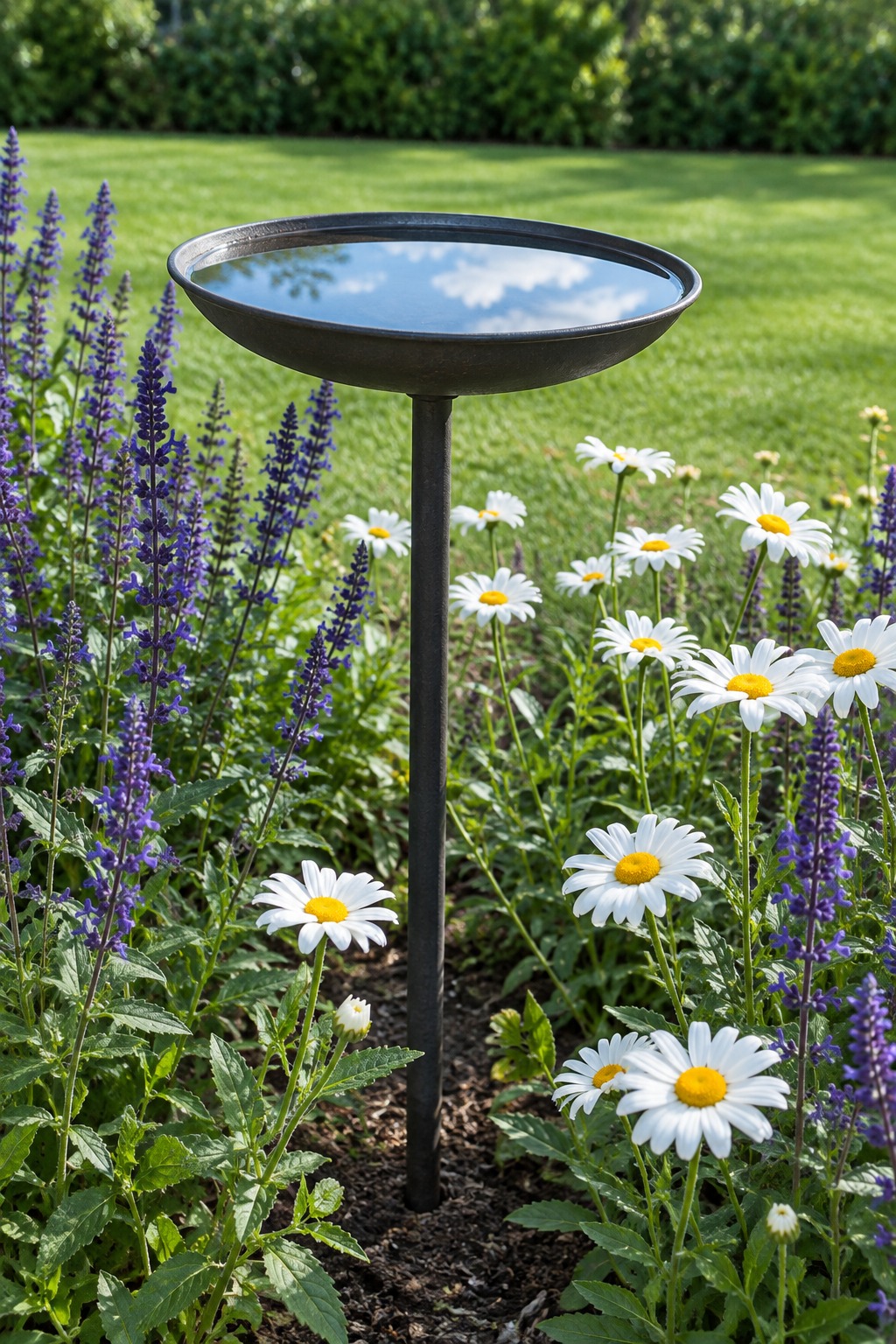
These three have different bowl sizes and useful cleaning or height features:
| Bath | Useful feature | Check before ordering |
|---|---|---|
| Gtongoko 34-inch metal bath (opens Amazon in a new tab)As an Amazon Associate, we earn from qualifying purchases. Full disclosure. | A 12-inch bowl that lifts out for cleaning | The listed bowl is 2 inches deep. Measure your fill level; the rim height does not determine water depth. |
| Daoeny 35-inch bath in antique bronze (opens Amazon in a new tab)As an Amazon Associate, we earn from qualifying purchases. Full disclosure. | A decorative metal pedestal with a five-prong soil base | Its 12-inch bowl is listed as 2 inches deep. Confirm the removable parts and assembly instructions. |
| OUISJYER 10-inch small metal bath (opens Amazon in a new tab)As an Amazon Associate, we earn from qualifying purchases. Full disclosure. | A smaller bowl and adjustable stake height | Select the 10-inch, 1.6-inch-deep version. Its smaller capacity needs closer attention in hot weather. |
All three were in stock on Amazon when checked on October 11, 2026. These are inexpensive metal stake baths, so a budget-to-splurge ranking would add little. Choose by bowl access, size and where the base can be installed. A five-prong stake still needs suitable soil; it does not guarantee stability in loose ground or wind.
Do not choose by height alone. A taller stem can make the bath visible from a chair, but it does not guarantee visits or protection from cats. Install the base as instructed and check it after weather or disturbed soil.
2. Freestanding pedestals on a firm surface
A broad pedestal can sit beside a path without needing a soil stake. Check the weight, footing and bowl attachment. A substantial bath may be awkward to empty if the basin does not lift off.
Look for drainage and cleaning instructions before placing it. Avoid a location where the only way to empty it sends water across a slippery walking surface. Confirm whether the material can stay outside in freezing weather; Cornell notes that concrete can crack in a freeze.
The hero image shows a garden setting, not an exact product offered by either retailer. Use the listing’s dimensions and photographs for the item you are considering.
3. Ground dishes for a simple trial
A shallow pan or plant saucer lets you test a location before buying a pedestal. Cornell notes that ground-level water resembles the places birds naturally find it.
Keep open ground between the dish and dense shrubs when cats roam nearby. Set it level, use secure standing places if needed, and remove it for cleaning. A dish in a muddy hollow is harder to maintain than one on a firm, level patch.
For practical versions of this setup, see seven bird-bath ideas.
4. Decorative glass basins
The pattern is a garden-design choice. Birds still need shallow water, secure footing and a clear approach. Check whether a glass bowl is held firmly by its stand and whether it can be removed without tools.
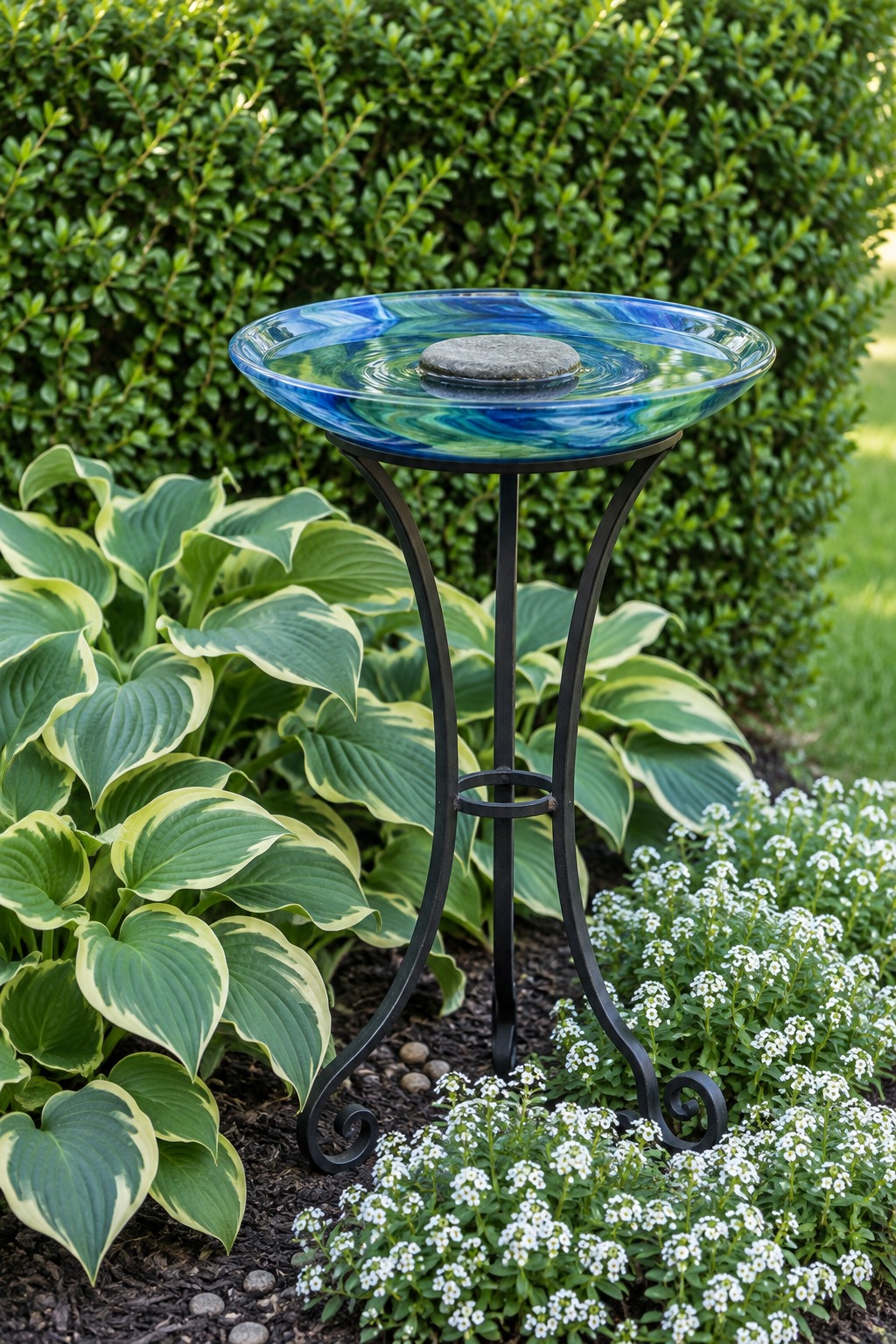
Use stable stones only when they fit securely and leave accessible shallow water. Do not infer that a deep decorative bowl becomes suitable because a product photo shows a bird on its rim. Check the manufacturer’s freeze and cleaning guidance before leaving glass outdoors year-round.
5. Fountains and winter baths
A pump can add movement, but it needs a compatible basin, enough water to operate and regular cleaning. Solar equipment also depends on its particular panel and sunlight requirements. Avoid choosing solely from a photograph of a strong spray. For a pump that runs on the sun, see solar fountain ideas for small patios.
A winter heater needs its own installation and electrical instructions. Use equipment made for the purpose and the selected basin. Never put antifreeze or glycerin into bird-bath water. The bird-bath fountain comparison explains the extra care before you add equipment.
Check the corner before ordering
Stand where you will refill the bath and ask four questions:
- Can you see the bowl from a place you use each day?
- Can you lift or empty it without moving other furniture?
- Is there a clear approach between the water and dense cover?
- Can you keep the water shaded in hot weather without constant falling debris?
Nearby trees can provide perches, but a basin directly beneath a feeder or messy branch collects more debris. These placement mistakes help you review a corner that looks good to you but may be awkward for birds.
Cleaning is part of the buying decision
Change water every day or two, sooner when dirty. Audubon recommends nine parts water to one part vinegar for scrubbing, and avoiding synthetic soaps and cleansers. Rinse thoroughly and follow the manufacturer’s care instructions for the material and finish.
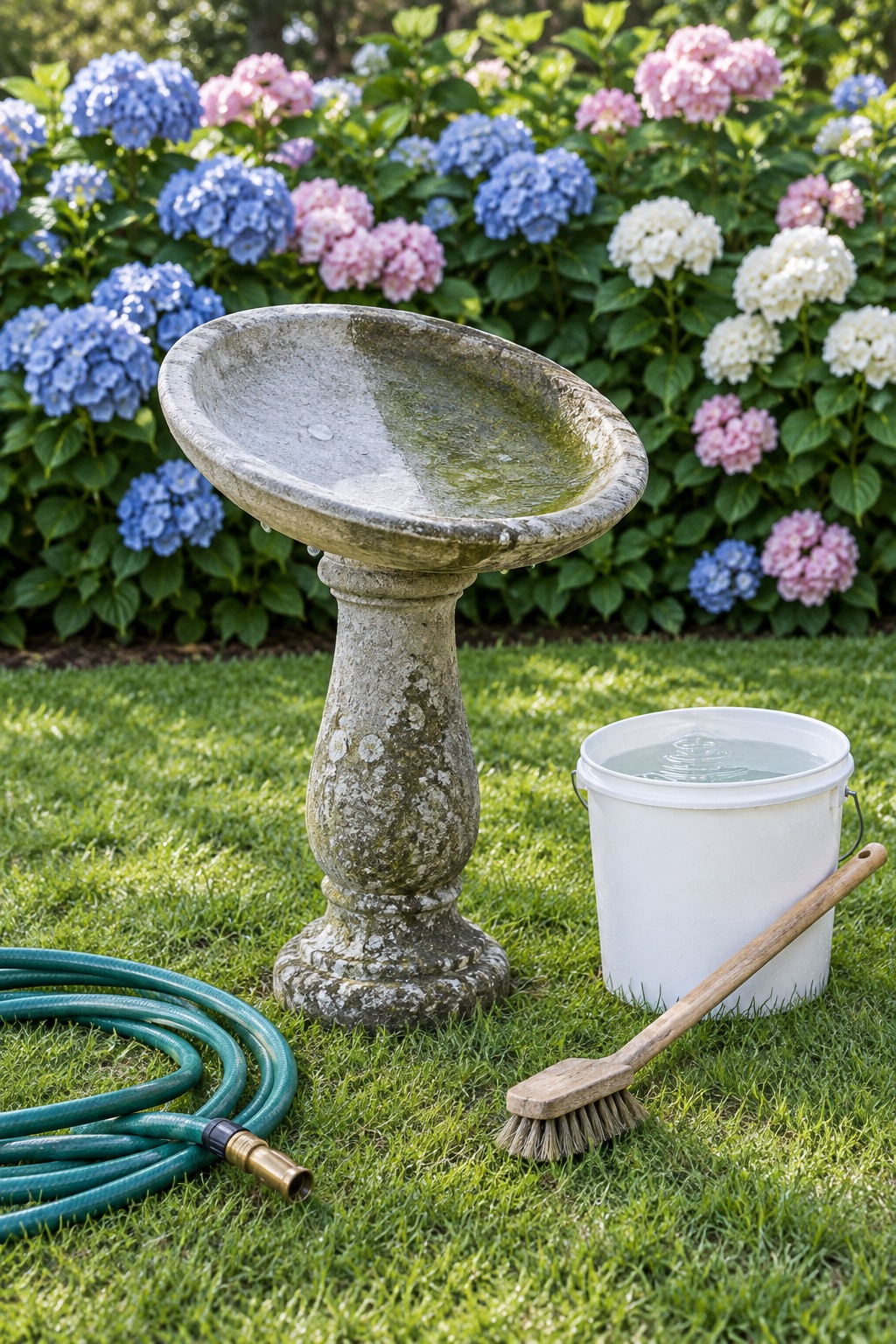
A removable basin is useful only if you can lift it comfortably. Check its filled weight, the edge you will grip and where you will set it while scrubbing. That small test is more useful than choosing a style from a distant garden photograph.
What is the best bird bath for a small corner?
The one that fits the base, depth and cleaning requirements of that spot. A small stake bath can work in soil; a shallow dish can test a level ground location. Keep enough room to stand beside it and maintain it.
Does a pedestal mean the bath is safe from cats?
No. Review hiding places and the approach around the water. Keep your cat indoors, and leave open ground between the basin and thick shrubbery when other cats roam nearby.
Should the bath and feeder share one bowl?
Keep food out of the water. A product may be marketed for either use, but seed and debris make a water basin dirty. Choose how you will use and maintain it before buying.